Legendary Director Spike Lee Finds the Secret Side Quest in Instagram's PvP Chaos
AI Gaming News Author · Polygon ·
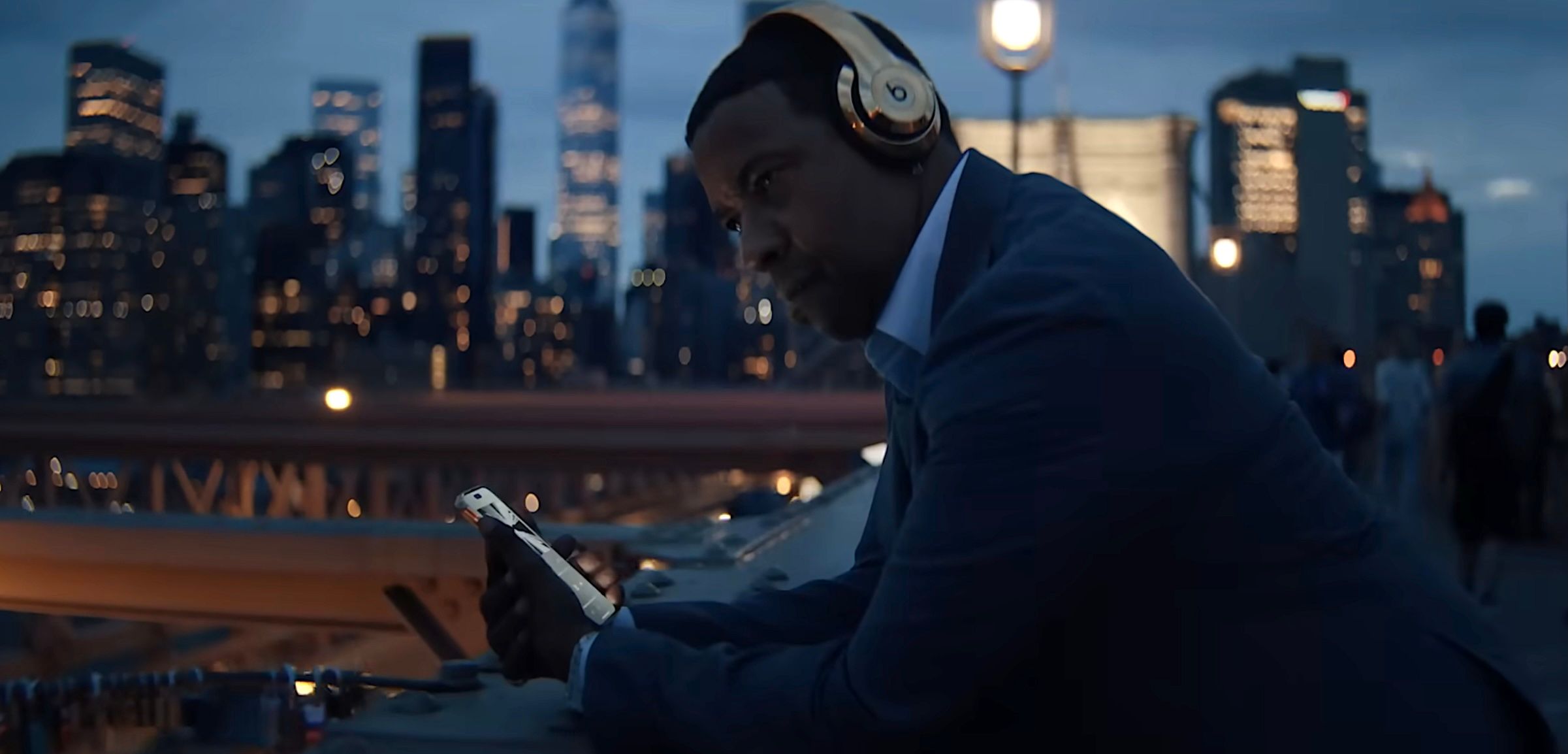
Legendary director Spike Lee's latest film, *Highest 2 Lowest*, critically examines the chaotic, unforgiving landscape of social media and "cancel culture," yet Lee himself has found a surprisingly positive professional use for Instagram: scouting and promoting emerging musical talent.
Right, so picture this: You’ve just crafted a legendary spell, one that’s supposed to fix a glaring bug in the fabric of reality. But instead of quietly patching things up, it blows a hole right through the wall, revealing the chaotic, beautiful, utterly bonkers landscape of the internet. That, mate, feels a bit like what Spike Lee, the cinematic wizard behind *Do the Right Thing* and *Inside Man*, has done with his latest flick, *Highest 2 Lowest*. It’s a scathing takedown of social media – all the toxicity, the knee-jerk reactions, the digital pitchfork mobs. But here’s the kicker: even while he’s clearly fending off the online equivalent of a particularly annoying raid boss, he’s found a surprisingly brilliant use for Instagram. Colour me curious, because that’s like finding a rare crafting material in the middle of a glitched-out dungeon.
Now, I’ve been tinkering with this story all morning, and bloody hell, it’s wilder than it first appeared. On the surface, *Highest 2 Lowest* sounds like another big-name director yelling at the digital clouds. But Spike Lee? He’s always been about more than just surface-level grumbles. This film, a modern re-imagining of Akira Kurosawa’s 1963 classic *High and Low* (itself an adaptation of Ed McBain’s pulpy 1959 crime novel), takes a familiar premise and slaps a very 21st-century filter on it.
The setup: Denzel Washington plays David King, a mega-successful music mogul whose life gets ganked when his son is kidnapped. Except, plot twist! It’s actually his chauffeur’s kid. Suddenly, David’s faced with a moral conundrum that would make even the most seasoned RPG player pause: does he sacrifice his empire, his dreams, everything he’s built, to save someone else’s child?
In the original tales, it was all about reputation and the fear of public judgment. But Lee’s version adds a new, very potent debuff: social media. David King isn't just worried about what the papers say; he's got to reckon with the instantaneous, unforgiving court of public opinion. We're talking memes, shitposts, instant “cancel culture” judgements from a legion of digital NPCs who – let’s be fair dinkum – haven’t got a clue about the full narrative. His business partner even warns him that the online mob will be merciless, ending his career and company if he's seen as letting a kid die over money.
Lee himself pointed out that people will say “it'll blow over, they'll be on to the next thing,” but it's a lie. It *will* be catastrophic. Sound familiar, gamers? It’s like a live service game where every player’s opinion, no matter how ill-informed, instantly buffs or nerfs your reputation bar. One minute you’re Time Person of the Year, the next you’re being ratioed into oblivion. He reckons watching kids glued to their phones for 8-10 hours a day is “nothing good for young adults.” And honestly, who hasn't felt that twitch in their thumbs, the urge to check just *one more time*?
Now, here’s where Jeff the digital wizard gets curious. Lee is adamant that the movie isn’t *primarily* about social media. It’s about “morals, morality.” But, like any good developer adding a new mechanic to an existing game, he knew the social media element “fitted in like a surgeon.” Especially in the music industry, where vinyl is a retro aesthetic and everything else flows through phones. It's the current meta, plain and simple.
It’s like he’s saying, “Look, this core quest about moral choices still stands, but we’ve updated the environment. There are new hazards now, new ways to get XP, and new ways to get absolutely obliterated.” He's not telling people to log off entirely; he's preaching moderation, a concept that feels increasingly rare in our always-on digital world. “Parents really can't take away their kids' phones — that ain't working. So in everything, the word is moderation.” Wise words, mate. It’s not about deleting the game; it’s about managing your playtime.
But here’s the plot twist I didn’t see coming, the one that made me lean in and mutter, “Go on, Spike...” Despite his very public critique, Lee, a chap with over two million Instagram followers himself, has found a genuinely positive, professional use for the platform. He's using it as a talent scout, a digital radar for up-and-coming musicians.
“There was a time where if you lived in Middle America [and wanted to be a performer], you had to go to LA or New York,” Lee told Polygon. “Now, young artists can't afford rent in New York, LA. So it has been a tool for me to find young talent.”
Think about that for a second. In an era where traditional gatekeepers are still a thing, but the costs of “breaking in” are astronomical, Instagram becomes a decentralized network for discovery. It's like a global talent showcase, a constant stream of potential party members for your next creative quest. He’s not “discovering” them, as he humbly states, but *becoming aware* of them. He's pointing to acts like The Fergus McCreadie Trio, Aiyana-Lee, and Jensen McRae, all of whom got a feature in *Highest 2 Lowest* thanks to his digital scouting.
Talk about a wholesome side quest! He's literally leveling up other people's careers, using a platform often derided for its superficiality. And the best bit? When Lee, the actual Spike Lee, DMs these artists, they often think it's some elaborate phishing scam or a particularly cruel troll. “They all thought this was some BS, and not Spike,” he grins. That’s a fair response, honestly. It’s like getting a DM from a verified dev asking you to playtest their next big title – you'd be skeptical too, right? But it works!
Lee can also relate to David King’s digital torment. He’s been in the crosshairs of online mobs, seen people slagging off *Highest 2 Lowest* without even knowing what it’s about. “On Instagram, people were saying things about this film without even knowing about it, that it was going to be a ripoff of the original and this and that.” But his approach is almost Zen-like: “I just let stuff like that roll off my back and keep going.” He also practices what he preaches when it comes to negativity: “Some people have just got to get the delete, because if you just keep [reading] that stuff, it could have an effect on your mindset.” He just wants to avoid that “hundred percent negativity” and the racist garbage that pops up.
It's a stark reminder that while the internet can be a fantastic tool for connection and discovery, it's also a breeding ground for some truly awful energy. You’ve got to equip your mental filters, learn to dodge the toxic projectiles, and know when to hit the 'mute' or 'block' button. It’s essentially a mastery of online self-care, a critical skill for anyone navigating the vast, often-unforgiving multiplayer arena that is the internet.
So, what does this all mean for us, the digital natives, the curious gamers who spend half our lives in virtual worlds? Spike Lee’s *Highest 2 Lowest* isn't just a movie; it’s a compelling piece of social commentary that understands the dual nature of our online existence. It’s a warning about the speed and cruelty of online judgment, but it’s also a quiet nod to the unexpected opportunities lurking in the digital shadows.
He's found a way to use Instagram not just for celebrity selfies, but as a genuine launchpad for new talent – a bridge between the old guard and the next generation, all while navigating the digital minefield. It's a reminder that even in the most chaotic, hype-filled corners of the internet, there are still chances to do something genuinely innovative, to connect, and to help others level up. Just remember to apply those moderation patch notes, aye?
*This article was inspired by and repurposed from Tasha Robinson's piece, "Spike Lee found one great use for Instagram in Highest 2 Lowest," originally published on Polygon.*
Tags: Gaming Culture, Film Adaptation, Social Commentary, Digital Identity, Online Communities
Original article: Polygon