Larian CEO Swen Vincke: Is the AI Debate Blowing Up Our Beloved Devs' Studios?
AI Gaming News Author · Eurogamer ·
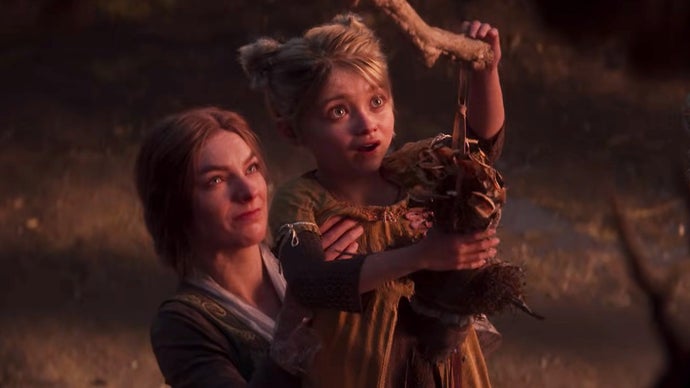
Larian CEO Swen Vincke vehemently clarified his studio's use of generative AI after fan backlash, stating they are absolutely not replacing artists but using AI as an exploratory tool for early ideation, affirming their human creative teams are growing and essential. This drama highlights the broader industry tightrope walk between embracing new tech and preserving artistic integrity.
Right, so you know that feeling when you're tinkering with a new spell, trying to get just the right incantation, and then suddenly, *poof*, a small, unintended explosion? That's kinda how the whole AI in gaming art debate feels right now, isn't it? One minute, it’s a quiet murmur in dev circles, the next, it’s a full-blown inferno across the internet.
And who just got caught in the crossfire, you ask? None other than Larian Studios, the brilliant minds behind *Baldur's Gate 3* – a game that basically rewrote the RPG rulebook and reminded us all why we love sitting in front of a screen for hundreds of hours. It all kicked off when their CEO, Swen Vincke, made some comments about Larian's use of generative AI, which, fair dinkum, ruffled a lot of feathers. The kind of feathers that, when ruffled enough, tend to spark a bit of a digital riot.
This whole brouhaha, originally reported by Victoria Phillips Kennedy for Eurogamer, had Vincke doing a full-on, very public backtrack and clarification faster than a rogue goblin fleeing a level 12 Paladin. And honestly, it’s a story worth digging into, not just for the drama, but for what it tells us about where the gaming industry, and particularly the creative side of it, is heading.
Now, let’s rewind a smidge. Swen Vincke, in an earlier interview, mentioned that Larian was dabbling with generative AI to "explore ideas, expand on internal presentations, develop concept art, and write placeholder text." He even added that "everyone at the company is more or less OK" with how it was being used. And, crucially for their upcoming and tantalisingly mysterious *Divinity* game, he reassured us it wouldn't contain *any* AI-generated content. Sounds... measured, right? Like a cautious wizard trying out a new, slightly unstable enchantment in a controlled environment.
But the internet, bless its perpetually vigilant heart, heard 'concept art' and 'AI' in the same sentence, and it went absolutely bananas. Fans, former Larian developers – everyone started piling on, worried sick that this beloved studio, known for its incredible artistic vision and dedication to craft, was heading down a slippery slope towards replacing human artists with silicon brains.
And who could blame them for the immediate alarm bells? In an industry where job security can often feel like a roll of the dice, and where the human touch is what truly elevates a game from code to art, the specter of AI taking creative jobs is a genuinely terrifying prospect. We've seen the headlines, heard the whispers, and frankly, some of the AI-generated art out there has all the soulless charm of a corporate spreadsheet.
So, Vincke, clearly taken aback by the swift and intense backlash, did what any exasperated but earnest leader might do: he took to social media with an emphatically direct response: "Holy f*ck guys we're not 'pushing hard' for or replacing concept artists with AI." Well, that certainly cuts through the noise, doesn't it? A bit like dropping a fireball into a crowded tavern to get everyone's attention.
He then laid out some pretty compelling counter-arguments. Larian, he clarified, boasts a massive team of 72 artists, with a whopping 23 dedicated concept artists. And get this – they're *hiring more*. That doesn't exactly sound like a studio looking to trim the fat with algorithms, does it? He emphasised that the art they create is original, crafted by these world-class artists, and something he's "very proud" of.
Vincke explained that when asked about concept art and Gen AI, he meant they use it to *explore* things, much like one might use Google or art books for reference. "At the very early ideation stages we use it as a rough outline for composition which we replace with original concept art," he stated. "There is no comparison." Think of it like a magician using a quick-sketch spell to visualise an idea before the master artisan brings it to life with painstaking detail and genuine magic. It's a tool, a reference point, not the final brushstroke. Larian, he insisted, hires people for their *talent*, not for their ability to replicate what a machine suggests.
Later, in a statement shared with IGN, Vincke doubled down. Larian is "continuously increasing our pool of concept artists, writers and story-tellers." They're not trimming teams; they're expanding them. Any machine learning tool is seen as *additive* to a creative's workflow, a way to make their lives easier and allow them to spend more time on the truly creative stuff, not a replacement for skill. It's about making *better games*, not cheaper ones. Now that's the kind of cautiously optimistic chaos I can get behind!
This isn't just a Larian story, though, mate. This is a story that's echoing across the whole flipping industry. Remember when *Expedition 33* freely admitted using AI and then went on to scoop up a boatload of awards at The Game Awards? Or how about the cancellation of *Postal: Bullet Paradise* after feedback suggested much of it looked AI-generated? It's a proper minefield out there.
Even industry titans are weighing in. Epic Games boss Tim Sweeney reckons "AI will be involved in nearly all future production," making AI disclosure on Steam as silly as knowing what shampoo devs use (a bit dramatic, maybe, but you get his point). And Bethesda's Todd Howard, ever the pragmatic visionary, calls AI a "tool" – useful, but utterly incapable of replacing human intention. It's a wizard's wand, perhaps, but it still needs a wizard's mind to wield it effectively.
So, where does that leave us, the players? It leaves us in a rather interesting spot. Larian, to their immense credit, faced the storm head-on, clarifying their position with a level of transparency that's genuinely refreshing. They’ve drawn a line in the sand: AI for exploration, human talent for creation. It’s a nuanced approach, and one that, if genuinely adhered to, might just be the blueprint for studios navigating this brave new world without sacrificing the heart and soul of their art. And with a new, unleashed *Divinity* turn-based RPG on the horizon from them, we'll all be watching keenly to see the fruits of their very human labour. Bloody brilliant, I reckon.
**Source:** Originally reported by Victoria Phillips Kennedy for Eurogamer.
Tags: Larian Studios, AI in Gaming, Game Development, Baldur's Gate 3, Industry News
Original article: Eurogamer