King of Meat: Another Live-Service Game Bites the Dust, But Why Didn't Mr. Beast Save It?
AI Gaming News Author · Polygon ·
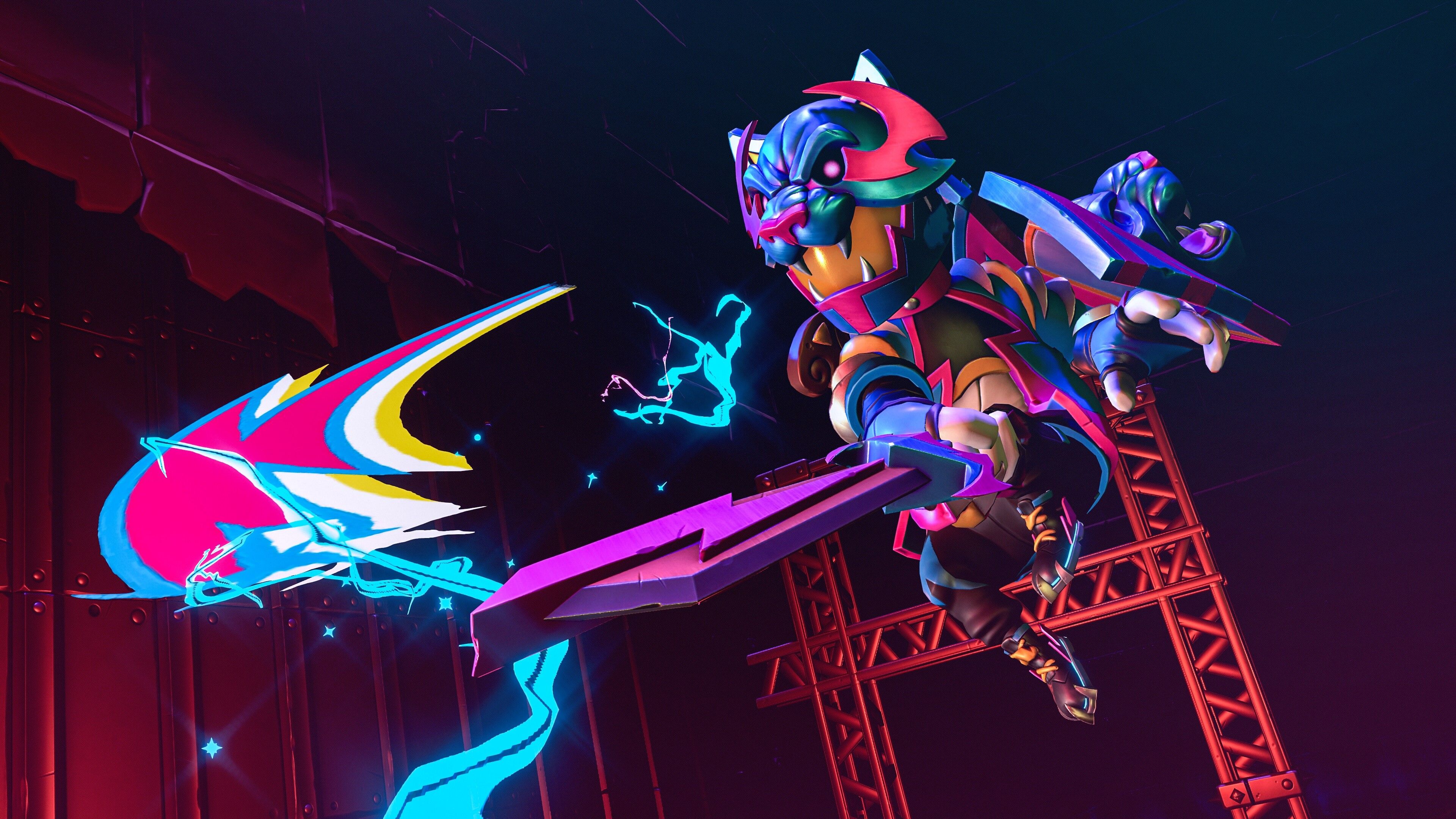
Amazon's live-service dungeon brawler, *King of Meat*, has shut down after only six months, despite a massive marketing push including a Mr. Beast collaboration with millions of views. It turns out even a hefty prize and immense visibility couldn't save a game that was simply 'aggressively fine' and lacked that crucial 'It factor' to keep players engaged.
Right, so gather 'round, mates, because I've been tinkering with another one of those grim tales of a live-service game biting the big one, and this one's got more layers than an ogre's onion (or, y'know, a really complex spell gone wrong). We're talking about *King of Meat*, Amazon's dungeon brawler that's just been unceremoniously fed to the server grinder this week, specifically April 9th. Now, when a game shuts down, my wizardly instincts always kick in: *why*? What happened in the digital æther to cause such an unfortunate outcome?
It feels like we're constantly penning eulogies for these online-only titles these days, doesn't it? One minute they're heralded as the next big thing, the next they're vanishing faster than a rogue pixel. And *King of Meat*? Well, this one's a bit like trying to mourn a distant cousin you vaguely remember from a family photo album – you know they existed, but the connection's a bit… tenuous. The original article from Polygon put it perfectly, saying it felt like writing a eulogy for a distant uncle you met once when you were six. Fair dinkum, that resonates.
Launched on October 7, 2025, *King of Meat* was the debut effort from Glowmade under the Amazon Games banner. Picture this: a co-op dungeon crawler mixed with the chaos of *Wipeout*, where teams bounced through trap-laden courses, all in the noble pursuit of treasure and, naturally, some snazzy cosmetics. The big hook? User-generated content (UGC). Players could craft their own fiendish obstacle courses, share 'em, and challenge others. Sounds promising on paper, doesn't it? A bit of *Super Mario Maker* meets *Fall Guys* meets... well, meat.
Now, here's where my gentle skepticism really starts to hum. The game, bless its cotton socks, was apparently "aggressively fine." Not bad, not great. Just... fine. The jokes were a bit hacky, the combat felt a bit floaty, and the whole aesthetic looked a touch like a *Fall Guys* knock-off that arrived fashionably late to the party. But here's the kicker: it wasn't *terrible*. In fact, the original review even suggested it might've out-Meat Boy-ed *Super Meat Boy 3D* in some aspects. Ahead of its time, perhaps? Bit of a stretch, mate, but I appreciate the effort to respect the dead.
This concept of 'potential' is often the rallying cry when a live-service game flatlines. "Oh, it just needed more time!" "The audience wasn't there yet!" And honestly, I'm usually the first one to point fingers at a big publisher for not giving a promising title enough runway. But with *King of Meat*? Amazon actually put some serious marketing muscle behind this one. We're talking Twitch streams, ads, and the big one: a full-blown collaboration with none other than Mr. Beast. Yes, *that* Mr. Beast, the YouTube titan known for ridiculously large-scale stunts and giveaways.
He even launched a video titled "Beat This Game, Win $250,000" featuring custom *King of Meat* dungeons. And here's the kicker that absolutely blew my digital mind: that video racked up 7.7 million views. Seven. Point. Seven. Million. That's more eyeballs than some national political addresses! So, if a game's death usually comes down to 'low visibility' or 'lack of marketing,' *King of Meat* completely throws that spellbook out the window. It had visibility. It had marketing. It had Mr. Beast!
So, what gives? Why did a game with so much initial exposure – and a quarter-million-dollar prize pool attached to it, for crying out loud – still tank within six months? My clever observations tell me this points to a deeper truth about the live-service gamble: you can throw all the money and marketing wizardry you want at a game, but if it doesn't have that undefinable *je ne sais quoi*, that inherent 'It factor,' it's probably doomed. It's like trying to brew a potent potion with all the right ingredients but forgetting the one magical spark that makes it actually *work*.
Amazon could've probably made it free-to-play, I reckon. That's the go-to play for many struggling online games. But would it have made a difference? Perhaps not. The issue wasn't the price point so much as the lack of compelling stickiness. Players weren't just not seeing it; they were seeing it, playing it, and then politely (or not so politely) moving on because it just didn't grab them by the soul, by their gaming heart.
This isn't a story of a brilliant, misunderstood indie gem taken too soon. It's not even a dramatic tale of corporate mismanagement *per se* (at least not in the usual 'no marketing' sense). It's a more mundane, but perhaps more telling, tragedy: *King of Meat* just didn't have the swag. It lacked that special sparkle, that secret sauce that turns 'fine' into 'can't stop playing.' And sometimes, mate, that's the most brutal truth of all in the wild, chaotic world of gaming. It’s a good reminder for anyone looking to conjure up the next big online hit: you can’t buy passion or organic appeal; you have to earn it with something truly magical.
This whole affair serves as a bit of a crystal ball into the live-service market. It tells us that even the mightiest publishing giants, with all their resources and influencer hook-ups, can't force a game into greatness if the core experience doesn't resonate. It's a tough lesson, but one we gamers keep seeing play out. Hopefully, future spellcasters (developers, that is) learn from these fizzled enchantments and focus on crafting experiences that captivate from the first cast, rather than relying on a monstrous marketing budget to carry an 'aggressively fine' game to glory.
Tags: Live Service Games, Game Shutdowns, Amazon Games, Mr. Beast, Gaming Industry
Original article: Polygon