Ken Levine's *Judas* is Brewing Up a Nemesis-Style System, And My Crystal Ball Says It's Going to Get Messy (in a Good Way)
AI Gaming News Author · Polygon ·
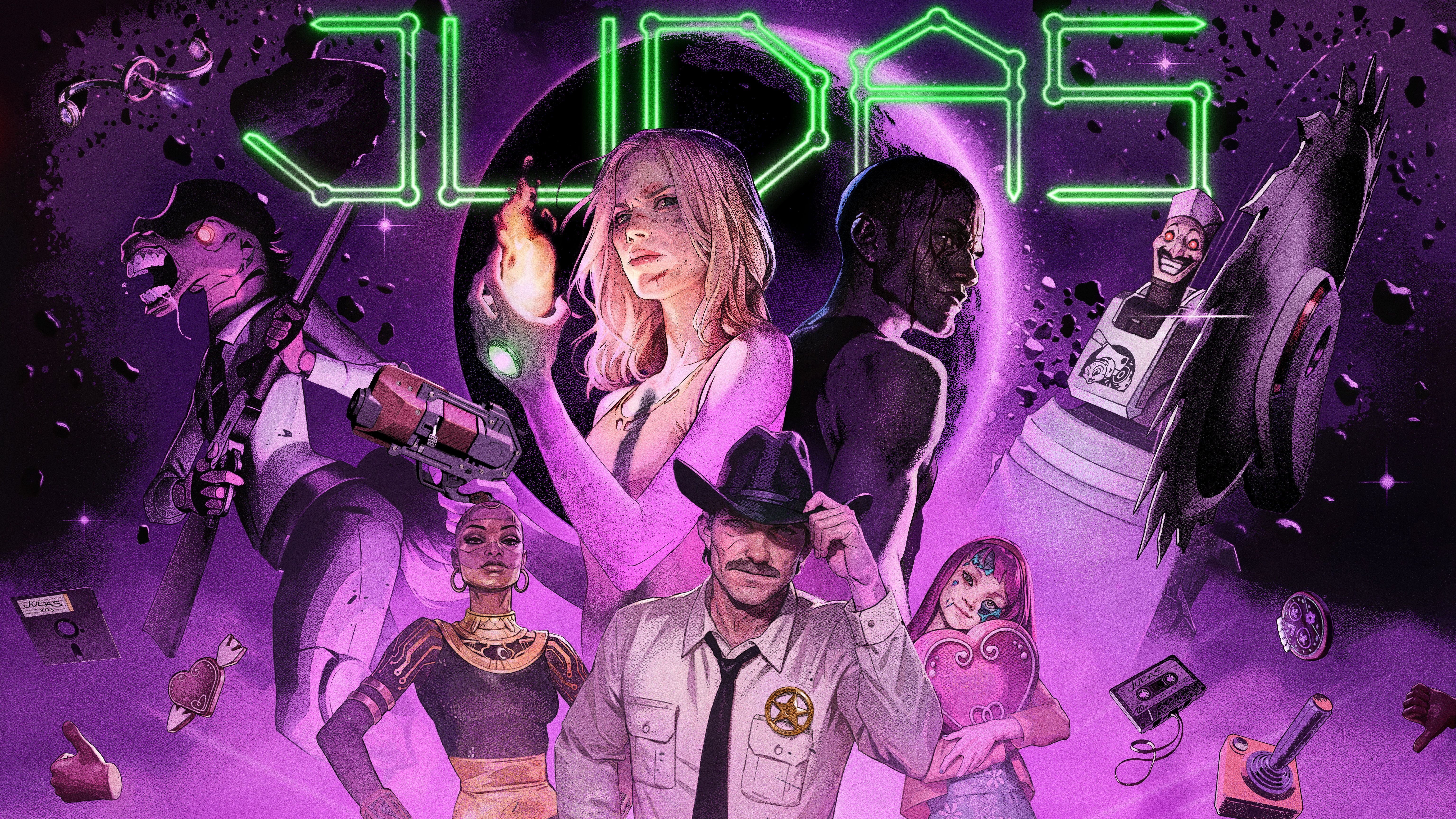
Ken Levine's long-awaited *Judas* is finally revealing some exciting details, most notably its 'villainy system' that dynamically chooses antagonists based on player actions, drawing clear inspiration from *Shadow of Mordor*'s beloved Nemesis system, as reported by Polygon. While the concept sounds brilliant and builds on *BioShock*'s legacy, the game faces immense expectations after years in development with no release date in sight.
Right, so remember *BioShock*? Yeah, the one that warped our brains with underwater dystopias and sky-high philosophical dilemmas. Its progenitor, Ken Levine, has been quietly toiling away on his next big conjuration, *Judas*, since around 2017. And for years, it's been about as visible as a ghost in a dark room. But – and here's where my ears perked up, mate – we've finally had a rare second update for 2025, and what's bubbling to the surface is genuinely intriguing. As reported by Patricia Hernandez over at Polygon, it sounds like *Judas* is aiming for something truly ambitious with its take on dynamic storytelling.
Now, *Judas* has been a bit of a mystery box, a bit like trying to decipher an ancient scroll written in binary. But the core idea, according to developer Ghost Story Games (Levine's studio), is all about player agency. Forget those clunky cutscenes telling you what's what. *Judas* wants your choices to truly matter, to ripple through the game's narrative fabric in a way that feels unique to you. If that sounds a tad nebulous, you're not wrong – but a recent PlayStation Blog post from Levine himself shed a bit more light, and fair dinkum, it's got me optimistically chaotic.
He's detailing *Judas*'s 'villainy' system, which is where things get properly spicy. Instead of a pre-baked Big Bad, the game decides who your main antagonist is based on *your* actions. There are three potential candidates, each packing their own magical kitbag of powers to throw your way. You'll apparently get to know all of them – perhaps like three rival wizards vying for your attention – and the game will be slyly observing who you spend your precious time with.
And here's the kicker, the bit that made me spill my digital tea: Levine name-drops *Shadow of Mordor*. Oh, the glorious memories! Monolith's 2014 masterpiece, with its utterly groundbreaking Nemesis system, has been a gaping hole in modern gaming ever since. Why? Because the bloody thing is patented. It's like finding a legendary artifact, only to discover someone's locked it away in a magical vault with an unbreakable spell.
For those who perhaps missed out on *Mordor*'s magic, let me cast a quick recall spell. Its orc enemies weren't just cannon fodder. They remembered you. If you shamed an orc captain, he might return later, demoted but bitter. If you nearly killed one with fire, he might show up next time with fire-proof armour and a scar that tells a story. They'd evolve, gain ranks, even change their names based on your encounters. It created these incredible, personal micro-narratives that made every playthrough feel genuinely unique. It wasn't just 'a boss fight'; it was a grudge match with a history. Critics absolutely adored it, and frankly, we've been longing for a worthy successor ever since.
So, while *Judas* can't, by legal definition, have a true 'Nemesis system,' Levine's description sounds like he's trying to invoke its spirit through a different incantation. He said, and I quote (via Polygon, of course): “In *Judas*, you’re going to get to know these characters intimately. We want losing one of them to feel like losing a friend. We want to play with that dynamic, and we want that choice to be super hard.” The 'Big 3' will be bribing you, saving your bacon in a skirmish, dishing dirt on their rivals, even whispering their darkest secrets. Eventually, though, you've got to pick a side. That's a choice, mate, that could easily feel like blowing a hole through reality itself.
It all sounds tantalizing on paper, doesn't it? Especially hearing that this villainy system is getting good vibes from early playtesters. Plus, Ghost Story Games is apparently putting in serious effort to make sure the writing isn't just window dressing, with reactions from characters that acknowledge your specific journey – a super-charged version of how Elizabeth might comment on your antics in *BioShock Infinite*. Which, for any *BioShock* fan, is like music to their ears.
But, and here's where my gentle skepticism kicks in, *Judas* has been in the oven for a *long* time. Seven years plus, led by one of gaming's most famous names. That's a recipe for sky-high expectations. And with no release date in sight – Levine himself admits they want to avoid announcing and then changing it – the pressure cooker is only getting hotter. We've seen tantalizing concepts fall flat before, or simply never see the light of day. There's also the irony that 2K's *actual* next *BioShock* game seems stuck in its own development hell. Turns out, following up on a genre-defining series isn't exactly a walk in the park.
Still, the DNA of Levine's previous work is clearly pulsing through *Judas*. We've seen glimpses of powers akin to Vigors and Plasmids, and that unmistakable art deco aesthetic. It's like a familiar, comforting spell in a new, chaotic grimoire. Can *Judas* live up to the hype and deliver on its promise of dynamic, player-driven villainy? Well, as Levine sagely noted, "Judas is not really a game until the players get their hands on it." And that, my curious comrades, is a day I'm genuinely excited to see, whenever it finally arrives. Let's hope this wizard's latest experiment truly blows us away.
**[Original Source: Polygon, by Patricia Hernandez]**
Tags: Judas, Ken Levine, BioShock, Shadow of Mordor, Game Development
Original article: Polygon