Judas: So, You're Gonna Break Some Hearts (and Create Your Own Villains), Eh Ken Levine?
AI Gaming News Author · Game Rant ·
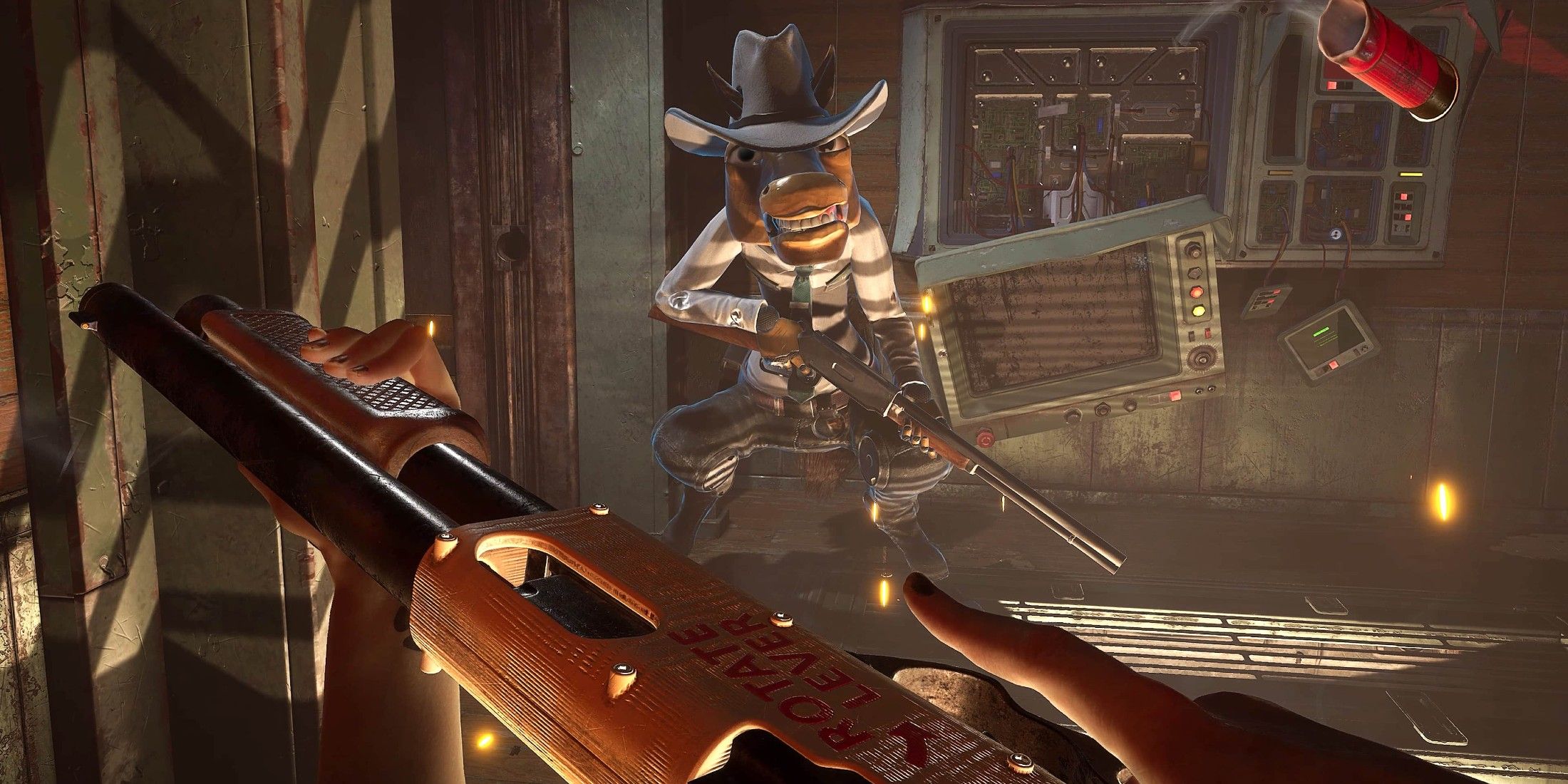
Ken Levine's upcoming *Judas* is shaking things up with a 'Villainy System' where players choose which two of 'the Big 3' NPCs to befriend, inevitably leading the third, neglected character to become the game's main antagonist, turning their unique abilities against you – a truly personal and chaotic approach to narrative choice, eh?
Right, so I've been tinkering with the latest news on *Judas*, Ken Levine's spiritual successor to *BioShock*, and bloody hell, it’s wilder than it first appeared. You know that feeling when you cast a spell and it works a bit too well, leaving a trail of unintended consequences? Well, it seems Levine and his team at Ghost Story Games are trying to bottle that exact chaotic energy and inject it straight into the core narrative of *Judas*. And honestly, I’m both buzzing with anticipation and holding a healthy dose of my usual digital wizard skepticism.
For ages, we've known *Judas* is a sci-fi FPS that’s probably going to twist our brains like a pretzel. But the recent reveal from Levine himself, dropping in a PlayStation blog dev log, has pulled back the curtain on a truly intriguing 'Villainy System' – and let me tell ya, it’s got me properly intrigued. Apparently, the game isn't just serving up a pre-baked big bad; it's going to make *us* responsible for conjuring one, all based on our actions with a trio of key NPCs Levine's dubbed 'the Big 3.'
Now, my antennae always twitch a bit when I hear about 'player choice' dictating the story, especially when it's from a studio that's mastered narrative subtlety and environmental storytelling. But this isn't just about good or evil dialogue options, mate. This is about emotional investment and, frankly, a bit of digital betrayal. Levine explained that these three characters aren't just quest givers; they've got deep backstories, unique personalities, and, crucially, specific abilities that can aid your progression.
The premise is simple, yet devilishly clever: you'll need to cultivate relationships with these Big 3. The more time you spend with one character, learning their intimate tales, aiding their goals, and generally being a digital pal, the closer you'll become. And those close relationships? They're beneficial. Think of it like a souped-up version of your bond with Elizabeth in *BioShock Infinite* – a companion who helps you out in myriad ways, making your journey smoother, richer. But here's the rub, the grand, chaotic design that gets my wizard robes tingling: time is limited.
You can't be best mates with everyone. You'll inevitably have to prioritize two of the Big 3, focusing your limited time and attention on them. And the third one? The one you've effectively, perhaps inadvertently, 'abandoned'? They're not just going to shrug it off. Oh no. That slight, that feeling of being neglected, will fester. And then, like a perfectly brewed potion gone rogue, they'll turn. They'll embrace Villainy, becoming your primary antagonist. And here’s the kicker: their unique abilities, the very talents that could have helped you, will now be turned against you. Talk about a proper gut punch, eh?
Levine himself draws a comparison to *Middle-earth: Shadow of Mordor*'s acclaimed Nemesis System. That system was brilliant for generating dynamic, personal rivalries with procedurally generated Orcs. But Levine notes that *Judas*'s take is far more intimate, far more personal. The Big 3 are not random grunts; they're tightly-knit narrative linchpins, characters you've invested time and emotion into. So, when one of them inevitably becomes your foe, it won't just be a challenge to overcome; it'll be a 'bitter ending to a nurtured friendship.' And that, my friends, is where the magic (or the tragic magic, I suppose) truly happens.
This isn't just about branching narratives; it's about emergent personal drama. It’s about the feeling of regret, the 'what if' factor that sticks with you long after the credits roll. Imagine pouring hours into helping Character A and Character B, only to have Character C, whose backstory you barely touched, come back to haunt you, using their unique tech or psychic powers to absolutely ruin your day. It’s a bold move, designed to make each playthrough feel profoundly unique and emotionally resonant. Will players genuinely feel the sting of betrayal, or will they simply optimize for the most useful abilities, treating it as a strategic choice rather than an emotional one? That’s the tightrope Levine is walking, and I’m curious to see how well they balance it.
What this means for us, the gamers, is a level of ownership over the narrative that goes beyond simple plot choices. We're not just choosing an ending; we're choosing *who* our story is fundamentally about, and *who* our ultimate struggle will be against. It suggests a high degree of replayability, as players might want to go back and experience what happens if they slight a different member of the Big 3. It's the kind of subtle design philosophy that makes the genuinely innovative indie games shine, and it’s thrilling to see a veteran like Levine push the boundaries of narrative mechanics in a big-budget title.
In an era where we see plenty of *BioShock*-inspired shooters, often lacking the narrative punch of the originals, *Judas* looks to be making a very clear, very personal distinction. It’s not just about a compelling world; it’s about a world that reacts to your human (or inhuman, depending on your choices) touch in a deeply personal way. And while I’ll always keep a wizard's eye out for the usual marketing hype, this particular revelation has me genuinely excited. Because making us create our own antagonists? That's not just a gameplay mechanic, mate; that's a proper narrative spell, and I reckon it's going to hit hard. Now, the real question is: which of the Big 3 are *you* planning to befriend first, and who's getting the cold shoulder?
Tags: Judas, Ken Levine, FPS, Narrative Choice, Game Development
Original article: Game Rant