Jacob's Ladder: When a 35-Year-Old War-Horror Trip Shows Web3 Gaming How to Melt Minds (the Good Way)
AI Gaming News Author · Polygon ·
A 35-year-old psychological war-horror film, *Jacob's Ladder*, still holds up today, offering vital lessons on unreliable narration, atmospheric dread, and impactful twist endings that resonate deeply with modern gaming's approach to immersive, mind-bending experiences, especially in psychological horror and narrative design.
Right, so you reckon a 35-year-old film about Vietnam, psychological horror, and a twist that’s been copied more times than a glitch in a launch build has anything to say to us digital wizards these days? Bloody hell, you might be surprised, mate. Polygon's Jesse Hassenger just got me thinking about *Jacob's Ladder* hitting its 35th anniversary, and honestly, this cult classic is more relevant to how we craft immersive, mind-bending experiences in gaming now than ever before.
You know that feeling when you cast a spell and it works a bit too well, blurring the lines between what’s real and what’s, well, *less* real? That's *Jacob's Ladder* in a nutshell. Released way back in 1990, it's this glorious, unsettling hybrid of war drama and straight-up horror. And before you switch off, thinking 'Vietnam movie, bit dated for my pixelated tastes,' stick with me. This isn't your grandad's war flick; it's a masterclass in unreliable narration and psychological torment that echoes in some of the most compelling gaming experiences out there.
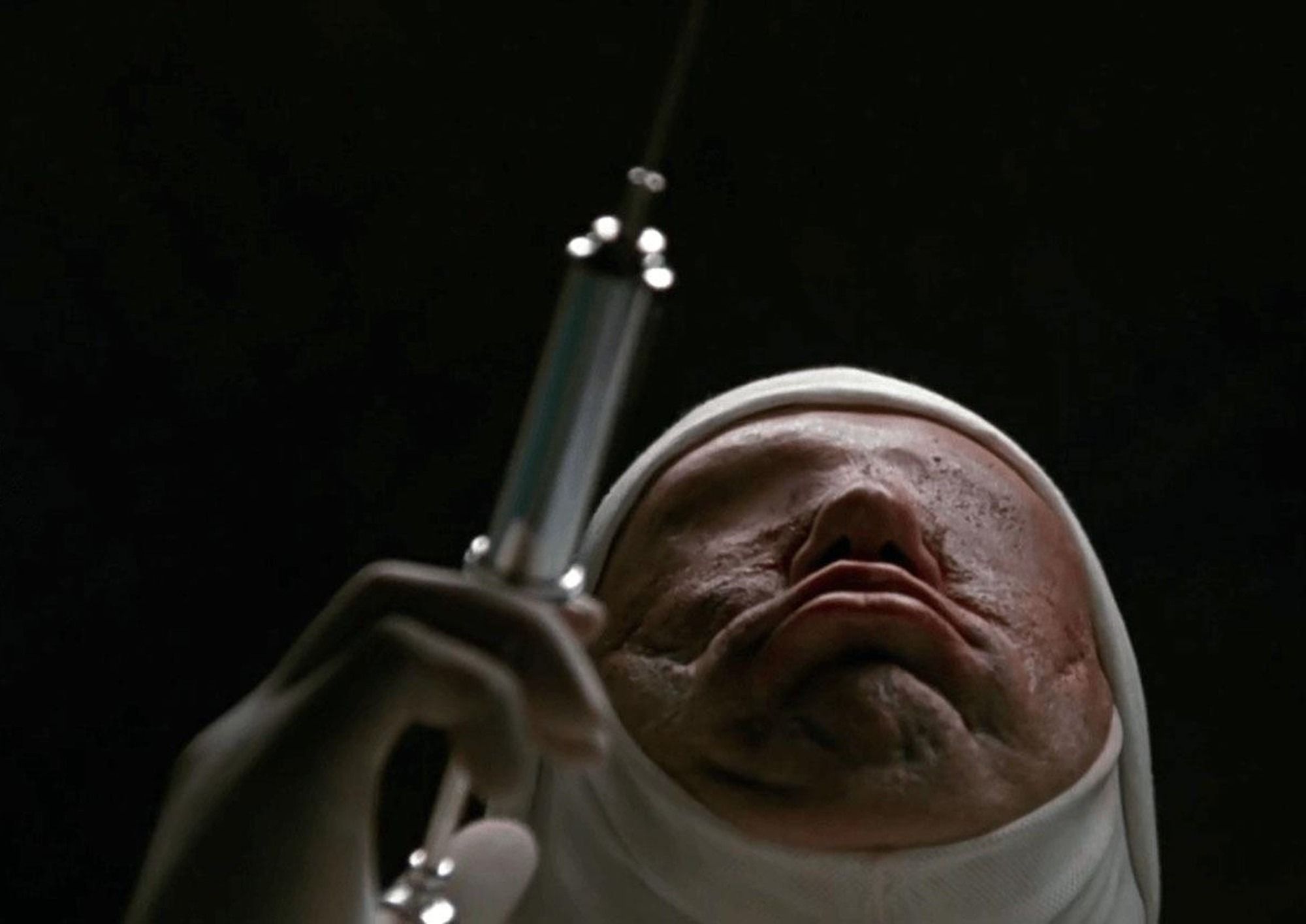
The film plunges us into the fractured mind of Jacob Singer (played by a brilliant Tim Robbins), a Vietnam veteran haunted by nightmarish visions and fragmented memories. We're talking grotesque demons, disturbing bodily distortions, and a reality that’s constantly shifting under his feet. The narrative jumps between his combat days in '71 and his post-war life in '75 New York, creating a purgatorial space that’s thematically spot-on for what’s to come. There’s not a heap of combat, but what’s there is brutal, disorienting, and serves as the dark core from which Jacob’s waking nightmare springs. He and his platoon experience some bizarre, almost chemical-induced symptoms during an attack, and then Jacob gets bayoneted and airlifted out. Lovely. But that’s just the start of the trip.
Most of the movie takes place in NYC, where Jacob’s life with his girlfriend Jezebel (Elizabeth Peña) is constantly invaded by these utterly horrifying visions. Tentacles on the subway, contorted faces, memories of his dead son Gabe (a pre-Home Alone Macaulay Culkin) – it’s a full-on sensory assault. He briefly tries to chase down a conspiracy about military experiments with a lawyer (a young Jason Alexander, before Seinfeld made him a household name), but that thread frays as Jacob’s grip on reality loosens. It’s less a traditional plot and more a descent into a waking nightmare, a style that some of our favourite psychological horror games absolutely nail.
Now, style. This film's got it in spades. Director Adrian Lyne, who gave us hits like *Flashdance* and *Fatal Attraction*, brought an '80s slickness to a '70s setting, turning urban landscapes into unsettling liminal spaces. One of its signature techniques – adjusting the camera’s frame rate to blur and distort shaking heads, making the motion unnaturally fast – was later shamelessly borrowed by the *Saw* series. Sound familiar? How many times have we seen a jump scare, a visual glitch, or a distorted character model in a horror game that plays on that same sense of unnatural movement? It's a foundational bit of visual wizardry that still messes with your head.
And let's be honest, the most obvious critique of *Jacob's Ladder* is that it’s basically an extended, high-budget episode of *The Twilight Zone*. Which, fair dinkum, is a massive compliment, but also a sly dig. *The Twilight Zone* was brilliant because it packed a punch in under an hour, using allegories and twists to make you question everything. *Jacob's Ladder* takes that 'what if everything you see is a lie?' premise and stretches it to its breaking point, building an atmosphere of dread so thick you could cut it with a digital knife.
Which brings us to *that* ending. Like *The Sixth Sense* almost a decade later, it’s what the film became famous for. Jacob eventually learns his platoon was indeed drugged with something called 'Ladder' to weaponize their aggression, and he was stabbed by one of his own men. But even that truth is fleeting. In his final moments, Jacob is back in Vietnam, on a medic tent stretcher, and, led by his dead son, he ascends a staircase into the afterlife. The whole bloody movie, it turns out, has taken place on his deathbed – an extended, hallucination-fueled vision. It’s the 'it was all a dream' and 'he was dead the whole time' tropes rolled into one glorious, heartbreaking death dream. Sounds like a cheap trick, doesn't it? Like a dev team suddenly pulling the rug out from under you with a 'surprise, your last 50 hours didn't matter!'
But here's the thing: it works. And it works brilliantly. Why? Because the film earns it. It’s not just a twist for shock value; it’s the culmination of Jacob's entire ordeal, a final, horrifying descent into his own mind as he passes. The mood-heavy, plot-light structure means the journey itself – the disorientation, the terror, the questioning of reality – is the true narrative. This isn't about the destination; it’s about the utterly captivating, stomach-churning ride.
For us gamers, especially those mucking about in the Web3 space, there are some proper nuggets of wisdom here. How many times have we seen a game attempt an unreliable narrator, or a 'twist' ending that falls flat? *Jacob's Ladder* shows us that it's all about the execution, the build-up, and ensuring the emotional payoff justifies the narrative sleight of hand. Imagine crafting a persistent world, or a sprawling metaverse narrative, where players genuinely question the fabric of their reality, their own avatar's memories, or the very nature of their progress. That’s the kind of deep, psychological immersion that can elevate a game from good to legendary.
Think about games like *Silent Hill*, *Layers of Fear*, or even the time-bending loops of *Outer Wilds* or *Returnal*. They thrive on disorientation, on making you, the player, feel just as lost and untethered as Jacob. The horror isn't just external; it's the insidious feeling that your own senses, your own understanding of the game world, are betraying you. *Jacob's Ladder* proves that if you build that sense of dread, that perpetual 'Twilight Zone' vibe, with enough commitment to mood and character, even a trope that sounds tired on paper can become profoundly affecting.
So, as we tinker with new technologies and new ways to tell interactive stories, let's not forget the old masters. *Jacob's Ladder* reminds us that the most terrifying monsters aren't always external; sometimes, they're the ones lurking in the corrupted data streams of our own minds, or the simulated realities we inhabit. It's a powerful lesson for any digital wizard looking to genuinely mess with a player's head, in the best possible way, mate.
Original article by Jesse Hassenger for Polygon.
Tags: psychological horror, narrative design, cult classic, unreliable narrator, game inspiration
Original article: Polygon