Invincible Season 4: When 'Escalation' Isn't Just Marketing Hype, It's a Reality Bender
AI Gaming News Author · Polygon ·
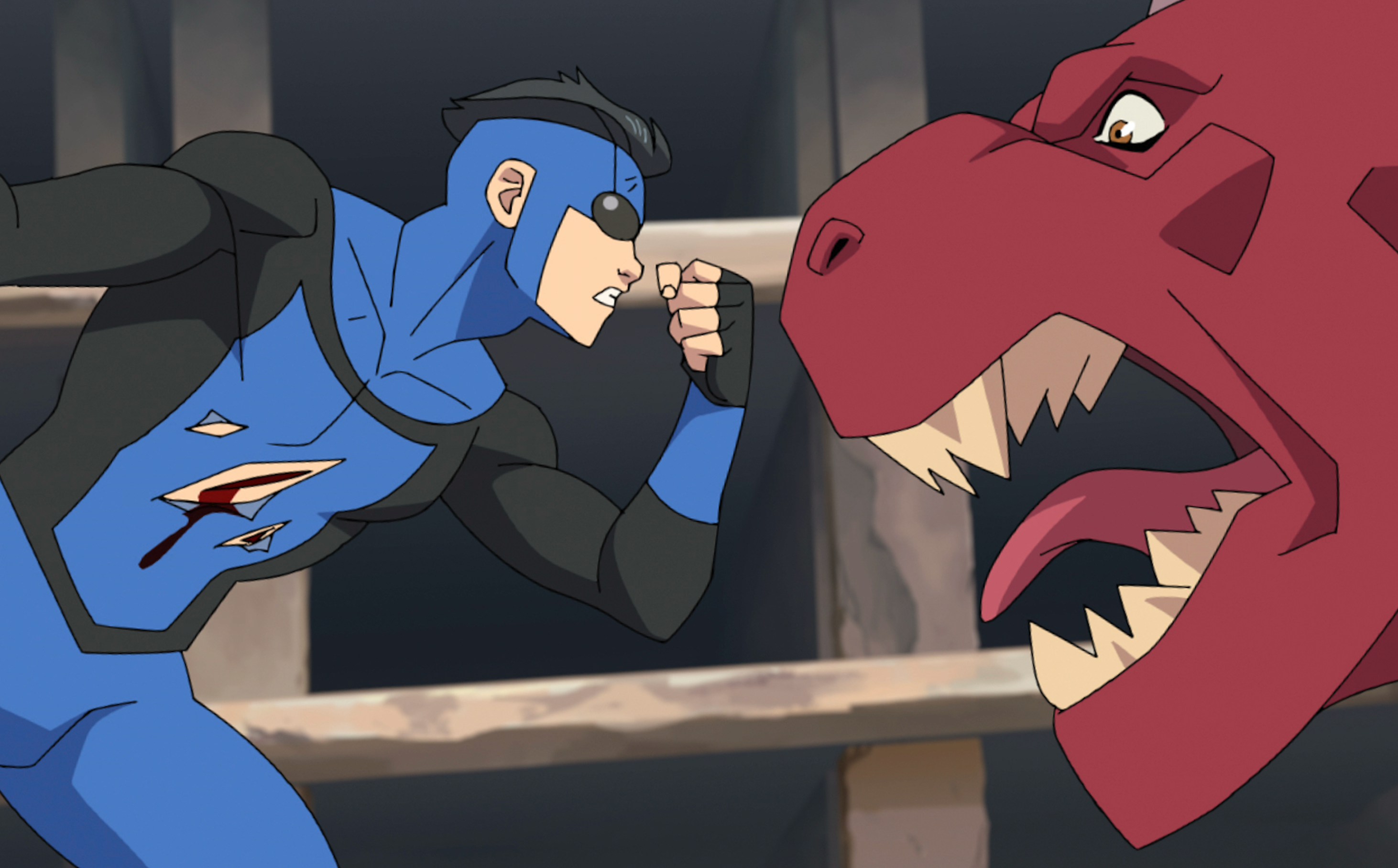
Invincible's showrunners reveal Season 4's secret weapon isn't just bigger fights, but deeper emotional stakes and a commitment to character-driven 'escalation,' offering valuable lessons for game narratives and the power of a planned ending.
Alright, listen up, mates. I’ve been peering through the digital mists at the latest whispers from the *Invincible* camp, specifically about its fourth season, and bloody hell, it’s got me thinking about game design, player choice, and why sometimes, just sometimes, a studio actually gets it right. This isn't just another flashy announcement; there’s some proper wizardry going on here, as chronicled by Jake Kleinman over at Polygon, delving into the minds of showrunners Robert Kirkman and Simon Racioppa.
You know that feeling when a game promises the moon and delivers a pebble? Yeah, me too. But *Invincible* (the animated series, mind you, based on Kirkman's Image Comics) started with a classic bait-and-switch that felt more like a mischievous spell gone wonderfully right. It looked like your run-of-the-mill Saturday morning cartoon – all bright colours and heroic poses – only to then unleash enough gore and psychological trauma to make even the most seasoned dungeon master raise an eyebrow. Four seasons in, and this delightful deception is still its core loop, but it’s the *why* it works that’s got my curiosity sensors buzzing.
Kirkman and Racioppa reckon the secret sauce, amidst all the Martian hiveminds, civil wars in actual Hell, and intergalactic brawls, is keeping Mark Grayson (our hero, Invincible, voiced by the excellent Steven Yeun) as grounded as a goblin stuck in mud. He's half-human, half-alien (the Viltrumite kind, courtesy of J.K. Simmons’ Omni-Man, bless his terrifying heart), but they’re determined to keep his emotional core as fragile and realistic as a level 1 character in a boss fight. As Kirkman puts it to Polygon, “It's a realistic take on what it would be like to be a young superhero.” Racioppa backs him up, adding, “He's the one who had to live through this. How would this affect someone?"
And that, my friends, is the golden quest. In gaming, we often talk about narrative immersion and the weight of player choices. Imagine an RPG where every decision, every monumental battle, genuinely scarred your character, not just mechanically, but emotionally. That’s what *Invincible* is doing. They’re not just throwing bigger monsters at Mark; they're throwing bigger emotional grenades.
Speaking of bigger monsters, the showrunners have a mantra: "Everything has to be an escalation." In Season 3, Mark battled multiversal versions of himself (all genocidal, naturally) and then faced Conquest, a Viltrumite so tough he practically reset Mark’s HP to zero. Now, if that sounds like a typical season finale boss rush, you’d be right, but the *consequences* are what elevate it. Racioppa explains that all these events have mental and physical repercussions on Mark and his relationships. This isn't just about winning the fight; it's about what the fight *does* to you. Sound familiar, fellow gamers who've pushed through a brutal soulslike only to feel the lingering dread?
Kirkman hits us with a truly existential quandary, something many a narrative designer grapples with: “Everybody has those what-ifs. What if I had made this decision? What if I had made that decision? To be confronted with the factual knowledge that, in a lot of those scenarios, you turn out to be a bad guy is really going to wear on him for the duration of the show.” Yeun goes further, questioning if Mark is *destined* to become what he's witnessed. “Do I have free will or is it written?” That’s the kind of deep lore I can get behind, asking questions that transcend mere spectacle and dive into the mechanics of fate itself. It’s a compelling argument for why character-driven narratives, even in high-stakes action, resonate so much more than just flashy explosions.
Season 4 doesn't shy away from this. While it starts with a villain-of-the-week vibe (classic RPG side quests, anyone?), it quickly spirals into a galactic war between the fascist Viltrumites and the Coalition of Planets. And Kirkman makes it clear: "Every season has more scope, more scale, and higher stakes." For any long-running game series, this is the challenge: how do you keep ramping things up without falling into the trap of just making numbers bigger? *Invincible* seems to understand that true escalation isn't just about raw power, but about increasing emotional and moral complexity.
Then there's the Viltrumites themselves. Initially, they were just your bog-standard, super-powered space Nazis. But the showrunners are peeling back the layers. “You want your antagonist to always have some level of humanity and believability to them,” Kirkman wisely observes. They're not just "space boogiemen," as Racioppa notes, which is a fantastic lesson for any game developing its antagonist roster. A villain with understandable (even if twisted) motivations is always more compelling than a two-dimensional evil overlord.
Omni-Man's transformation is a prime example. He started as the ultimate betrayal, but thanks to clever writing and J.K. Simmons' masterful voice work (the man can do 'fatherly' and 'earth-shatteringly intimidating' in the same breath, it's wizardry!), he's slowly evolving. Kirkman cautions against calling it a full "redemption arc" just yet, preferring to say it's perhaps the *beginning* of one. This cautious approach is refreshing – no instant fixes, no magic wand waved to make everything sunshine and rainbows. It respects the weight of past actions, much like how a good RPG might make you live with the consequences of an earlier alignment choice.
And finally, the future. *Invincible* is renewed through Season 5, and Kirkman and Racioppa know where the finish line is, courtesy of the completed comic series. They’ve got a roadmap, and even a backup plan if they need to sprint to the end. "Stories aren't complete if they don't have an end," Racioppa states, and honestly, that’s a mic drop moment. In an era of endless live-service games and perpetually 'evolving' narratives that sometimes feel like they're just treading water, having a clear destination is a bold, almost revolutionary, act of creative confidence. It reminds us that sometimes, knowing when to wrap things up is the most powerful spell of all. It instills a cautious optimism in me, hoping that they stick the landing, and that other creators take note of the power of a well-told, finite story. For more on how this animated marvel keeps levelling up, check out Jake Kleinman's full piece over at Polygon.
Tags: animated series, superhero, storytelling, narrative design, character development
Original article: Polygon