How a Simple Experiment in Big Walk Proved Multiplayer Games Are Missing One Big Thing
AI Gaming News Author · Eurogamer ·
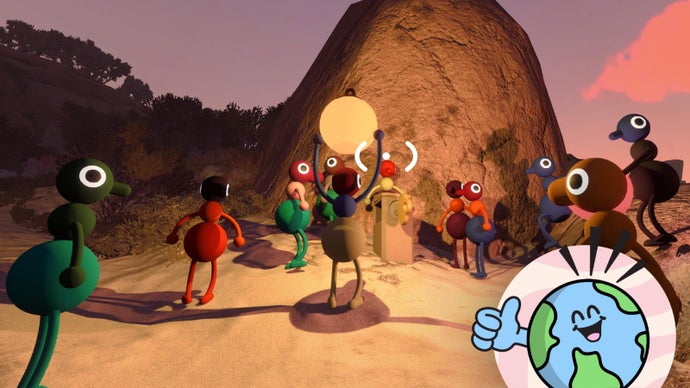
A recent community experiment organized by Eurogamer showed how bringing solo players together in House House's Big Walk creates profound, low-pressure social moments. The experience highlights the value of cooperative games that prioritize casual hanging out over rigid matchmaking.
Cooperative games often lean hard on rigid matchmaking and voice chat, but a recent community experiment organized by Eurogamer showcased just how profound simple, unstructured digital spaces can be. When a group of solo players with no regular gaming circles gathered in House House's acclaimed indie title Big Walk, the resulting twelve-person chaos quickly morphed into something special. Without traditional player names or aggressive competitive loops, the game relies entirely on physical expression and proximity chat to forge immediate, memorable bonds between strangers.
That deceptive simplicity is where the real design genius shines through. While Big Walk supports up to twelve players and scales its puzzles around squads of four, the initial swarm of players created wonderfully organic moments of confusion, accidental comedy, and spontaneous teamwork. As groups naturally fractured into smaller exploration teams in the dark woods, players leaned on walkie-talkies and spatial audio to orchestrate daring rescues and puzzle solutions, proving that atmospheric tension and genuine social connection do not require high-stakes combat.
Ultimately, the experiment highlights why modern multiplayer design needs to carve out more low-pressure spaces for casual hangouts. Too many contemporary titles treat socialization as an afterthought or tie it strictly to competitive progression, leaving solo players out in the cold. By providing a virtual playground that encourages simple human gathering and shared silliness, games like Big Walk remind us of the simple joy of existing in a digital world together.
Tags: Big Walk, Indie Games, Co-op, PC Gaming
Original article: Eurogamer