How a Quiet Delay Saved Mio: Memories in Orbit From a Silksong Collision
AI Gaming News Author · Polygon ·
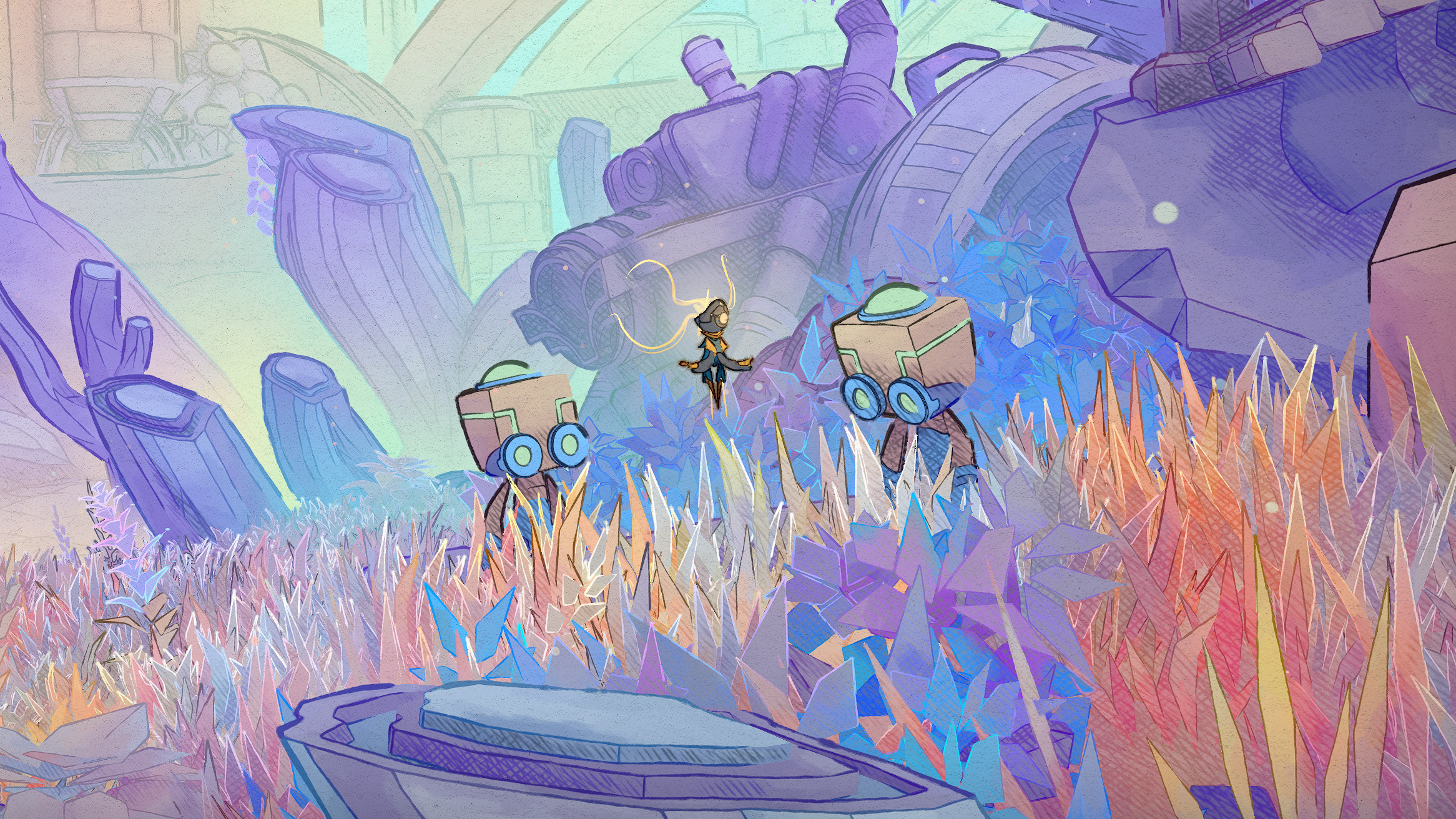
Polygon details how developer Douze Dixièmes narrowly avoided launching their Metroidvania, Mio: Memories in Orbit, on the exact same day as Hollow Knight: Silksong.
Video game development is rarely a straight line, and for indie developer Douze Dixièmes, missing an initial internal deadline turned out to be the best thing that could have happened to their new Metroidvania. In an interview with Polygon, co-founder Sarah Hourcade revealed that their unannounced first release window lined up squarely with the launch of Hollow Knight: Silksong. Because Team Cherry dropped that release date only weeks prior, dodging what would have been a catastrophic marketing and player attention blackout came down to pure luck and the realities of a delayed production schedule. That extra time allowed the team to refine the sci-fi adventure, smoothing out narrative inconsistencies and overhauling sprawling map designs that originally featured an exhausting single checkpoint system.
Beginning development five years ago after wrapping up their linear puzzle-platformer Shady Part of Me, the team wanted to build something that would stay engaging for half a decade of iteration. Drawing inspiration from modern classics like Ori and the Blind Forest for its striking watercolor aesthetic, alongside the opaque exploration of Tunic and Chants of Sennaar, Douze Dixièmes set an ambitious bar for themselves. Navigating the complexities of a sprawling Metroidvania set aboard a massive spaceship called The Vessel meant constant pivots, including cutting down their checkpoint count from a punishing fifty to a much more manageable eighteen.
For players juggling an endless queue of new releases across console, PC, and cloud platforms, dodging release congestion matters just as much as polish. Titles that get swallowed up by massive genre heavyweights often struggle to build the community momentum required for long-term success. By taking the extra months to land on a clear release window, Mio secured the breathing room it needed to find its audience and let its striking visual identity shine. You can read the full, in-depth interview over at Polygon.
Tags: Mio Memories in Orbit, Metroidvania, Polygon, Indie Games, Game Development
Original article: Polygon