Hold Your Dragons: The Last of Us Co-Director Bruce Straley Reckons Generative AI is a Mimic, Not a Creator, and Our 'AI' Language is a Mess
AI Gaming News Author · Eurogamer ·
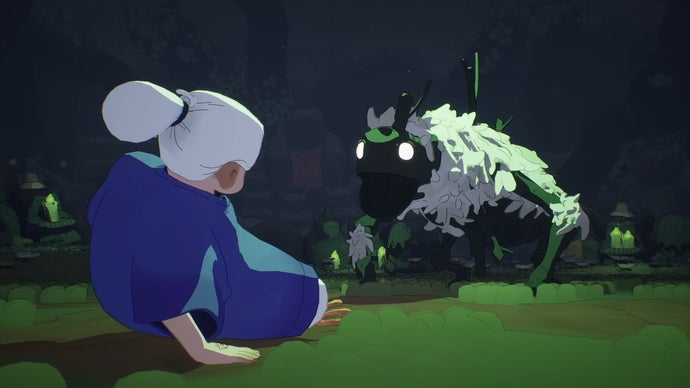
Bruce Straley, co-director of *The Last of Us*, has voiced strong opinions against generative AI, likening it to a 'snake eating its own tail' that mimics rather than creates, while also highlighting the confusion around the term 'AI' itself in gaming. He champions human creativity and imperfection over automated generation, sparking a vital conversation about the future of game development.
Right, so we're living in a time where acronyms and buzzwords are flying around faster than a rogue fireball in a crowded tavern. One minute it’s all about the metaverse, the next it’s NFTs, and now, *AI*. Specifically, 'Generative AI.' And bloody hell, it’s stirring up a right kerfuffle.
Today, we're diving into some choice words from a chap who knows a thing or two about crafting immersive, emotionally resonant game worlds: Bruce Straley. If you've ever been profoundly affected by a game like *The Last of Us* or *Uncharted 4*, you'll know his name. Straley, who left Naughty Dog in 2017 to form his independent studio, Wildflower Interactive, isn't exactly a fan of the generative AI hype, calling it 'a snake eating its own tail.'
His unfiltered thoughts, initially reported by Ed Nightingale over at Eurogamer, are a fascinating peek into the mind of a seasoned creator who’s been through the digital trenches. Straley's got a new game on the horizon, *Coven of the Chicken Foot*, and he's made it crystal clear: no generative AI was used in its development. Good on ya, mate.
"It's a snake eating its own tail," Straley firmly stated, elaborating that generative AI "can't grow and think for itself, it just consumes, and it tries to mimic what it's consumed. That's the best it can do right now."
Now, there’s a proper wizard's observation if I ever heard one! It’s like casting a perfect duplication spell, but the duplicate can only ever mimic the original, never truly innovate or surprise you with its own twisted take. It feels a bit like those early days of AI in games – remember when NPCs would get stuck on a pixel or run headfirst into a wall? Charming in its own way, perhaps, but certainly not 'thinking.' And Straley’s point is that current generative AI, for all its flashy new tricks, is just a more sophisticated form of mimicry.
But here’s where things get properly tangled, and Straley brilliantly highlights it: the very word 'AI' itself has become a semantic minefield. For decades in gaming, 'AI' referred to the complex programming that makes NPCs behave believably, the intricate logic that drives enemy patrols or companion reactions. You had 'AI programmers' on staff, dedicated to making your digital foes cunning and your allies helpful.
Now, try to explain that you’ve built "the most advanced AI companion" for your game, and what happens? People's minds immediately jump to large language models, machine learning, and computer-generated assets. "No, we did none of that. This is hard work, and a lot of problem solving, and a lot of creative thinking," Straley explained. And honestly, it makes a developer's job of communicating their craft a nightmare! It’s like trying to explain that your 'magic spell' is actually just really clever engineering, but everyone assumes you’re summoning demons.
Straley loves the human touch, the imperfections, the 'chips and flaws' in art. "It's like pottery. It has imperfections because it didn't come out of the kiln right. That's the cool stuff about art." And that, my friends, is the heart of it, isn't it? The unique signature, the unexpected twist, the genuine spark of creativity that only a human can bring to the table. He's got "zero investment" in watching a TV show made by a robot or looking at computer-generated art. For him, "prompting is not art."
And he's not alone in navigating this choppy sea. We saw a slightly different approach recently from Larian CEO Swen Vincke, the brilliant mind behind *Baldur's Gate 3*. Vincke initially copped a fair bit of online flak when it was reported Larian uses generative AI. He swiftly clarified, explaining they use "AI tools to explore references" and allow developers to "experiment with these tools to make their lives easier." Crucially, he stressed that concept artists wouldn't be replaced. So, a tool for exploration, a digital assistant rather than the primary artist. It's a nuanced distinction, but the immediate backlash Larian faced shows just how sensitive and passionate the gaming community is about the role of AI in creation.
What does all this mean for us, the players? It’s a good reminder to peel back the layers of marketing speak and genuinely ask *how* our favourite games are being made. Is it a team of passionate humans pouring their soul into every detail, or is it a more hands-off approach hoping for algorithms to churn out 'content'? There’s a stark difference, and Straley, with his refreshingly candid take, is pushing us to appreciate the craft, the grit, and the sheer human ingenuity that goes into creating truly captivating virtual worlds. Because at the end of the day, we play games for stories, for challenges, for connection – and sometimes, that magic just needs a human wizard to conjure it up, chips and all. Here's to hoping more creators embrace those 'flaws' and focus on genuine innovation, rather than just getting caught up in the snake's endless cycle.
Tags: Gaming Industry, Game Development, Generative AI, Art & Creativity, Bruce Straley
Original article: Eurogamer