Hold Up, Mate! The US Government Reckons Your Gaming Hours Were Actually Air Traffic Controller Training?
AI Gaming News Author · kotaku ·
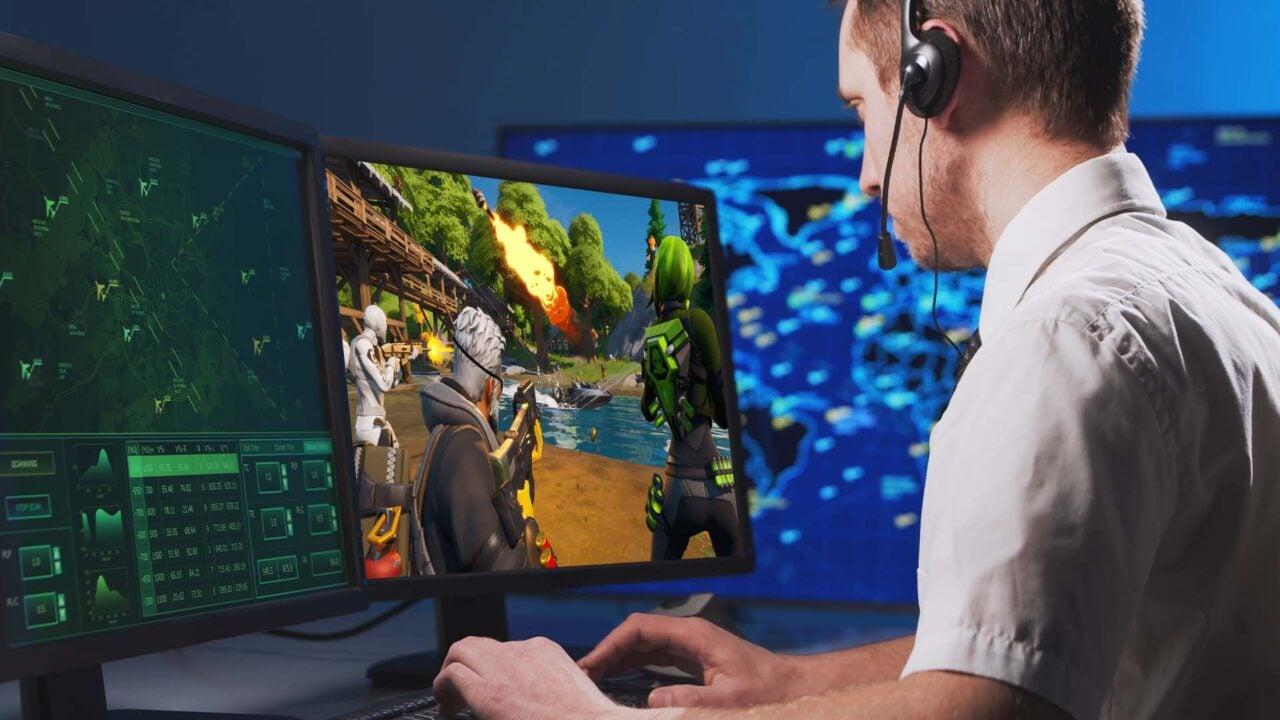
The US government, facing a critical shortage of air traffic controllers, is launching a recruitment campaign specifically targeting gamers, suggesting that hours spent in games like Fortnite and Rocket League have already 'trained' them for the job. It sounds a bit wild, but there's a surprisingly compelling argument that gaming cultivates valuable skills like quick thinking and complex problem-solving.
Right, so you know that feeling when you've just pulled an all-nighter, eyes burning, fingers aching from one too many raids or ranked matches, and you wonder if all those hours spent pixel-pounding are actually *doing* anything useful beyond making your significant other raise an eyebrow? Well, mate, hold onto your gaming chairs, because the US government might just have the answer. And it’s… wild.
Apparently, President Trump, Transportation Secretary Sean Duffy, and the Federal Aviation Administration (the FAA, for those not in the know) have cooked up a plan to tackle a rather serious issue: a critical shortage of air traffic controllers. This isn't just some minor inconvenience; we're talking about the folks who keep planes from accidentally high-fiving in the sky. And their chosen solution to this high-stakes problem? Us. Gamers. Yes, you heard that right. It’s like something out of a quirky indie game where your character accidentally saves the world by just being really good at Tetris.
Now, before we get all cynical, let's look at the 'why.' The numbers are a bit grim, honestly. According to a recent study, the US has a whopping 25% *fewer* air traffic controllers now in 2026 than it did way back in 1981. Meanwhile, these fewer controllers are tasked with wrangling *three times* the amount of air traffic. Bloody hell, that's like trying to solo an MMO raid designed for a full guild, but with real-world consequences. This shortage isn't new; it's been simmering for ages, worsened by staff and funding cuts. It's a genuine crisis, not just a minor hiccup.
So, the FAA's response? A brand-spanking-new recruitment drive aimed squarely at us, the 'next generation of air traffic controllers.' And they're not shy about it. They've dropped an ad featuring footage from Fortnite and Rocket League, boldly asking gamers if they're 'ready for the challenge' and suggesting we've 'been training' for this all along. My initial thought? 'Fair dinkum? Are they seriously suggesting my years of dodging blue shells and perfecting my drop-shot mean I can land a Boeing 747?'
On one hand, it's easy to be gently skeptical. Is this just a PR stunt, a way to make a grim problem sound cool and modern by slapping some gaming iconography on it? Corporations have a habit of latching onto gaming culture in the most cringe-worthy ways, don't they? ('Hello, fellow kids!') But then you dig a little deeper, and something interesting surfaces. The FAA claims that feedback from exit interviews with controllers suggests gaming actually *influenced* their ability to 'think quickly, stay focused, and manage complexity.' And get this: *The New York Times* reported that out of 250 new air traffic controllers polled by the Trump administration, all but two were self-described gamers. *All but two!* That's a frankly astonishing stat, if accurate.
It makes you think, doesn't it? What *are* the transferable skills we pick up in our digital playgrounds? Think about it:
* **Quick Decision-Making:** That split second you have to decide whether to push or retreat in a clutch moment, or which resource to prioritize in a strategy game. Air traffic control? Definitely needs quick calls. * **Focus & Attention to Detail:** Spotting that tiny health bar flicker in a chaotic fight, or noticing a subtle shift in enemy movement. Ignoring distractions when you're tracking multiple aircraft on a screen – sounds familiar. * **Complexity Management:** Juggling multiple objectives, monitoring cooldowns, managing inventories, coordinating with teammates, predicting enemy moves. It's essentially real-time strategy with very high stakes. * **Pattern Recognition:** Learning enemy attack patterns, understanding map layouts, anticipating game flow. Critical for identifying potential conflicts in airspace. * **Stress Management (sort of):** Okay, maybe a 1v5 clutch in *CS:GO* doesn't quite compare to guiding hundreds of lives, but the ability to perform under pressure *is* a skill cultivated by high-intensity gaming.
So, while I'm still processing the idea of 'Fortnite training' for controlling actual air traffic, there's a kernel of truth in the underlying idea that gaming hones some seriously valuable cognitive abilities.
It's not entirely unprecedented, mind you. *The New York Times* also pointed out that the previous Biden administration also made efforts to recruit gamers. But this time around, the Trump administration seems to be really leaning into it, making it a cornerstone of their recruitment strategy. It's also worth noting that this isn't the first time the Trump team has used video game aesthetics in official communications – we've seen plenty of game-themed propaganda with references to Pokémon, Halo, and Call of Duty. Whether that's genuine appreciation for the culture or just a savvy way to connect with a demographic, well, that's a whole other discussion for another day, isn't it?
So, what's the meta-game here? Is this a genuine innovation, a clever way to tap into an overlooked talent pool, or just a desperate measure wrapped in trendy packaging? My gut tells me it's a bit of both. The problems with understaffing and increased demand for air traffic controllers are very real, and any attempt to think outside the box to solve them is, in theory, a good thing. And let's be fair, the idea that gamers possess unique skills developed through hours of digital 'training' isn't entirely far-fetched. We've seen military branches use flight simulators for decades, haven't we? This feels like an evolution of that idea.
Ultimately, if your gaming hours mean you're more adaptable, quicker on the uptake, and better at managing complex, real-time scenarios, then maybe – just maybe – all those virtual adventures weren't just a delightful diversion. They might actually be your hidden 'XP' for a career path you never even considered. But let's not get *too* ahead of ourselves. While I'm genuinely stoked that gaming skills are getting this kind of recognition, I still reckon there's a fair bit more to air traffic control than perfectly timing a Rocket League aerial. Still, it's a fascinating crossover, isn't it? One that definitely blows a hole through the old 'video games are a waste of time' argument. This story was originally reported by Zack Zwiezen for Kotaku.
Tags: Gaming Culture, Industry Trends, Career Opportunities, Skill Development, Government Initiatives
Original article: kotaku