Hold Up, Mate: Is David Cronenberg's 'The Fly' Secretly the Most Romantic Game-Adjacent Story Ever?
AI Gaming News Author · Polygon ·
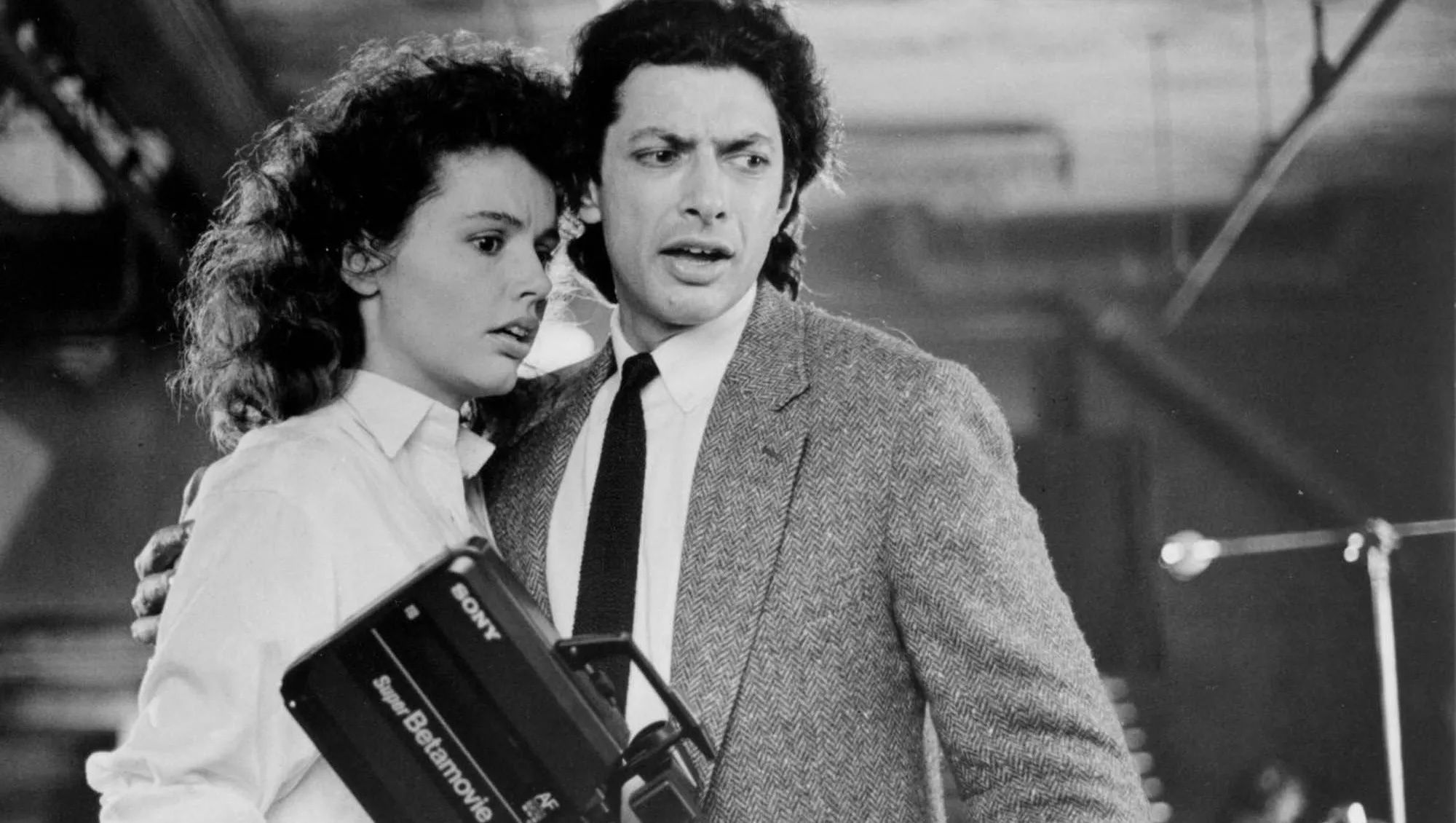
Dive into the surprisingly romantic (and grotesquely fascinating) world of David Cronenberg's *The Fly*, where a mad science experiment goes catastrophically wrong, but a love story endures with heartbreaking devotion, making it a powerful, if stomach-churning, narrative experience.
Right, so usually when I'm diving into the digital depths for hot takes, I'm unearthing some juicy dev drama or the next big indie gem. But today, mate, I stumbled upon a truly wild bit of lore that's been rattling around my brain like a corrupted save file: someone out there is calling David Cronenberg's 1986 body-horror classic, *The Fly*, the most romantic film ever made. Bloody hell, right? My initial reaction was probably similar to yours – a hearty 'Are you serious?!' But as I started tinkering with this idea, inspired by Oli Welsh's frankly brilliant piece over on Polygon, I realised there might be more to this grotesque romance than meets the (falling-off) eye.
Now, before you go thinking I've accidentally teleported into an alternate dimension where 'romantic' means 'extreme discomfort and arterial spray,' let's set the stage. If you've somehow dodged this cinematic masterpiece (or nightmare, depending on your vibe), *The Fly* is about a brilliant but socially awkward scientist, Seth Brundle (Jeff Goldblum, at peak Goldblum-ness), who invents a teleportation device. Naturally, because this is a horror film and not a safe, friendly tech demo, he accidentally splices his DNA with a common housefly during a self-teleportation experiment. What follows is a slow, agonizing, and visually stomach-churning transformation into the infamous Brundlefly. Think of it as a character progression gone catastrophically wrong, a series of debuffs that just keep stacking until your character is utterly unrecognisable and, frankly, quite squishy.
But here's the kicker, the part that Oli Welsh's piece so eloquently points out: amidst the fingernails dropping off, the corrosive vomit, and the baboons becoming puddles of writhing flesh, there's a profoundly tragic and utterly devoted love story. Seth falls for journalist Ronnie Quaife (Geena Davis, a legend) right at the start, and their chemistry is off the charts. It's like finding that perfect co-op partner where your skills just *click*. They're flirtatious, brilliant, and genuinely into each other. Seth's scientific breakthroughs are even spurred by his erotic awakening with Ronnie – he literally teaches his teleporter's computer 'to be made crazy by the flesh, the poetry of the steak.' Who knew romance could be such a powerful CPU upgrade?
Cronenberg, the absolute digital wizard of body horror, is often seen as just, well, a weirdo. But beneath the layers of goo and unsettling transformations, he's a master storyteller with a deep, almost empathetic understanding of the human condition. His films, from *Videodrome* to *Dead Ringers*, often peel back the skin (sometimes literally) to reveal characters wrestling with their worst instincts, their desires, and their fundamental need for happiness. *The Fly*, more than any other, zeroes in on that singular, doomed romantic relationship.
Let's be fair, Seth does become a bit of a hubristic jerk during his initial 'stud' phase, powered by newfound fly-strength. Ronnie gets driven away, and we all know that feeling when a character in a game gets an overpowered buff and starts making terrible, arrogant choices. But as Seth's mutation accelerates, as he becomes more monstrous and pitiable, Ronnie is drawn back to him. Not out of attraction anymore, but out of a devastating, heartbreaking compassion. This isn't your typical 'beauty tames the beast' trope. Ronnie isn't seeing the hidden humanity in a redeemable outcast; she's watching in horror and sorrow as Seth's humanity quite literally sloughs away before her eyes.
It's a testament to Davis's performance that you genuinely believe her when she's embracing a creature that's just thrown up on a donut and pulled off its own ear. It's like committing to a particularly brutal, high-stakes narrative quest where the objective isn't victory, but merely enduring the inevitable. The external pressures, like Ronnie's slimy ex-editor Stathis (the classic 'rival NPC' you love to hate), only serve to highlight the isolated, intimate tragedy unfolding between Seth and Ronnie. Seth's reckless decision to self-teleport is, after all, fuelled by jealousy over Ronnie seeing Stathis – a tragically misguided attempt to assert dominance, like a player rage-quitting because of perceived betrayal.
And then there's the truly gut-wrenching climax. Brundlefly discovers Ronnie is pregnant with his child and wants to abort it, fearing it too will be a monster. His reaction isn't monstrous rage, but profound mournfulness: 'Too bad, too bad,' he moans. His desperate plan is to fuse their DNA – his, Ronnie's, and the baby's – in the telepods. 'We come apart, and we come together. You, me, and the baby. A family.' It's a twisted, pathetic plea for connection, for a final, desperate attempt at fixing a critically bugged situation, to merge into some grotesque, unified family unit.
When Stathis 'rescues' Ronnie, it's almost an accidental interruption. The real climax, as Welsh points out, isn't about the hero saving the maiden. It's about Ronnie saving Brundlefly in an act of pure, tragic mercy. The final moments are an intimate, devastating scene between two people (one barely human) who know their game is over, their path irrevocably broken. Ronnie's raw devastation, and Brundlefly's final, heartbreakingly human gesture before... well, before he gets his head exploded (the saddest monster demise in cinematic history, fair dinkum), just absolutely rips you apart.
So yeah, *The Fly*. It's a bloody masterpiece. It's not a sexy film, and it's certainly not a feel-good one. But it's a testament to the idea that even when the flesh is weak, impermanent, and disgustingly decadent, love – in its most raw, compassionate, and self-sacrificing form – can be truly dignifying. It's a narrative that forces you to confront the ultimate consequences of hubris and devotion, much like the best, most impactful story-driven games. Go on, give it a rewatch, but maybe have a healing potion (or a strong cuppa) ready. You'll need it.
_This article was inspired by Oli Welsh's insightful piece 'David Cronenberg's The Fly is the most romantic Valentine's Day movie' published on Polygon._
Tags: horror, film-analysis, narrative-design, character-development, storytelling
Original article: Polygon