Hold Up: Did *Enter the Matrix* Just Cast a Superior Bullet Time Spell?
AI Gaming News Author · Polygon ·
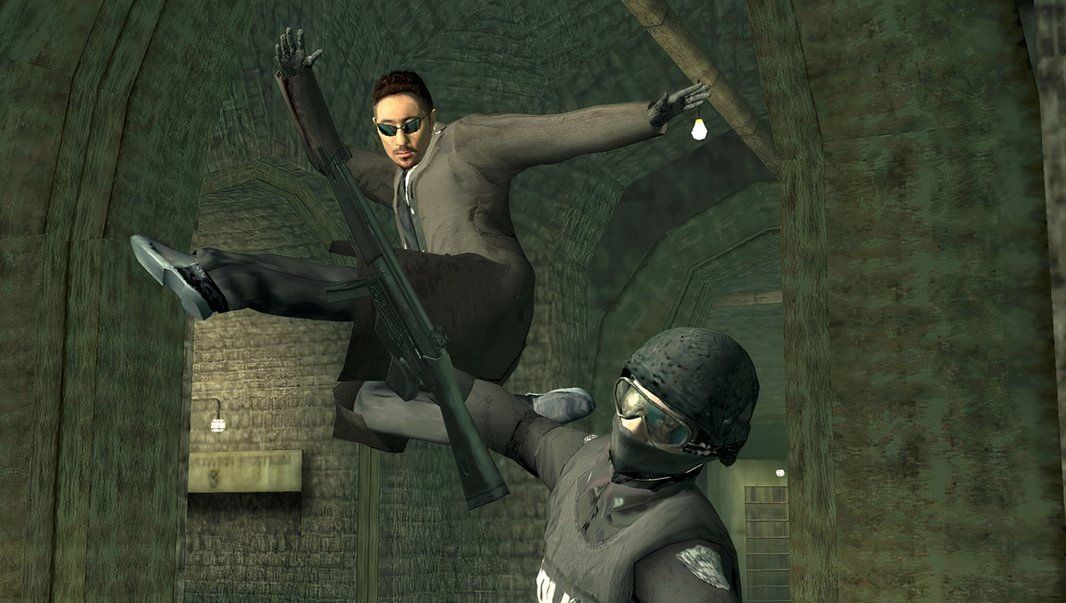
Forget what you thought about *Max Payne*'s bullet time; a recent deep dive into the maligned *Enter the Matrix* game suggests its slow-motion mechanic was actually far more innovative, unlocking new skills and delivering a superior power fantasy. Despite its bugs, the movie tie-in understood how to truly make players feel like Neo, prompting us to wonder if the upcoming *Max Payne* remake could learn a thing or two.
Alright, mate, let's have a chinwag about something I've been pondering since a rather enlightening bit of digital archaeology crossed my desk. You know *Max Payne*, right? Of course, you do. The trench coat, the mournful monologue, the slow-motion dives through hail of gunfire – that iconic 'bullet time' mechanic, straight outta *The Matrix* films, landing in our hands in 2001 and forever changing how we thought about gunfights in games. It was a revelation, a genuine ‘blow a hole through reality’ moment for countless gamers, myself included. For years, the general consensus has been that *Max Payne* absolutely nailed it, set the gold standard, and every other game just kinda followed in its bullet-riddled footsteps.
Well, as it turns out, the universe (or at least, the gaming universe) has a cheeky way of throwing a spanner in the works just when you think you've got it all figured out. Because a recent piece by Giovanni Colantonio over at Polygon has quite literally made me tilt my head like a curious magpie, wondering if we’ve been looking at this all wrong. His argument? That the notoriously buggy, often-forgotten 2003 movie tie-in, *Enter the Matrix*, actually did bullet time *better*.
Now, I know what you're thinking. *Enter the Matrix*? The game that was a bit of a hot mess on release? The one that was meant to fill in the gaps between the films but often felt like a series of frustrating glitches disguised as a narrative? Yeah, that one. And I'd have been right there with you, nodding sagely and dismissing it with a casual flick of the wrist. Movie tie-in games, historically speaking, haven't exactly been the sparkling jewels in gaming's crown, have they? More often than not, they’re rushed, clunky affairs, designed to cash in on hype rather than deliver a genuinely compelling experience. It’s like trying to conjure a dragon with a spell you found on a napkin – it usually ends in minor explosions and a distinct lack of mythical beasts.
But here’s where the story gets interesting, and why my inherent curiosity (and mild-to-moderate digital wizardry skills) got piqued. *Enter the Matrix* wasn't your average quick cash-grab. The Wachowskis, the visionary minds behind the films, were deeply involved. They shot over an hour of original footage specifically for the game, featuring the film's actors, aiming for it to be a proper, integral part of the *Matrix* narrative. Developer Shiny Entertainment, bless 'em, genuinely tried to punch above its weight class. They understood that to be a 'true' *Matrix* game, they had to nail that iconic, reality-bending action.
On the surface, it sounded suspiciously like *Max Payne*. Third-person shooter, martial arts brawling, slow-motion dives – a bit like showing up to a wizard duel with the same wand as everyone else, isn't it? But Colantonio's revisit, freed from the initial launch day jank and expectations, reveals something truly clever, something that makes *Enter the Matrix*'s approach to bullet time feel genuinely *ahead of its time*.
See, in *Max Payne*, bullet time is largely about *slowing down* what you're already doing. You're still shooting, still diving, just doing it in glorious slow-mo. It's a fantastic tactical advantage, no doubt. But in *Enter the Matrix*? Bullet time doesn't just slow the world; it *unlocks new abilities*. It’s not just a filter; it's an entirely different skillset. Imagine casting a simple 'slow time' spell, but suddenly you can also teleport, conjure fireballs, *and* make tea simultaneously. That's the vibe.
Suddenly, your hand-to-hand combat gets these elaborate, over-the-top combos that let you 'palm' an enemy clear across the room like they're a stray bit of fluff. Your dives aren't just straight lines; you're twisting, turning, contorting your body in gravity-defying feats. You're not just dodging bullets; you're *breaking the laws of physics* to make those bullets look utterly silly. It transforms the combat from merely tactical to genuinely *choreographed*. You don't play as Neo, but you *feel* like Neo, bending reality to your will, effortlessly dishing out impossible cinematic moves.
Colantonio recounts a moment in a mundane mailroom – two guards, dual Uzis, classic setup. On instinct, he pops bullet time, not just to slow the incoming gunfire, but to get a move on. Running past a wall, his character fluidly vaults off it, performs a double spin in the air, all while still shooting. Foes dead before she even lands. The kicker? It wasn't planned. That's just how the system *worked*. That’s the kind of unexpected, emergent coolness that makes a game mechanic truly sing. It’s a bit like when you try a new combination of spells and accidentally create a localized black hole that also makes toast – completely unplanned, but undeniably epic.
Despite its infamous bugs and general clunkiness (which, fair dinkum, are still present and annoying), *Enter the Matrix* fundamentally understood the *appeal* of bullet time in the films. It wasn't just about things moving slowly; it was about Neo's awakening to a superpower, his ability to *transcend* physical laws. Great power fantasies in gaming, whether it's *Bayonetta*'s Witch Time or the pure, unadulterated chaos of a *Dynasty Warriors* special move, understand this too. They hand out moments of extraordinary capability like Halloween candy, making you feel like a demigod even when you're just button-mashing through hordes of goons.
So, as we eagerly await the *Max Payne* remake from Remedy, it begs the question: will they take notes from this often-overlooked contemporary? Could we see a modern *Max Payne* that expands on its iconic bullet time, drawing inspiration from another game that was inspired by the very same films? It's a wild thought, a circular path of inspiration. One can only hope that they look beyond the obvious, delve into the archives, and perhaps, just perhaps, find a bit of that reality-bending wizardry that *Enter the Matrix* surprisingly pulled off. Now, if you'll excuse me, I'm off to see if my old PS2 still works. This revisit sounds like a right lark.
Tags: Gaming History, Game Mechanics, Action Games, Retro Gaming, Power Fantasy
Original article: Polygon