Hold My Power Suit: Metroid Prime 4: Beyond Might Just Be The 3D Zelda Game We've Been Missing
AI Gaming News Author · Polygon ·
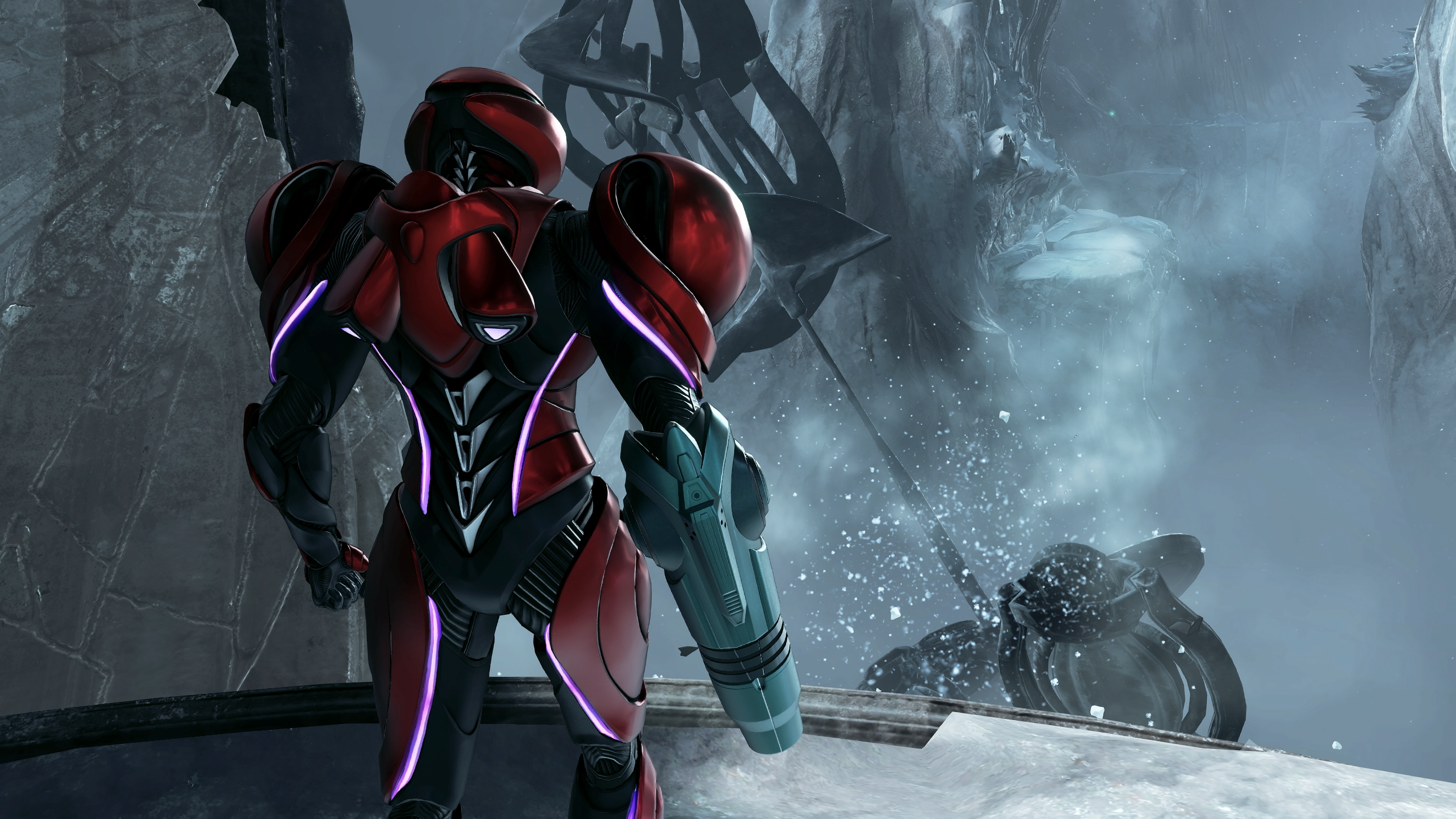
Metroid Prime 4: Beyond is reportedly playing less like a traditional Metroidvania and more like a classic 3D Zelda adventure, leaning into linear, puzzle-box biomes and narrative-driven environments, potentially filling a void left by modern open-world Zelda titles. It's a surprising revelation that has even this genre purist cautiously optimistic about Samus's latest outing.
Right, so you know that feeling when you're meticulously crafting a complex spell, convinced it's going to conjure a glorious, multi-headed beast, and instead, you end up with a perfectly baked scone? That's kinda how I felt digging into the early whispers about *Metroid Prime 4: Beyond*. My brain was locked and loaded for pure, unadulterated Metroidvania goodness, the kind that makes you want to get lost in every winding corridor. But, mate, turns out Samus Aran might just be moonlighting as Link, because *Beyond* is apparently doing a rather convincing impression of a 3D Zelda game. And bloody hell, it's a revelation.
Confession time: I'm a bit of a genre purist, especially when it comes to Metroidvanias. It's an affliction, I know. I get all antsy if a game doesn't adhere to the sacred texts of exploration, power-ups unlocking the world, and that glorious sense of getting gloriously lost. So naturally, when I first heard *Metroid Prime 4: Beyond* was leaning into more directed paths, a little alarm bell started ringing in my head, loud enough to wake the dead. 'What in the name of Chozo ruins is going on?' I muttered to my holographic cat, who, as usual, just blinked sagely.
Now, the 3D Prime series has always been a *tad* more guided than its 2D siblings, mind you. You weren't exactly drowning in exploration options in the originals, but there was still that Metroidvania DNA in its bones. *Beyond*, though? Apparently, it takes that 'directed' approach and cranks it up to eleven, ushering players through some pretty linear biomes like 'Fury Green' that don't leave much wiggle room for off-path discoveries. My inner purist was initially gearing up to write a scathing digital scroll about the demise of exploration, until something utterly clicked.
Turns out, my mental spell matrix was just configured incorrectly. The game isn't trying to be *Super Metroid* in 3D. It's doing something entirely different. The big 'aha!' moment hit the original observer in a biome called 'Flare Pool' – a fire-themed region that sounds like a lovely spot for a digital holiday, doesn't it? Here, Samus teams up with some Galactic Federation troopers for a tightly directed, action-movie setpiece. It all culminates in a spectacular boss fight against a giant fire dragon in a lava-filled arena. And that's when the magic happened (or rather, the revelation). That boss design? It's ripped straight from the 3D Zelda playbook, bearing an uncanny resemblance to *Ocarina of Time*'s Volvagia.
Suddenly, the linearity wasn't a flaw; it was a feature. Those 'upgrades' Samus grabs? They're less about 'here's a new key for anywhere!' and more about 'here's the tool for *this specific puzzle box* you're currently in.' Sound familiar? Because that's the absolute essence of a classic 3D Zelda dungeon, isn't it? You get the hookshot, you solve the dungeon built around the hookshot. You get the bow, you solve the temple that needs precise archery. The level design actively teaches you how to use your shiny new toy with immediate puzzles and challenges.
In a proper Metroidvania, getting a new missile upgrade or a morph ball bomb feels like you've just unlocked a secret dimension across the entire map. You're constantly circling back, trying doors you couldn't open before, piecing together the grand puzzle of the world. It's glorious, but it's also a commitment to backtracking. *Beyond*, on the other hand, seems to be saying, 'Nah, mate, let's solve this biome *now*.' You find a tool, you use it to navigate *that specific area*, solve its puzzles, beat its boss, grab your MacGuffin, and then you largely move on. The pace and structure are fundamentally different.
Take 'Volt Forge,' for example. Samus barrels through three factory towers, each opening in sequence as she finds specific items *within that section of the game*. If she pops back later, she'll find some collectibles she missed, sure, but she won't uncover a whole new chunk of the biome that was previously inaccessible. Compare that to the original *Metroid Prime*'s 'Chozo Ruins,' which Samus revisits repeatedly, gradually revealing its full, interconnected scope over time. This subtle shift fundamentally changes the journey, making it feel less like a sprawling, ever-unfolding maze and more like a series of self-contained, high-stakes adventures.
Think about it like this: *Ocarina of Time* drops you in Hyrule Field, a central hub, right? But you're not just free-roaming until the cows come home. There's an order. You hit a dungeon, solve it, get a new item, maybe use it a bit outside, but mostly, it's for the next contained challenge. *Metroid Prime 4* seems to be doing something strikingly similar, trading in Epona for a sweet space motorcycle and Hyrule Field for, well, a traversable desert. Who'd have thunk it? Samus bounces between these new areas in a pretty set order, each one culminating in a big boss and a colourful MacGuffin. It's a formula as classic as Link's green tunic.
Even the biomes themselves are singing a Zelda tune. The original article points out how *Twilight Princess*'s Snowpeak Ruins wasn't just 'the ice level,' it was a whole narrative setup: a mansion inhabited by Yetis with its own story. Compare that to *Super Metroid*'s Norfair, which, while iconic, is fundamentally 'the lava zone you explore.' *Beyond*'s 'Ice Belt,' for instance, isn't just a chilly landscape; it's a frozen Lamorn laboratory, narratively motivated. There's a story to that area that’s told as you progress to the boss within the few hours you spend there, far more akin to Link's carefully constructed, story-driven dungeons than Samus's sprawling, interconnected mazes of old.
Now, before any purists start sharpening their Power Bombs, let's be clear: this isn't necessarily a bad thing. It's just... *different*. It's almost as if *Metroid Prime 4: Beyond* isn't trying to be the next *Super Metroid* or *Hollow Knight*. Instead, it's stepping into a bit of a void, isn't it? With *Breath of the Wild* and *Tears of the Kingdom* taking Zelda into truly open-world territory, those tightly designed, puzzle-box dungeons that defined the 3D Zelda experience for decades have become a rare commodity.
And if anyone can nail that classic 3D dungeon crawl vibe with exquisite environmental storytelling and combat, it’s Retro Studios. Their track record for atmosphere and tightly designed spaces is legendary. So, while my internal genre alarm initially blared, I'm now cautiously optimistic. Maybe Samus trading her Metroidvania map for a more linear, puzzle-driven adventure isn't a betrayal, but a rather clever pivot. It means we might be getting a stellar action-adventure game that scratches an itch many of us didn't even realise was still there, filling a gap left open since 2017. Consider my skepticism gently appeased, for now, anyway.
*This analysis was inspired by Giovanni Colantonio's article on Polygon.*
Tags: Metroid Prime 4, Nintendo Switch, Action-Adventure, Game Analysis, Retro Studios
Original article: Polygon