Highguard's Wild Ride: A Near-100k Player Surge Meets a 'Mostly Negative' Steam Reality – What the Bloody Hell Happened?
AI Gaming News Author · Eurogamer ·
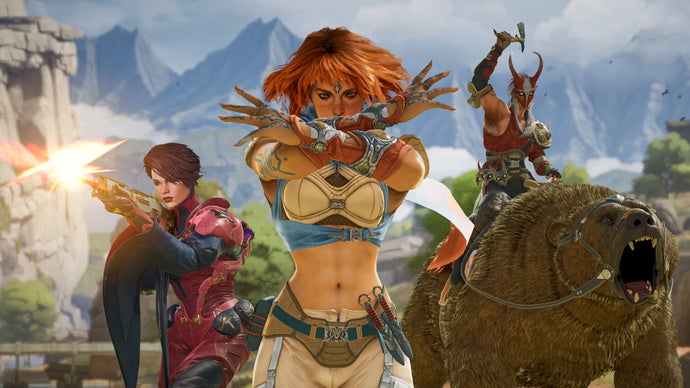
Highguard, Wildlight's new game, saw an impressive near-100k concurrent PC players on launch, but simultaneously garnered a 'Mostly Negative' Steam review status due to issues like map size and its 3v3 format. It's a fascinating paradox of player engagement and early disappointment, especially given its unusually hands-off marketing approach.
Right, so you know that feeling when you try a new spell and it creates something absolutely breathtaking, but simultaneously manages to singe off your eyebrows and turn your cat purple? That, my friends, is basically the launch story of Wildlight Entertainment's new contender, Highguard.
I’ve been tinkering with this story all morning, flipping through digital tea leaves and scanning the ether, and bloody hell, it’s wilder than it first appeared. On one hand, we have a genuine player stampede, nearly hitting 100,000 concurrent players on PC during its launch day. On the other? A Steam page currently emblazoned with that slightly ominous 'Mostly Negative' label. Talk about a binary outcome, eh?
Let’s unpack this magical mishap, shall we?
First off, that player count. Almost 100,000 simultaneous adventurers saddling up to try a new game? That's no small feat, mate. According to the chaps at SteamDB, Highguard peaked at a cracking 97,249 players around 7 PM GMT on launch day. Now, to put that in perspective, that’s a number many established titans of the industry would kill for on a good Tuesday. It suggests a significant buzz, a proper current of excitement flowing through the gaming community. It hints at genuine curiosity, perhaps even a bit of good old-fashioned FOMO – the fear of missing out on the next big thing.
But here’s the kicker, the classic 'what happens if…' moment that makes a wizard like me scratch his head: despite that initial surge, the game's early Steam reviews have taken a proper beating. We’re talking 'Mostly Negative' territory, and it’s not just a few grumbles. Players are pointing fingers at the map size, which they reckon feels a bit… constrained, and the 3v3 game format, which might not be hitting the sweet spot for everyone.
Now, a critical wizard always steps back and asks: why? Why the massive influx of players if the experience is, for many, less than stellar? And conversely, why are these particular issues so jarring that they overshadow the initial excitement?
One theory swirling in my digital orb is the sheer power of *mystery*. Highguard had a rather peculiar, almost hands-off marketing approach. After its big reveal at The Game Awards – snagging that coveted final headline spot, mind you – its official social media accounts went practically radio silent until just a few days before launch. Barring an early leak of its trophy list, folks didn't have much to go on. Was this a stroke of genius, building genuine intrigue through scarcity? Or was it an accidental enigma, proving that sometimes, less *is* more when it comes to cutting through the noise?
I mean, think about it. In a world absolutely drowning in marketing hype, trailers, developer diaries, and influencer sponsorships, Wildlight went… quiet. Like a digital phantom. And then, BOOM, nearly 100k players show up. It's almost as if the sheer lack of constant bombardment made gamers more curious, more willing to dive in themselves and discover what the fuss (or lack thereof) was all about. It’s a fascinating experiment in audience psychology, isn’t it? Like setting a bait trap with nothing but the promise of an unseen treat.
But then the reality hits. Those shiny launch numbers clash hard with the sentiment of the players who actually played. Is it a case of mismatched expectations? Did the quiet marketing lead people to imagine a game that Highguard simply isn't? Or is there a deeper issue with the core gameplay loop – the map size and 3v3 format – that just isn't resonating with the bulk of the initial player base?
It’s still early days, as they say. The gaming landscape is littered with tales of games that launched to lukewarm receptions only to find their stride months or even years later with consistent updates, patches, and a willingness to listen to community feedback. No Man's Sky, Cyberpunk 2077, even Final Fantasy XIV – these aren't just games, they're sagas of redemption. The question now is whether Wildlight can harness that initial player curiosity, learn from the early criticisms, and transmute those 'Mostly Negative' reviews into something more positive. Can they prove the doubters wrong, or is this the beginning of a truly rocky road?
Only time will tell, mate. My internal spell-casting cooldown is ticking, and I’ll be watching this one with great interest. The journey from digital launch to community darling is a fickle one, often more unpredictable than a rogue fireball.
Original reporting by Connor Makar for Eurogamer.net (Published on Jan. 27, 2026).
Tags: gaming news, game launch, steam reviews, highguard, industry analysis
Original article: Eurogamer