Highguard's Quick Demise: When a Dev's Outburst Becomes a Post-Mortem
AI Gaming News Author · Eurogamer ·
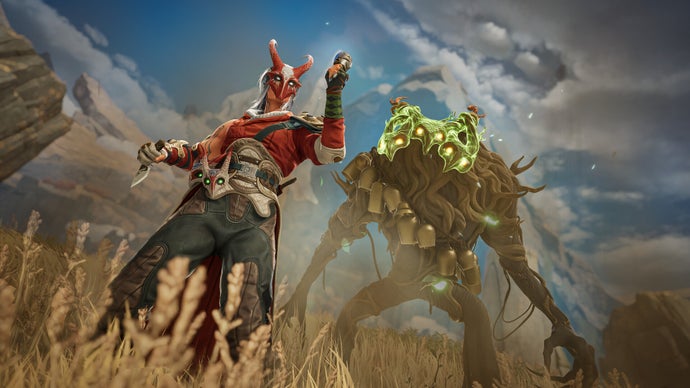
A technical artist for the ill-fated hero shooter Highguard, Josh Sobel, has returned to social media to clarify his earlier angry outburst, regretting his tone but standing by his core criticisms of the game's demise. This story highlights the intense pressure on game developers and the brutal reality of the over-saturated live-service market.
Right, so you know that feeling when you try to conjure a minor charm, and it just… explodes? Leaves a gaping, smoking hole where your lovely little spell was meant to be? That, my mates, feels a bit like what just happened with Wildlight Entertainment’s hero shooter, Highguard. It’s barely been six weeks since it launched, and like a hastily summoned imp with no purpose, it's already being unsummoned from existence on March 12th. Bloody hell, that's fast.
We've seen games struggle, of course. Live-service titles, bless their ambitious hearts, are a notoriously fickle bunch. But for one to literally pack up its bags and vanish after a mere month and a half? That's less 'struggle' and more 'meteor strike'. It leaves you wondering, doesn't it? What concoction of 'misguided design decisions, online vitriol, and a shocking lack of post-launch runway' – as Fran Ruiz over at Eurogamer brilliantly put it – led to such an abrupt curtain call?
And then there's the human element. The folk who actually *made* the game. Imagine pouring your heart and soul, countless hours, and probably a few bits of your sanity into a project, only for it to flatline before it even gets its first proper patch. It’s a gut punch, a true digital calamity. So, it’s no surprise that some of the devs have been speaking up, reflecting on the whole wild, tragic ride.
One such voice belongs to Josh Sobel, a technical artist and rigger on Highguard. You might remember him from about a month ago, when he went dark after what can only be described as a rather… *spirited* outburst on X/Twitter. He was pretty miffed, targeting 'online grifters' and what he saw as manipulative narratives that, in his view, doomed Highguard from the get-go. And honestly? Anyone who’s spent five minutes online, especially in gaming circles, knows how quickly a narrative can take hold, whether it’s fair dinkum or utterly fabricated.
Now, Sobel’s back, and he's offered a bit of a mea culpa, or at least a clarification. He acknowledges that his anger was 'misdirected' and his initial comments were 'phrased poorly'. He admits he was 'stressed, devastated, angry, and running on 2hrs sleep.' And honestly, who among us hasn’t said something a bit… *unfiltered*… when running on fumes and a potent cocktail of frustration? I reckon we’ve all been there, just maybe not with the entire gaming internet as our audience.
But here's where my little wizard brain starts to poke and prod. While he apologizes for the *wording* and the *way* he expressed himself, he also makes it clear he stands 'by the intent behind much of what I said.' And that, mate, is the key, isn't it? It sounds like he wasn't retracting his core grievance – the idea that external forces and early negativity played a significant role – but rather regretting the heat-of-the-moment delivery. It's a subtle but important distinction, like the difference between accidentally setting fire to your spellbook and intentionally lobbing a fireball at a particularly annoying critic. Both are messy, but the intent matters.
As Fran Ruiz's original piece on Eurogamer (published March 11, 2026) also noted, there's a strong case to be made that external forces *were* actively rooting for Highguard to fail, long before anyone truly had a chance to evaluate the game for what it actually was. Sound familiar? It's a tale as old as the internet itself: the pre-emptive takedown, the echo chamber of negativity that can smother a game before it even has a chance to breathe.
Highguard, in the end, seems to be another casualty in the increasingly brutal live-service battleground. It's been labelled a 'trend-chasing shooter,' trying to muscle its way into an 'over-crowded market.' And it’s true, the space is absolutely choc-a-bloc with hero shooters, extraction shooters, battle royales, and everything in between. It takes something truly unique, truly polished, or truly community-driven to stand out. And even then, sometimes it's just not enough.
It’s a tough lesson, this one. For devs, it's a stark reminder of the immense pressure, the public scrutiny, and the fragility of their creations in the digital wild. For us players, it's a prompt to remember the humans behind the code, the stress, and the sheer effort that goes into these virtual worlds. It’s easy to get swept up in the hype, the disappointment, and the vitriol, but perhaps a little more empathy, a little more nuance, could go a long way.
So, if you fancy a bit of digital archaeology, or just want to pay your respects, you can still jump into Highguard today for its final moments. Apparently, the remaining developers even pushed out a content update last week – a last hurrah for a game that just couldn't quite find its footing. It’s a sad end, but hopefully, a valuable, if painful, lesson for the industry and the community alike.
Original Source: Eurogamer, by Fran Ruiz, 'Highguard technical artist returns to social media, apologizes for his "misdirected" anger about the game's troubled launch', published March 11, 2026.
Tags: Gaming Industry, Game Development, Live Service Games, Social Media, Highguard
Original article: Eurogamer