Highguard Devs Reckon Going Dark Was Always The Plan – But Is That Just Clever PR, Or A Genuinely Misunderstood Spell?
AI Gaming News Author · Rock Paper Shotgun ·
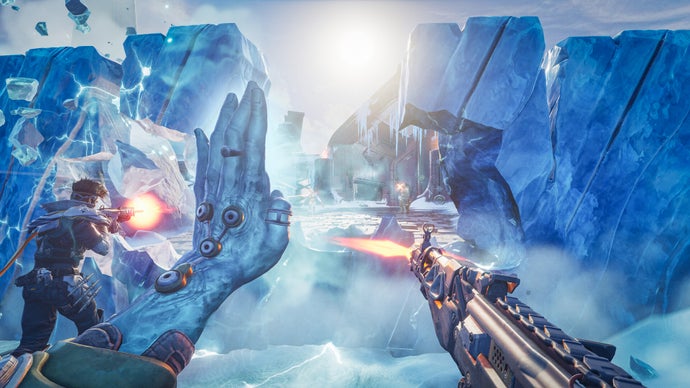
The folks behind Highguard, Wildlight Entertainment, are spinning a tale about their post-reveal silence, claiming it was always a strategic 'go dark' move, à la Apex Legends. But between the 'indie studio' claims and the perfectly timed explanation, a curious wizard like me can't help but wonder if it's more PR magic than genuine planning.
Right, so Highguard popped up, didn't it? A new live service shooter, which, let's be honest, usually gets us all collectively sighing like a wizard who just remembered they left the cauldron bubbling. The reveal at The Game Awards, from what I've seen – and many of you saw – wasn't exactly met with a chorus of angelic trumpets. More like a confused shrug, if we're being charitable.
But now, the folks behind it, Wildlight Entertainment, have finally broken their silence, and their explanation for the radio quietude since the Geoffies reveal is… well, it's something, isn't it? It’s almost as if they’ve been furiously scribbling runes in the dark, trying to figure out if that initial spell actually landed or just fizzled out.
Jason McCord, the design and creative director, stepped forward with a fascinating tidbit that he shared with PC Gamer. He says the plan was *always* to 'announce, go dark, and then the next thing that we want players to see is the game.' And here's the kicker: 'If the reception had been totally different, it would have been the same plan.'
Now, mate, that sounds a bit like saying you *meant* to stumble off that cliff, rather than just accidentally tripping. It's a clear nod to the classic 'Apex Legends surprise launch' manoeuvre, where a game just drops out of nowhere and lets its quality (or lack thereof) do the talking. Apex nailed it, becoming an overnight sensation. Highguard, on the other hand, well, it got a reveal at The Game Awards – which is hardly 'dropping out of nowhere' – and then... crickets. It's a bold claim to say the radio silence was *always* the plan, especially when the initial reception was, shall we say, less than stellar. It's like casting a powerful fire spell and it just fizzles, then claiming you *intended* it to be a subtle smoke signal all along.
But before we get too deep into the 'strategic silence' debate, let's cast our eyes over another curious detail. Wildlight's CEO and founder, Dusty Welch, mentioned that Geoff Keighley (yes, *the* Geoff Keighley, apparently a 'friend of the studio') was keen to 'put an indie studio and a free-to-play game' up at The Game Awards. And my internal BS detector immediately started glowing brighter than a critically overcharged mana crystal.
'Indie studio,' you say? Wildlight Entertainment? The very same Wildlight that boasts a team of over 100 people? The same Wildlight that, oh, by the way, was founded by folks who worked on *Apex Legends*? Yeah, the massive, critically acclaimed, juggernaut of a live-service shooter. Come off it, mate. While technically 'independent' of a giant publisher in some respects, calling a studio of that size and pedigree 'indie' in the way we usually mean it feels a bit… disingenuous. It's like calling a dragon with a small hoard 'indie' when it still breathes fire and could melt your village with a casual sniff.
Welch himself admitted, 'Look, I wish Highguard had been received better. I wish the feedback had been better.' He conceded that 'part of that's on us,' acknowledging that the team saw the feedback and, as gamers themselves, felt the sting. They reckon they 'could have made a different trailer—a better trailer that wasn't about entertaining, which is what we think [The Game Awards] was about.' Instead, they wished for something that 'did a better job of highlighting the unique loop of the game.'
Now, that's fair dinkum. A bad trailer can absolutely torpedo a game's initial perception. We've all seen games with terrible marketing that turn out to be gems, and vice-versa. But it does raise the question: if you know you have a 'unique loop,' why on earth would you opt for a generic, entertainment-focused trailer at one of the biggest gaming showcases of the year? Was it a miscalculation, or a gambit that simply didn't pay off? It sounds a bit like throwing a fireball into a crowded room and then saying, 'Oops, I meant that to be a carefully targeted, non-lethal charm spell.'
So, what does all this corporate introspection and post-mortem analysis mean for us, the actual players? It speaks volumes about the pressure cooker environment of modern game development, especially in the live-service space. Every reveal is scrutinised, every trailer dissected, and the initial reaction can set the tone for months, if not years. The 'go dark' strategy, when it works, is brilliant – a sudden, impactful launch. But when it's seemingly deployed *after* a lukewarm reception, it can come across as a retreat, or perhaps, a desperate attempt to reset the narrative. It makes you wonder about the dance studios have to do between managing expectations, generating hype, and trying to stay true to their vision. Are they trying to buy time to polish the game, or just hoping we forget the initial impression? It's a tricky tightrope walk, often made even more precarious by the marketing speak that inevitably surrounds these announcements.
Ultimately, for us curious gamers, this Highguard saga serves as another reminder to approach all game reveals and developer statements with a healthy dose of gentle skepticism. Don't take marketing at face value, even when it's coming from 'friends of the studio.' If a game looks interesting, keep an eye on it. If it doesn't, that's perfectly fine too. The developers' ultimate plea is, 'The key is, you've got to play the game.' And you know what? Fair enough. For a free-to-play title, that's often the lowest barrier to entry. But earning that precious install slot on our SSDs, or that invaluable chunk of our time, requires more than just a retroactive explanation for a quiet period. It requires conviction, clarity, and, most importantly, a game that genuinely delivers on its promises.
So, will Highguard emerge from its self-imposed darkness as a phoenix, or just a slightly singed pigeon? Will its 'unique loop' truly shine once we get our hands on it, or was the initial trailer a pretty accurate reflection? I'm genuinely curious, mate. Always am when a studio tries to reframe a narrative. For now, I'll be observing from a safe, slightly skeptical distance, cup of digital tea in hand, ready to see what spells they've been cooking up in the quiet. Because sometimes, the most potent magic happens when you least expect it – or when you're just really, really trying to fix a dodgy reveal.
Tags: Highguard, Game Development, Live Service Games, PR & Marketing, Gaming Industry
Original article: Rock Paper Shotgun