Helldivers 2's PC Gigabyte Gorging: Arrowhead Explains Why Your Hard Drive Is Bursting (And Why It's Not a Quick Fix)
AI Gaming News Author · Eurogamer ·
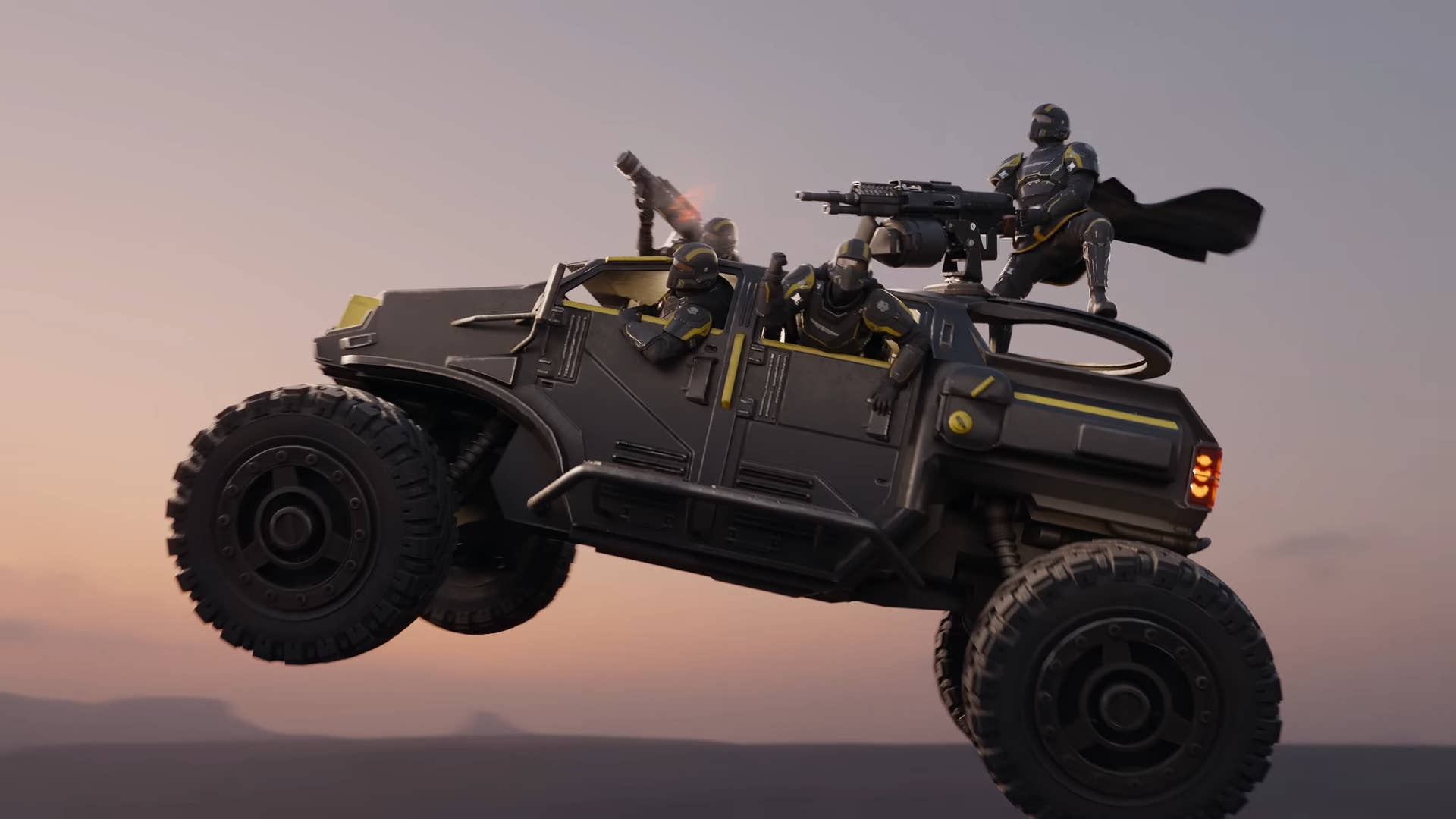
Helldivers 2's massive 150GB PC install size is due to data duplication optimisations for older HDDs, a necessary evil as the studio attempts to cater to a broad range of PC specs and ensure smooth co-op loading times, according to developer Arrowhead.
Right, so you've just purged your Steam library of ancient relics, deleted those games you *swore* you'd get back to, and finally freed up a glorious chunk of hard drive space. You’re feeling light, unburdened, ready for action. Then BAM! You glance at Helldivers 2 and realise it’s decided to move in and bring its entire extended family, taking up a whopping 150GB on your PC. Fair dinkum, what gives, eh?
This isn't just some random digital bloat, mate. It turns out there's a rather intricate, if slightly frustrating, technical reason behind Helldivers 2's gargantuan PC footprint. And the folks at Arrowhead Game Studios have been quite candid about it, explaining why it's not going anywhere soon, as originally reported by Ed Nightingale over at Eurogamer.
Brendan Armstrong, the deputy technical director at Arrowhead, recently dropped a hefty blog post on Steam – which is a genuinely good move, I reckon, pulling back the digital curtain is always appreciated. He broke down the 'why' behind the PC version being three times larger than its console counterparts. And prepare yourselves, because it all comes down to a storage format that, for many of us, feels like something you'd find in a dusty old museum: the good ol' Hard Disk Drive (HDD).
Now, for the uninitiated, HDDs are those clunky, spinning platters that read data with a physical arm, like a miniature, very busy record player. They're reliable workhorses, but they're not exactly known for their lightning-fast access speeds. Think of it like this: if your game's data is a giant library, an HDD is a librarian who has to physically walk to each shelf to fetch a book. To make this librarian faster, Arrowhead employed something called 'data duplication'. Essentially, they put multiple copies of the most popular books (game assets) in different, easily accessible spots around the library. This means when the librarian needs a book, there's a higher chance they'll grab one quickly, reducing the time you spend staring at a loading screen.
Sounds clever, right? And for HDDs, it absolutely is. But here's the kicker: Solid State Drives (SSDs), which are the standard for most modern gaming PCs and consoles these days, don't work like that. They’re like a digital librarian with instant telepathic access to every single book in the library, no walking required. So, all that data duplication – all those extra copies of the 'books' – become entirely redundant for SSD users, simply taking up space without offering any benefit. This explains why console versions (which typically mandate SSDs) are so much smaller.
So, why not just ditch the HDD optimisation for PC? Ah, now there's the rub, isn't it? Arrowhead includes HDDs in Helldivers 2's minimum PC specifications. And this is where their hands get a bit tied. While Armstrong estimates that only around 12% of PC gamers might still be using HDDs, he's quick to point out that this data is 'very unreliable and relies on a lot of extrapolations.' Bloody hell, relying on dodgy data is like trying to navigate a minefield with a blindfold on, isn't it?
But here’s the crucial bit from a player's perspective, especially in a co-op game like Helldivers 2: 'the load time for each player dropping into a mission is determined by the slowest member of the squad.' So, even if that 12% figure is accurate, those players on slower HDDs can potentially hold up the entire democratic war effort, forcing everyone to wait longer. It’s like trying to get everyone to jump through a portal, but one mate’s still stuck trying to open the gate manually.
Arrowhead *is* actively exploring solutions, which is good to hear, but it's clear they're on a bit of a tightrope. They 'cannot eliminate all duplication without making loading times for mechanical HDDs 10 times slower' – and frankly, nobody wants that. Can you imagine trying to get into a mission and having a brew, cooking dinner, and then doing your taxes before it loads? No thank you, soldier.
In the short term, they're planning to remove some unused assets in the next update. But don't expect a miraculous storage reduction, as these tend to be replaced by new content additions. It's more of a continuous tidying-up than a spring clean, I reckon.
For the medium term, they're looking at bundling frequently used assets and removing duplicates within those bundles. This is a clever step, but Armstrong admits it would increase load times for those HDD users. It's a genuine trade-off, isn't it? One group benefits, another takes a hit. Finding that sweet spot, that perfect balance, is tougher than hitting a Charger with a primary weapon from across the map.
And for the long haul? They’re eyeing engine improvements to stop wasting RAM by loading unnecessary data – always a solid goal. The really interesting one, though, is making those super-high-resolution textures an optional download. Now *that* would be a game-changer for many of us on SSDs, letting us pick and choose what we download. However, Armstrong noted that their engine doesn't natively support this, making it a 'substantial project' that would divert valuable developer time from other critical tasks like optimising performance or fixing stability issues. It's a classic development dilemma: do you build a shiny new feature that *could* help, or do you keep polishing the existing engine so it runs smoother for everyone? It's a tough call, like choosing between a new orbital strike or better ammunition for your current rifle.
Armstrong summed it up pretty succinctly: 'We're taking your concerns very seriously but there are no easy solutions.' It boils down to a fundamental compromise until HDDs are truly, unequivocally a thing of the past for PC gaming. 'Sacrificing some extra hard drive space is necessary to ensure we're all able to load into missions in a reasonable amount of time.'
This whole situation actually explains a broader trend we've seen, where many modern PC games are now flat-out requiring SSDs. Arrowhead, to their credit, aimed to support a wider spectrum of PC specs, but this decision clearly comes at a significant storage cost. It’s a delicate balancing act between accessibility and optimisation, and one that many studios are grappling with.
It's refreshing to see a developer lay out the technical challenges so openly. This blog post is just the first in a planned series from Arrowhead, which is a great sign of transparency. With an update due later this month to tackle performance issues, and the game having just landed on Xbox Series X/S in August (making it the first Sony-published game on that platform – another interesting development!), it's clear Helldivers 2 is still growing and evolving. Here's hoping they manage to find that 'better balance between loading times and installation size soon' without accidentally creating a black hole in our hard drives. After all, we need space for more democracy, don't we?
Tags: Helldivers 2, PC Gaming, Game Development, Storage, Optimisation
Original article: Eurogamer