Haunting the Code: Why David Lowery’s Ghostly Visions Feel Like the Ultimate Game Design Masterclass
AI Gaming News Author · Polygon ·
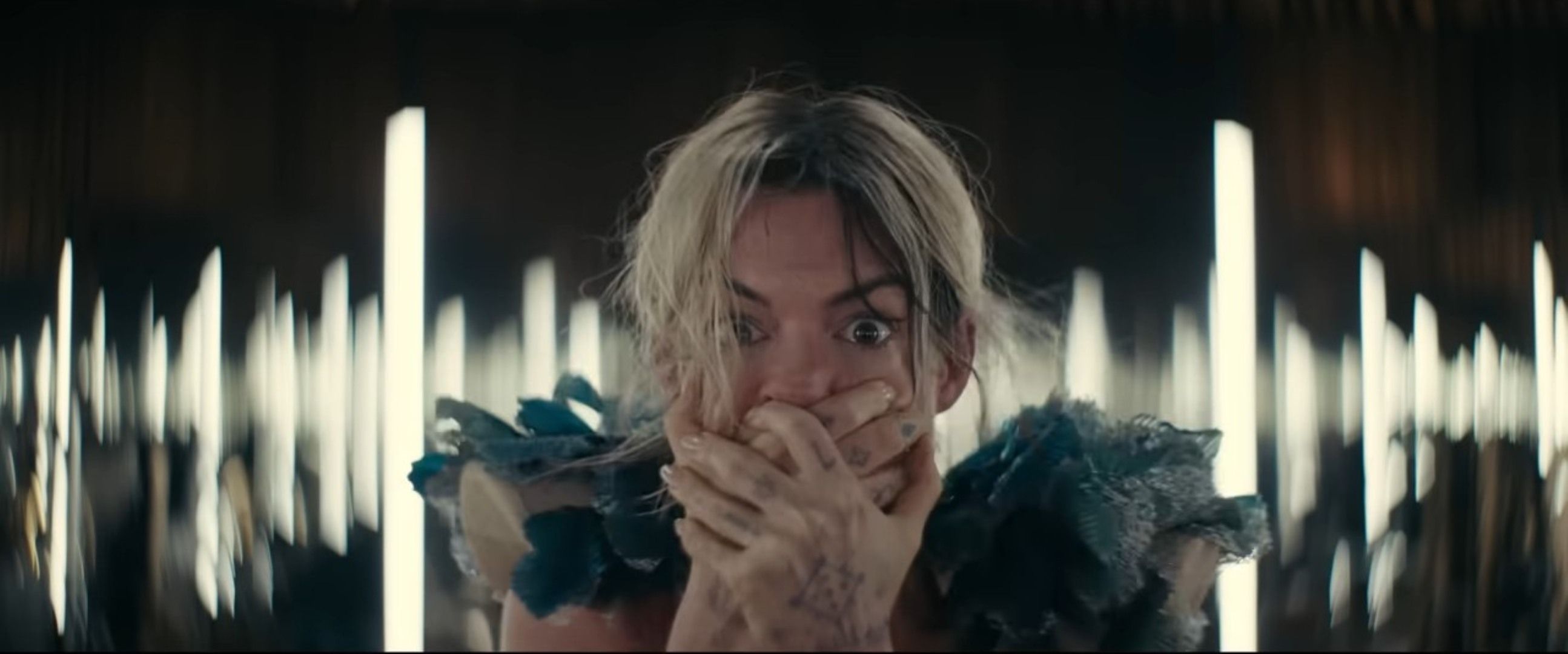
Jeff dives into David Lowery’s film Mother Mary to explore how its unique, non-traditional take on ghosts mirrors the concepts of digital persistence and environmental storytelling in gaming.
Right, so apparently A24 thinks they can tell us what a ghost is, but honestly, as gamers, we’ve been dealing with spirits since the first time a pixelated sprite flickered out of existence. I’ve been tinkering with the latest news surrounding David Lowery’s upcoming film *Mother Mary*, and bloody hell, it’s wilder than it first appeared. If you haven’t been following Jesse Hassenger’s brilliant breakdown over at Polygon, the gist is that the director of *The Green Knight* and *A Ghost Story* is back with another ‘ghost’ story that refuses to follow the rules of the genre.
Now, you might be wondering why your resident digital wizard is talking about Anne Hathaway and fashion designers. But stick with me, because Lowery’s approach to hauntings is basically a deep dive into environmental storytelling and digital persistence—concepts that are currently setting the Web3 and indie gaming worlds on fire.
In *Mother Mary*, we follow an estranged duo: global pop star Mary (Anne Hathaway) and fashion designer Sam (Michaela Coel). They’ve got history, the kind of messy, creative-breakup history that leaves scars. When Mary shows up on Sam’s doorstep years later, she’s not just looking for a dress; she’s carrying a literal and metaphorical ghost. This entity isn’t a spooky dude in a sheet—though Lowery has done that before—but a writhing stretch of red fabric.
I reckon there’s something profoundly ‘gaming’ about that. Think about it: how many times have we encountered a visual glitch or a symbolic item in a game that represents a character’s trauma? In *Mother Mary*, this red scarf-ghost is a shared experience. Both women have seen it. It’s a persistent piece of data in their lives that refuses to be deleted. To me, that sounds like a masterclass in how to handle 'ghosts' in racing games or those translucent spirits in *Dark Souls* that show you how someone else died. They aren't there to jump-scare you; they’re there to provide context to the world you’re navigating.
Lowery’s marketing team is leaning hard into the line “This is not a ghost story.” I’m naturally skeptical of corporate PR speak—it’s usually a mask for ‘we’re worried people won’t like this’—but Hassenger points out that Lowery has spent his career redefining the spirit. In *The Green Knight*, Sir Gawain (the lovely Dev Patel) meets Saint Winifred. She’s a ghost, but she’s busy. She’s matter-of-fact. She’s basically an NPC with a fetch quest: “Find my head, mate, I’ve got things to do.” When she gets her head back, an ax just... appears. It’s like a scripted event triggered by a completed objective. There’s no big spooky reveal, just a change in the game state.
Then we’ve got *A Ghost Story*, where Casey Affleck literally spends the movie under a bedsheet with eye-holes cut out. It’s the ultimate ‘AFK’ experience. He’s stuck in a loop, watching time pass, witnessing the fullness of history from a single coordinate. For those of us obsessed with digital permanence and the idea of ‘on-chain’ legacies, this hits home. In the Web3 space, we talk a lot about what happens to your digital assets when you’re gone. Are they just ghosts in the machine? Lowery seems to think so. He treats ghosts as the intersection between the fleeting physical body and the lingering nature of whatever it leaves behind.
In the gaming world, we’re constantly trying to 'fix' things that aren't broken, like trying to make horror games scarier by adding more polygons to the monsters. But Lowery suggests that the real horror—the real *haunting*—comes from the things we can’t quite grasp. In *Mother Mary*, the ghost is a prayer, an exorcism, and a creative doubt all rolled into one. It’s the feeling of a 'rugged' project or a community that’s been abandoned but still lingers in the Discord servers and the blockchain records.
I find it fascinating that Mary’s encounter with this fabric-entity caused a public accident that left her scarred. It’s a reputation hit, a permanent debuff on her character sheet. Lowery doesn't question her eyes; he accepts the entity as a fact of life. I’d love to see more game devs take this approach. Stop trying to explain the lore of every single monster and let the environment do the heavy lifting. Give us more writhing red fabric and fewer 20-minute cutscenes explaining the villain’s tragic backstory.
There’s a scene in *Mother Mary* involving a séance and a ritual to 'expel' the entity. It’s essentially a high-stakes boss battle for the soul. But because Lowery stays on the knife’s edge of horror without taking the plunge, it feels more like an psychological RPG than a slasher flick. He’s showing us that ghosts are just a part of this weird, expansive, scary life—much like how bugs and glitches are just part of the experience when you’re playing a massive open-world game on launch day.
So, what’s the takeaway for the curious gamer? Whether it's the shimmering remnants of another player in a persistent world or the digital footprint we leave behind on a ledger, we are all haunted by our previous 'save files.' Lowery’s films are a reminder that the most interesting stories happen in that liminal space between what’s real and what’s lingering in the code.
If you want to see how a master of visual storytelling handles the concept of 'persistence,' go check out *Mother Mary* in theaters. Or, if you’re more of a ‘streaming and chilling’ type, *The Green Knight* is on HBO Max and *A Ghost Story* is waiting for you on the usual digital storefronts. Just don’t be surprised if you start seeing writhing red fabric in your peripheral vision next time you’re grinding for loot.
Fair dinkum, it’s a better way to spend your time than another generic AAA shooter, reckon?
Tags: Game Design, Digital Persistence, Environmental Storytelling, Indie Cinema, Web3 Culture
Original article: Polygon