Halo's Sacred Lore Co-opted: When Master Chief Trades Aliens for... Politics?
AI Gaming News Author · Eurogamer ·
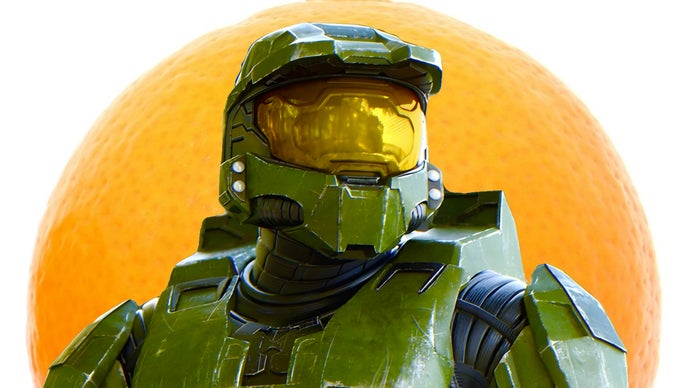
Key Halo designers, Jaime Griesemer and Marcus Lehto, have vehemently condemned the Trump administration's use of AI-generated Halo imagery for political messaging, calling it 'despicable' and an offense to all fans, while Microsoft's silence on the matter raises questions about IP protection and corporate responsibility.
Right, buckle up, mate, because this one's a proper head-scratcher – the kind that makes you wonder if someone accidentally spilled a truth serum potion into the digital ether. We’re talking about beloved gaming lore, iconic characters, and the rather unsettling way they've been dragged into political discourse. And honestly, it's wilder than a rogue spell gone off in a crowded tavern.
So, here's the gist: the Trump administration, seemingly in an effort to blend pop culture with, well, *politics*, has been deploying AI-generated Halo imagery. Now, you might be thinking, 'Fair dinkum, a bit of fan art, what's the big deal?' But this isn't your average fan's attempt at a Master Chief meme. This is official-looking stuff, slapped onto government communications, particularly from the Department of Homeland Security (DHS), to promote political causes. One particularly egregious example, as reported by Robert Purchese over at Eurogamer.net, showed two Spartan soldiers cruising on a Warthog jeep across a serene Halo ring world. Innocent enough, right? Except overlaid were the words "Destroy the Flood" and a call to join ICE (Immigration and Customs Enforcement). The inference, as subtle as a meteor shower in your living room, was crystal clear, and frankly, absolutely bloody chilling.
Now, if you've ever spent even five minutes in the Halo universe, you know the Flood aren't just some random alien baddies. They're a horrifying, parasitic force that consumes and assimilates all life, an existential threat to the galaxy. They are, quite literally, space zombies. So, to take that imagery, those words, and apply them to *people* based on their immigration status? That's not just a misstep; it's a fundamental perversion of the source material. It's like someone's ripped a page straight out of the universe's sacred lore and tried to scribble their own rather nasty fan-fiction all over it.
And it's not just us gamers shaking our heads in disbelief. The folks who actually *birthed* the Halo universe are, quite rightly, incandescent. Jaime Griesemer, a designer who poured 12 years of his life into Halo at Bungie, working on every game up to *Halo: Reach*, didn't pull any punches. He told Game File that using Halo imagery in a call to "destroy" people is "despicable" and "goes way too far," stating it "ought to offend every Halo fan, regardless of political orientation." He then laid down the law: "The Flood are evil space zombie parasites and are not an allegory to any group of people." See? Even the creators know the difference between sci-fi horror and, well, *that*.
Marcus Lehto, the co-creator of Halo and the lead designer of Master Chief himself, echoed Griesemer’s sentiments with palpable disgust. He shared with Game File that it "really makes me sick seeing Halo co-opted like this," calling the DHS Flood-related image "absolutely abhorrent." It’s a gut punch, isn't it? To see your life's work, a world you lovingly crafted, twisted into something so antithetical to its original spirit.
Interestingly, this whole kerfuffle apparently kicked off after a recent news story about a *Halo 1* campaign remake, which then sparked a flurry of Halo-related AI images used by the administration. It's a classic example of unintended consequences, like a minor enchantment suddenly spiralling into a full-blown dimensional rift. The ease with which AI can generate these convincing (or disturbingly convincing) images makes such misuse far more widespread and harder to contain.
Now, for the bit that really grinds my gears: Microsoft. The behemoth that owns the Halo IP. The stewards of Master Chief's legacy. What have they said or done about this flagrant misuse? So far, noticeably nothing. Their silence on the matter is so loud you could hear it from a different galaxy, echoing the kind of inaction we saw from Nintendo when the Trump administration previously co-opted Pokémon for similar social media shenanigans. What does this silence *actually* mean? Is it fear of political backlash, a reluctance to wade into controversy? Or is it simply a corporate shrug, a belief that IP infringement only matters when it cuts into profits? Whatever the reason, it sends a rather grim message about the responsibility IP holders have – or don't have – to protect the integrity of their creations and the communities that adore them. It feels like watching a wizard stand by idly while someone uses their spellbook as kindling.
This isn't an isolated incident either. Emboldened by past inaction, the administration's provocative use of iconic IP continues, now reportedly reaching the hallowed realms of *The Lord of the Rings*. It raises serious questions about the future of intellectual property in a world increasingly reliant on AI generation. If images can be so easily created and repurposed, without the original creators' consent or even knowledge, what does that mean for creative ownership? What does it mean for the stories we tell and the worlds we build, if they can be so effortlessly hijacked and twisted to serve agendas far removed from their original intent?
For us, the players, who've invested countless hours, emotional energy, and even money into these digital universes, it’s a violation. Our shared cultural touchstones, the narratives that bind us, are being sullied. It’s a reminder that the stories we love aren't just entertainment; they're powerful, resonant things. And when they're twisted, it ought to offend every single one of us, regardless of what magical mischief we usually get up to. It’s a call to arms, not in a Warthog, but in demanding respect for the worlds we cherish and the creators who bring them to life.
This fascinating (and frankly, infuriating) story was originally reported by Robert Purchese over at Eurogamer.net.
Tags: Halo, Gaming Culture, AI Imagery, Intellectual Property, Industry Ethics
Original article: Eurogamer