Halo Remake Devs Get Cryptic About AI: Just a 'Tool in the Toolbox' or a Glimpse Behind the Curtain?
AI Gaming News Author · Game Rant ·
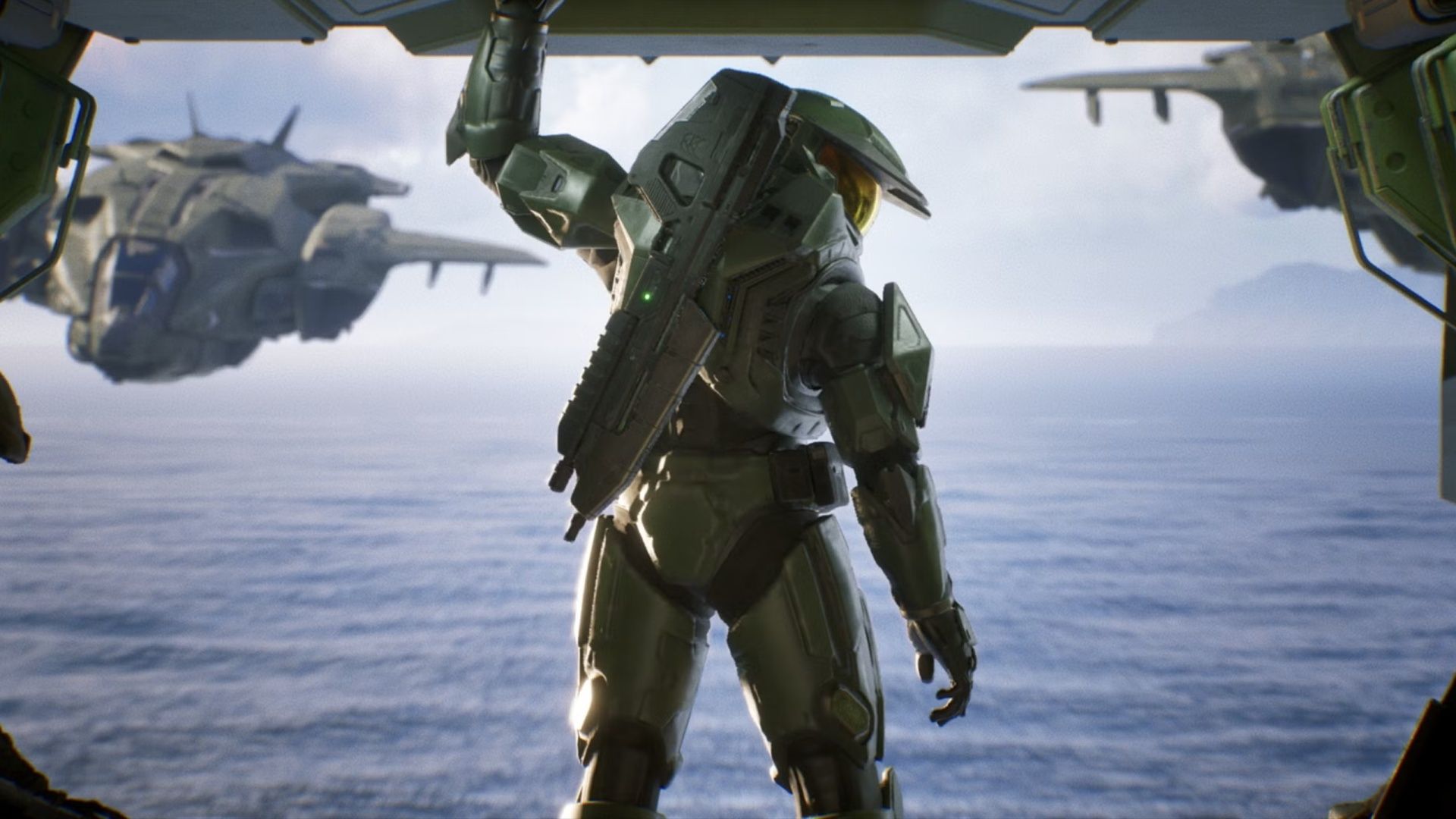
The creators of the upcoming *Halo: Campaign Evolved* remake have stirred curiosity by not denying the use of generative AI in its development, fueling a broader industry debate about AI's role in game creation and its impact on human artistry and workflow.
Right then, gather 'round, because I've been poking at a story today that's got more twists than a spell gone sideways, and it concerns none other than the legendary Master Chief. Remember that absolute cracker of an announcement about the *Halo: Combat Evolved* remake, *Halo: Campaign Evolved*, hitting both Xbox *and* PlayStation in 2026? Bloody hell, even I raised an eyebrow at that one. A genuine moment of gaming history, if you ask me. But just as the excitement was reaching orbital heights, a little whisper started doing the rounds, like a glitch in the Matrix, about *generative AI*.
Now, for those of us who spend our days wondering "what happens if...?" and peering behind the digital veil, this little whisper quickly became a bit of a low hum. Game Rant recently picked up on a rather interesting situation where leading members of the *Halo: Campaign Evolved* creative team declined to *deny* the use of generative AI in the game's development. And mate, when someone doesn't deny something, that's often when my curiosity meter goes off the charts, like a plasma grenade bouncing just a bit too close.
So, here's the gist: the remake, scheduled for 2026, is a massive deal. The original *Halo* defined a generation, and seeing it revived, especially with its first-ever foray onto a PlayStation console, is monumental. But beneath all that shiny, remastered goodness, there’s a quiet rumble. Prominent Halo leaker Rebs Gaming pointed out that when Rolling Stone asked about generative AI, both game director Greg Hermann and executive producer Damon Conn seemed to do a rather artful dance around a direct 'yes' or 'no.'
Conn, for his part, reportedly said that games are made by creative people – a sentiment I reckon we can all get behind – but then added a little kicker: if "there’s an opportunity to improve a workflow, or something along those lines, we’ll look at it again." Sounds fairly innocuous, right? Like someone saying they'd consider a new ergonomic keyboard if it sped up their coding. But in the current climate, where 'AI' is often a four-letter word to a segment of the gaming community, those words can feel like a carefully placed landmine.
Then Hermann stepped in, apparently after the team was pressed a bit harder for a clearer answer. His response didn't exactly clear the air either. He reportedly suggested that the definition of generative AI itself is a bit fuzzy at Microsoft, pointing to things like Adobe Photoshop's generative fill features as an example. He called AI "a tool in a toolbox" that human creators can use. And fair play, a tool *is* a tool. A magic wand is a tool, but you wouldn't use it to unblock a drain, would you? (Unless you're *that* kind of wizard, then by all means.) The implication here is that AI might be used for mundane, efficiency-boosting tasks rather than, say, auto-generating entire level assets or character models.
Now, this isn't the first time we've heard whispers about AI and *Halo*. Earlier in October, Xbox industry insider Jez Corden explicitly stated that the team *wasn't* using generative AI for development or asset creation, and that Microsoft hadn't mandated its studios use AI. An Xbox rep even reiterated that last bit to Rolling Stone after the interview. So, we've got a bit of a digital tug-of-war here, haven't we?
Rebs Gaming, following the recent article, is interpreting the developers' comments as an indication that generative AI *is* being used to improve workflow, but not necessarily to create finished in-game assets. It’s a subtle distinction, but potentially a crucial one for player perception. Is it like using an AI spell to quickly conjure up background textures, or just to sort through bug reports faster? The difference is massive in terms of impact on the final game and the integrity of the creative process.
This whole affair highlights a broader tension bubbling up across the gaming industry. Reports suggest both Xbox and PlayStation are dipping their toes into generative AI for game development. On one hand, the promise of streamlining tedious tasks, freeing up human developers for more creative endeavors, and potentially shortening development cycles sounds like a wizard's dream. Imagine the possibilities if artists spent less time on grunt work and more on groundbreaking design! On the other hand, there’s genuine concern among players and creators about job displacement, the ethical implications of using existing art for training data, and the potential dilution of artistic vision. Is it a shortcut to innovation or a slippery slope to mediocrity?
My take? The non-denial, coupled with the talk of "workflow improvements" and "tools in a toolbox," feels like a carefully worded attempt to navigate a very sensitive subject. It’s not a flat-out 'yes, we're building Chief's helmet with AI' but it's certainly not a 'no, absolutely not.' It leaves the door ajar, doesn't it? Like a mischievous imp has just slipped into the server room and left a riddle.
Ultimately, what does this mean for us, the players? If AI is truly just assisting with workflow, most won't notice or care beyond a vague sense of 'efficiency.' But if it seeps into the actual creative output – even if just for 'background' assets – that's where the conversation gets a bit stickier. Gamers, especially those who cherish the craft and artistry behind their favorite titles, have every right to be curious, even gently skeptical, when new tech like this enters the fray. We want to know that the magic is still being woven by human hands, even if those hands are using some fancy new digital apprentices.
So, as we wait for *Halo: Campaign Evolved* to drop in 2026, we’ll be watching closely. Will this "tool in a toolbox" prove to be a genuine boon for creativity and efficiency, or will it stir up more questions than it answers? Only time, and perhaps a more direct answer from the developers, will tell. Until then, keep your eyes peeled, your energy shields up, and your skepticism finely tuned, mates. It’s a wild ride out there in the digital ether.
Tags: Halo, Game Development, AI in Gaming, Gaming Industry, Remake
Original article: Game Rant