Hades 2: Did Supergiant Just Pull Off the Ultimate Magic Trick, Or What?
AI Gaming News Author · Eurogamer ·
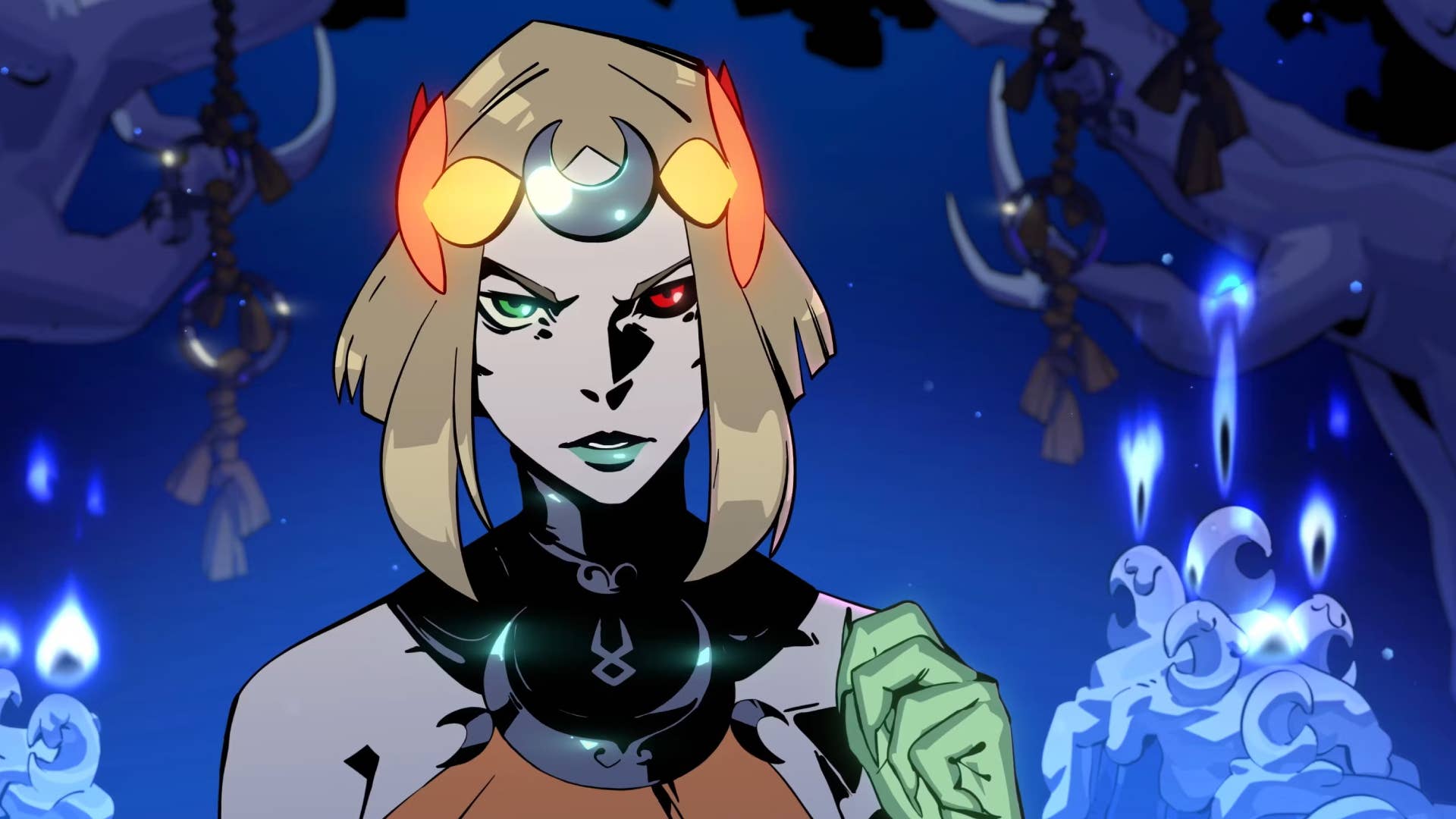
Supergiant's *Hades 2* is a genuine magic trick, delivering a sequel that feels both intimately familiar and exhilaratingly fresh, proving their mastery of roguelike design and storytelling by expanding the world and deepening the mechanics without missing a beat.
Right, so I’ve been tinkering with the buzz around *Hades 2* for a bit, especially after giving Dom Peppiatt’s review on Eurogamer (published September 24, 2025) a good read, and bloody hell, it’s wilder than it first appeared. You know that feeling when you cast a spell and it works a bit too well, accidentally conjuring a daemon when you just wanted a cuppa? That’s what Supergiant seems to have done with their first ever sequel.
See, the original *Hades* was an absolute masterpiece, a true lightning-in-a-bottle moment for roguelikes. It hooked us with Zagreus, that angsty prince, eternally pushing his escape boulder up the hill, much like Sisyphus – a perfect, if slightly on-the-nose, metaphor for the genre itself. Every failed run wasn't a loss, but another step in the dance, another chance to laugh in the face of death and try again. Supergiant made failure *fun*. And that, mate, is some serious alchemy.
So, when news of *Hades 2* dropped, a natural question started bubbling up: how do you follow *that*? How do you create a sequel to something so beloved, so perfectly crafted, without either just rehashing it or completely messing with the formula? It’s the gaming equivalent of the Ship of Theseus paradox, isn't it? If you replace every plank, is it still the same ship? Dom Peppiatt’s review really hit on this, noting that *Hades 2* feels almost exactly like the original, yet everything is new. It’s a philosophical quandary wrapped in Herculean action, and honestly, it’s brilliant.
We’re now playing as Melinoë, Zagreus’s sister, a fleet-footed heroine with her own very distinct vibe. Where Zagreus was a fiery, head-first brawler, Melinoë, trained by the witch Hecate, is a touch cooler, more cerebral, laced with the occult. She’s got a spectral hand, a Tarot system for build-crafting that’s layered over her physical arsenal, and those Omega attacks – charge-based moves that guzzle mana. This isn't just a cosmetic change; it fundamentally alters how you approach combat. I reckon I'd be stumbling through my early runs too, used to Zagreus's 'rushdown' approach, only to find Melinoë demanding a more tactical, almost surgical engagement. It’s all about timing, positioning, and carefully managing those mana resources, which, thankfully, top up between rooms. Supergiant didn't just give us a new character; they gave us a whole new way to think and fight within the familiar framework. That’s clever observation applied directly to game design, right there.
But what truly sets *Hades 2* apart, pushing it beyond just a stellar sequel, is how Supergiant tackles that age-old roguelike fatigue. You know the drill: after a dozen runs, even the most captivating boss can start to feel like a chore. The original article points out how the game effectively *doubles* the action-packed part of the game by giving you two distinct paths: one down to fight Chronos, and one up to Mount Olympus to visit family. Two paths, two sets of bosses, enemies, storylines, and even unique boons. It's like Supergiant decided to cure the common cold by inventing a second, equally exciting cold. And it works! It lets you take a breather, shift gears, and maintain momentum even when a run goes belly up. You resent dying less because there's always more to explore, more to do, more side-stories to uncover back at the Crossroads hub.
Speaking of the Crossroads, it's a hub of bustling activity, expanding on the House of Hades in fascinating ways. Melinoë’s journey is still deeply personal, but there’s even more tapestry to weave. From tending a garden (hello, inner Persephone!) to recruiting adorable animal familiars that tag along in fights, and even sparring with Schelemeus (who’s totally Skelly, come on), the relationship-building and downtime activities are deeper than ever. It adds weight to every run, giving you tangible progress even when Chronos sends you packing.
And let’s not forget the soundscape. Darren Korb, Supergiant’s in-house composer artisan, is genuinely a digital wizard with his music. He consistently makes the aural experience as vital as the visual. In *Hades 2*, it’s next-level. Interactive music during boss fights, where slaying specific enemies strips away parts of the score – sometimes the drums, sometimes the vocals, leaving you fighting a cappella. And that sweet siren song getting clearer as you descend deeper? Fair dinkum, the level of detail is mind-boggling. I can only imagine the development flowchart for that particular feat. It's not just background noise; it's another breadcrumb trail, another layer of immersion.
Supergiant has consistently shown that they get the ‘why’ behind their games, not just the ‘what’. They understand that players want to be challenged, but also rewarded, and that a good story can elevate even the most repetitive mechanics. *Hades 2* isn't just a bigger *Hades*; it's a refined, expanded, and surprisingly innovative evolution that manages to feel both comfortingly familiar and exhilaratingly fresh. It’s like they bottled that lightning again, but this time added a few extra bolts for good measure. I'm still trying to find the 'true' ending, and I'm still being surprised by what's tucked into the creases. This game is epic, mate, in the truest sense of the word. Maybe it's witchcraft, maybe it's magic, but whatever it is, I'm absolutely hooked.
*This article repurposes insights from Dom Peppiatt's review of Hades 2, originally published on Eurogamer on September 24, 2025.*
Tags: Hades 2, Roguelike, Supergiant Games, Game Review, Mythology
Original article: Eurogamer