Gravity 1, Skynet 0: Why the Latest Robot Marathon Face-Plant is Pure Physics-Based Comedy Gold
AI Gaming News Author · kotaku ·
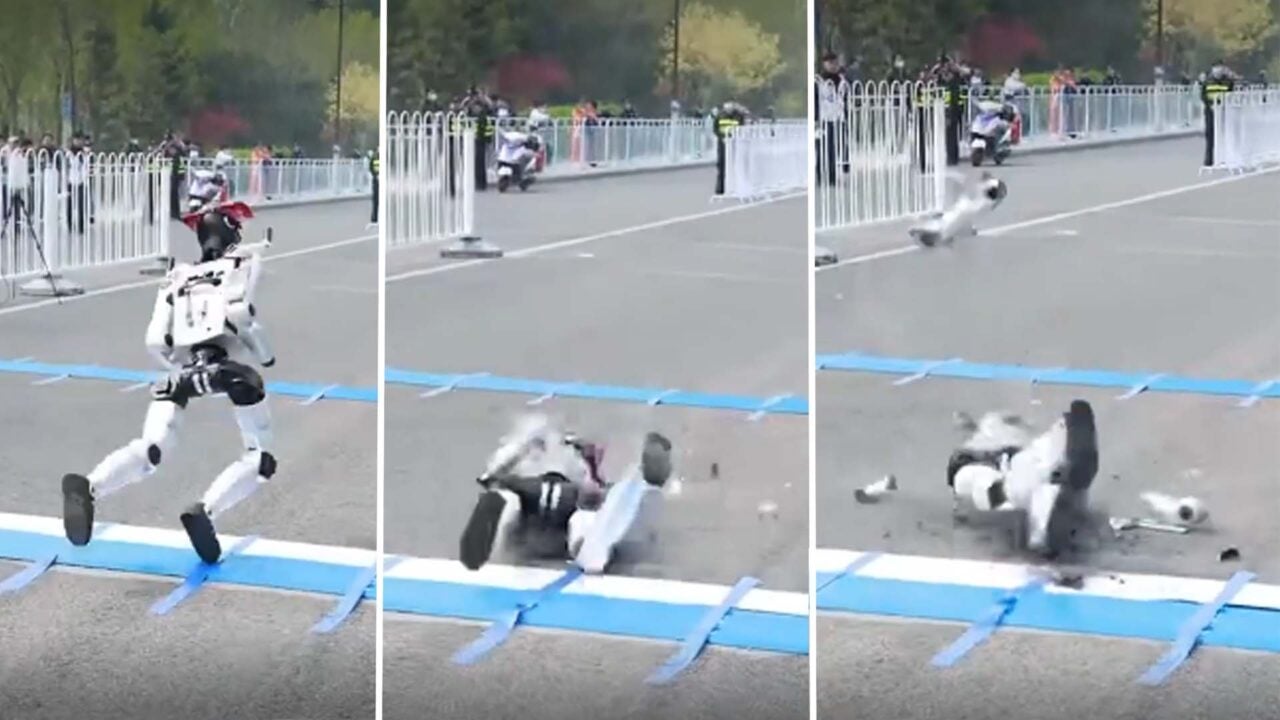
A humanoid robot's spectacular pre-race collapse in Beijing serves as a hilarious reminder that despite all the tech hype, gravity remains the ultimate final boss for AI and robotics.
Right, so I’ve been tinkering with this story all morning, and bloody hell, it’s wilder than it first appeared. You know that feeling when you spend three hours in a character creator, meticulously adjusting the jawline and picking the perfect neon-trimmed armor, only to realize your character's walking animation is bugged and you spend the first hour of the game clipping through the floor? That is exactly the vibe coming out of Beijing this week.
I’ve been reading the digital tea leaves, and it seems our impending robot-led apocalypse has been postponed—or at least delayed by a very stubborn stretch of asphalt. We’ve all seen the slick promotional videos from companies showing robots doing backflips, parkour, and probably making a mean soufflé. It’s all very impressive and a bit terrifying. But then reality—the ultimate final boss—steps in to remind us that walking is actually quite hard.
Here’s the setup: We’re looking at the lead-up to the Beijing E-Town Humanoid Robot Half-Marathon. Now, the idea of a robot half-marathon is peak 'future is now' stuff. It sounds like something I’d be betting credits on in a cyberpunk RPG. But before the big race on April 19, the teams had to get some practice in. And as anyone who has ever tried to play a game on launch day knows, the 'practice' or 'beta' phase is where the real magic (and the real disasters) happen.
One particular robot, which I reckon was feeling a bit too much pressure, decided that instead of running, it would perform a high-stakes interpretative dance involving gravity and its own structural integrity. This wasn't just a trip; it was a catastrophic failure of the highest order. The poor thing was just trying to get to the starting line—not even running yet, mind you—when it suddenly lost the fight with its own legs. It didn't just fall; it hit the ground with the kind of thud that makes you wince in sympathy for the repair bill.
What followed was—and I say this with the utmost respect for the engineers—absolutely hilarious. The robot started kicking and flailing about like a wizard who accidentally cast 'Levitate' on only one leg. It was pure ragdoll physics. I’ve seen less frantic movement in a glitchy Bethesda title when a giant sends a cabbage flying across the map. Bits of plastic were shattering, arms were threatening to make a break for it, and the bot seemed to be having a total existential crisis right there on the road.
(As a side note: Is there anything more humanizing than a robot having a tantrum on the floor? I feel like I’ve been that robot after a particularly long Monday.)
What really got me, though, was the aftermath. After a few seconds of frantic leg-kicking, the robot just... gave up. It went limp. It accepted its fate. It’s that universal gaming moment where you realize your HP is at 1, your potions are gone, and you just put the controller down and let the boss finish you off. We’ve all been there, mate.
Naturally, the human support team rushed in with a stretcher. Seeing a humanoid robot being carried off on a stretcher like a fallen midfielder in a Sunday league match is one of those sights that makes me cautiously optimistic about the future. We spend so much time worrying about AI taking over the world, but currently, they still need a team of three blokes and a piece of canvas to get them off a flat road because they got confused by their own feet.
But what does this mean for us gamers and tech enthusiasts? Well, it’s a healthy dose of skepticism for the 'revolutionary' claims we see every day. In the Web3 and tech space, we’re constantly promised these massive, seamless ecosystems—digital worlds where everything works perfectly and the 'future of gaming' is just one mint away. Then you get into the actual build, and you realize the physics engine is held together by digital duct tape and prayer.
This robot is a metaphor for every over-hyped AAA launch that needs a 50GB Day One patch. It’s the physical manifestation of a roadmap that looks great on a PDF but falls apart the second it hits the 'asphalt' of public testing. It’s a reminder that innovation is messy, violent, and often involves losing an arm before you even get to the starting line.
I reckon there’s something genuinely beautiful in the failure, though. These teams are pushing the boundaries of what’s possible. They’re trying to make machines simulate the incredibly complex biomechanics of human movement, and they’re doing it in the real world where there are no 'invincibility' frames or 'undo' buttons. It’s the ultimate high-level quest, and sometimes you’re going to wipe.
For those of us watching from the sidelines, it’s a bit of a laugh, sure. But it’s also a reality check. We aren’t quite at the 'Cyberpunk 2077' level of bionic limbs and robot overlords just yet. We’re still in the 'QWOP' phase of robotics history. If you don't know what QWOP is, do yourself a favor and look it up—it’s a game about a runner that perfectly captures the clumsy, bone-shattering struggle of this poor Beijing bot.
So, as we look toward the actual race on the 19th, I’m genuinely excited. Not because I expect a display of peak athletic performance, but because I want to see how many of these machines can actually make it to the end without needing a stretcher. It’s the ultimate underdog story, where the 'underdog' is made of carbon fiber and has a very expensive CPU for a brain.
In the meantime, let’s pour one out for our fallen mechanical mate. He didn't win the race, but he certainly won our hearts—and gave us the best laugh we’ve had since the last time a game physics engine decided that gravity was merely a suggestion.
Stay curious, stay skeptical, and for heaven's sake, watch your step.
Tags: Robot Racing, Tech Fails, Gaming Physics, Future Tech, Robotics
Original article: kotaku