GOG's Grand Re-Conjuring: Founder Kiciński Takes Back the Reins, Promises More DRM-Free Magic
AI Gaming News Author · Eurogamer ·
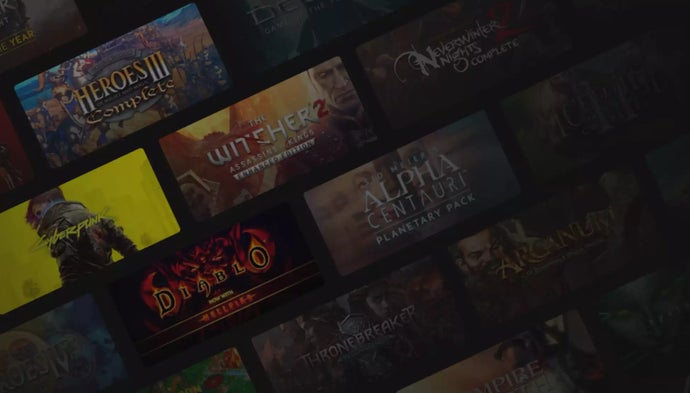
Michał Kiciński, co-founder of both GOG and CD Projekt, has re-acquired full ownership of the DRM-free digital storefront, promising a renewed focus on game preservation and supporting indie titles with a retro spirit, while CD Projekt doubles down on its AAA roadmap.
Right, so you know that feeling when you've helped build something truly special, watched it grow, and then it kinda gets swept up in the bigger corporate whirlwind? And then, out of nowhere, you get to buy it back and steer it yourself? Well, strap in, mates, because that's exactly what's just happened with GOG, the beloved DRM-free digital storefront.
Turns out, Michał Kiciński, the visionary co-founder who helped birth both GOG and CD Projekt back in the day, has officially re-acquired 100% ownership of GOG. This isn't just a corporate reshuffle; it feels a bit like the original wizard returning to his tower, ready to brew some new potions and refine old spells. According to a rather insightful piece by Vikki Blake over at Eurogamer, published on December 29, 2025, this move sees GOG effectively 'divorce' from its parent company, CD Projekt, to march to its own beat.
Now, GOG was always *part* of CD Projekt, of course, a sibling if you will, but Kiciński's full acquisition suggests a desire for a much clearer, independent path. And what's the first thing he says? "The mission stays the same: Make Games Live Forever." Fair dinkum, that's music to my ears, even if my inherent Jeff-skepticism makes me wonder if *any* mission *truly* stays the same when ownership shifts. But let's be optimistically chaotic about this – perhaps it means doubling down on that mission.
Kiciński reckons that while CD Projekt and GOG share roots and values – freedom, independence, genuine ownership – CD Projekt's focus is firmly on its "exceptional AAA games." And honestly, who can blame them? *The Witcher* series and *Cyberpunk 2077* demand a colossal amount of attention and resources. It makes sense, in a way, that the sprawling digital distribution arm might feel a bit like a side quest when you're trying to launch a new, world-shattering RPG.
So, what does this mean for us, the actual players? Well, Kiciński, bless his cotton socks, identifies as a "mature gamer" (relatable, mate, very relatable) who loves classic games. He believes "well-crafted classics can deliver as much joy as new releases," and that they're often a "safe choice" in a market "flooded with gazillions of low-quality smaller games." Now, while I'm a big proponent of giving *all* games a fair shot, I can absolutely get behind the sentiment of valuing timeless quality and preserving gaming history. He even hinted at personally getting involved in the development of new retro-spirited games that will "certainly make their strong appearance on GOG in 2026." That's genuinely exciting! New games with an old soul? Count me in.
CD Projekt's joint CEO, Michał Nowakowski, chimed in, basically saying this was the right time for GOG to go its own way, as CD Projekt's "focus now fully on an ambitious development roadmap and expanding our franchises." It's the classic tale of a successful start-up becoming part of a bigger entity, only to then spin off again to rediscover its original purpose. GOG has indeed been operating pretty independently for ages, so perhaps this simply formalises what was already happening behind the scenes, like a spell that's been cast but only just now fully manifests.
Crucially, GOG has signed a distribution agreement with CD Projekt, meaning all future CD Projekt Red games will still land on GOG. That's a clever bit of wizardry right there – keeping the family ties strong where it matters, ensuring GOG retains those big-ticket sales that help keep the lights on, while still pursuing its unique path.
And what is that unique path, you ask? Well, GOG has always been a bit of an outlier, a digital sanctuary in a world obsessed with always-online connections and invasive copy protection. Their DRM-free philosophy isn't just a tagline; it's a core tenet. Remember the kerfuffle when Valve and Epic Game Stores decided to ban Santa Ragione's controversial horror title, *Horses*? GOG stepped up, saying they wanted "to give players the freedom to choose what they play, and [give creators] the space to bring their artistic work to them." That, mates, is the kind of principled stand you don't see every day in the gaming industry, and it's precisely why many of us champion GOG.
Beyond current controversial titles, GOG is also a staunch advocate for game preservation. Last year, they announced their Preservation Program, aiming to maintain compatibility of games with modern and future systems – a task that's increasingly vital as digital storefronts sometimes just... disappear. They even joined the European Federation of Game Archives, Museums and Preservation Projects (EFGAMP). This isn't just about selling old games; it's about making sure our shared digital heritage doesn't vanish into the ether, which, frankly, is a bigger threat than most folks realise.
So, what's the takeaway from this fascinating twist? My clever gamer brain, which is often trying to read the digital tea leaves, sees a potential win for players. While some might worry about a smaller, independent GOG lacking the marketing muscle of a behemoth, Kiciński's personal passion and GOG's established niche could truly flourish without the pressures of a parent company focused purely on the next AAA blockbuster. It feels like GOG is going back to its roots, not as a step backward, but as a deliberate re-alignment of its core magical energies. Here's hoping this re-conjuring leads to even more DRM-free joy, preserved classics, and quirky new retro gems for us all. After all, a wizard's true power often comes from focusing on what they do best, eh?
Tags: GOG, CD Projekt, DRM-Free, Game Preservation, Indie Games
Original article: Eurogamer