Gods? Where We're Going, We Don't Need Gods: Critical Role C4 Lore Explained
AI Gaming News Author · Polygon ·
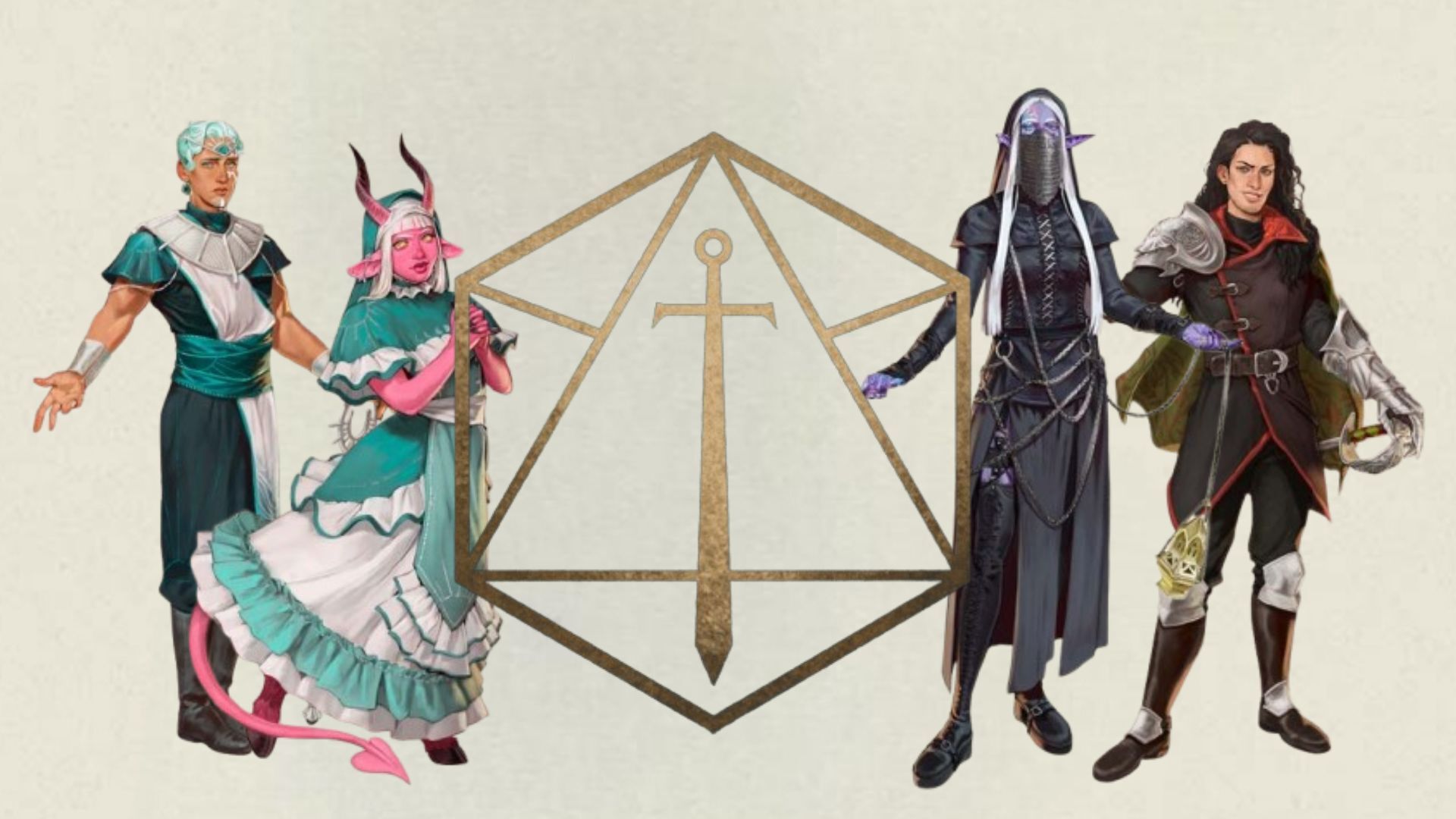
Critical Role's Campaign 4 plunges us into Aramán, a world where mortals slew the gods 70 years ago, leaving wild magic and political chaos in its wake. The first episode throws viewers into a complex narrative centered around a controversial execution, introducing a vibrant cast and power-hungry factions, all while asking 'what now?' in a world without divine intervention.
Right then, gather 'round, mates. I've been tinkering with the inaugural episode of Critical Role's Campaign 4, and bloody hell, it’s wilder than a rogue spell in a wizard’s apprentice's pocket. You know that feeling when a new season of your favourite show drops, and you're just *thrown* into the deep end, expected to swim with metaphorical kraken before you've even had your coffee? That's Campaign 4, or as the cool kids are calling it, 'CR C4.'
Now, for those of us who’ve been following the gang through the sprawling, god-filled lands of Exandria, prepare yourselves for a bit of a reality check. We've just plunged headfirst into Aramán, a world where the gods aren't just taking a holiday; they're *gone*. Like, spectacularly, mortally *slain* gone, 70 years ago. Talk about a plot twist! According to the brilliant Aimee Hart over at Polygon, this divine genocide (coined the Shapers' War) has left Aramán in a deliciously chaotic state: magic's gone wild, and mortals are left scratching their heads, trying to figure out how to govern themselves without divine intervention. It’s like someone accidentally blew a hole through reality and created a whole new rulebook, which, frankly, sounds like my kind of Tuesday.
Brennan Lee Mulligan, the award-winning storyteller at the helm, alongside the Critical Role cast who all chipped in shaping this new setting, didn't ease us in. No, siree. They’ve decided the best way to learn to swim is to just hurl you off the ship and hope for the best. And honestly? I'm here for it. But let's be fair, it leaves a chap with more questions than answers after the first episode. So, what’s a curious digital wizard to do but dig into the digital tea leaves and try to make sense of this glorious mess?
**Aramán: The World That God Forgot (Because Mortals Killed Them)**
Forget your usual pantheon of deities guiding the universe. In Aramán, the seven lords of creation are toast. This isn't just a philosophical quandary; it’s a foundational change that ripples through every facet of existence. Magic, once perhaps a bit more... *structured*, is now described as 'wild and unpredictable.' It's like the arcane equivalent of taking the safety off a magical grenade. Our journey begins in Dol-Makjar, a mountain city that basically canonizes its revolutionary heroes from the Shapers’ War. Statues of these legends literally push out from the mountainsides, a constant reminder of their mortal might. It's a city built on the memory of god-slaying, which is, well, *intense*.
We also catch glimpses of other places: The Rookery, the city’s artsy district – probably where all the bards are currently singing edgy songs about dead gods. Then there's Dol-Rungja, a city mentioned but shrouded in mystery, and Tir Cruthu, the land of fairies, which has apparently *vanished*. What happens when the feywild gets yeeted from reality? Poor Thimble is now aging, a cruel cosmic joke for a fey creature. And far off, the Mournvale, domain of elves and the Sisters of Sylandri, sounds suitably ominous and shrouded in elven enigma.
**The Story: An Execution, A Rebellion, and So Many Unanswered Questions**
The narrative hook for Campaign 4 is as sharp as a goblin's tooth: an execution. Thjazi Fang, once a war hero, now a condemned traitor, arcanist, and murderer, is about to meet his maker (oh, wait). He's the lynchpin around whom our new ensemble cast – 13 individuals, each with a connection to him – gathers. And get this: the plan to free him? It *fails*. Spectacularly. Talk about a bold opening gambit!
Thjazi’s death kickstarts everything, but it's all deeply entwined with Aramán's recent, tumultuous history. Beyond the god-slaying, there's the War of Axe and Vine (of which we know precisely nothing, adding to the mystique), where Thjazi was a hero. Then, two years after marrying into House Royce, he leads the Falconer’s Rebellion against the Sundered Houses of Dol-Makjar. This sounds less like a rebellion and more like a glorious misadventure, given that the 'Sundered Houses are stronger than ever.' Apparently, he fought against his wife's house and others. Bit awkward for family dinners, that.
And let's not forget the magic. 'Arcanism' is a crime here, implying a heavily regulated, almost feared, approach to magic. It’s a far cry from the celebrated arcane arts of Exandria, hinting at a society still grappling with the fallout of wild, untamed power. This regulation of magic, and the question of where souls go without gods to ferry them, are colossal 'what now?' questions that I'm genuinely buzzing to see explored.
**The People: A Rogues' Gallery of Heroes, Villains, and Tragic Figures**
Beyond our main cast, a handful of NPCs immediately jump out like a goblin from a bush. Thjazi Fang himself is a whirlwind of contradictions: hero, scoundrel, lover, rebel. The core mystery here is what happened between his rebellion and his current predicament. His wife, Aranessa Royce, still clearly loves him despite his rogueish ways, which only deepens the personal stakes. Then there’s Loza Blade, a battle-hardened orc and commander of The Torn Banner mercenary group, who fought alongside Thjazi. These are the kinds of connections that hint at deep, complex pasts, rather than just cardboard cut-out characters.
But the real head-scratcher (and a character to keep a close eye on) is the Photarch of the Candescent Creed and House Halovar. This wizened grandmother of one of our main characters, Wicander, wields absolute authority in Dol-Makjar and, crucially, decided Thjazi’s fate. Despite reassuring Wicander, she signed his death warrant. What's *really* going on there? Corporate promises wrapped in pious pronouncements? Sounds suspiciously familiar, doesn't it?
**The Factions: Power Plays in a Post-God World**
Ah, factions! The bread and butter of any good political drama, especially when you've wiped out the deities. The **Sundered Houses** are the big players in Dol-Makjar, part of the **Revolutionary Council**, which sounds like a committee meeting that could end with a public execution. Houses Halovar and Tachonis seem to be the heavyweights, with Halovar now also wielding religious authority through their new branch, the **Candescent Creed**.
Now, a new religion popping up 70 years after the gods were slain? That's just *chef's kiss* for generating conflict. The Candescent Creed, led by the aforementioned Photarch, is trying to fill that massive divine void, but Dol-Makjar isn’t exactly lining up for sermons. The kicker? Their priests have 'aspirants,' and the two we've seen so far are *demons*. Yes, demons! Tyranny and Enmity, to be precise. Is this a genuine attempt at spiritual inclusivity, or a calculated PR move to show 'even *demons* can be saved by the Light'? My money's on the latter. It's always a good idea to be gently skeptical when a new power structure starts co-opting things that were once considered antithetical to their doctrine.
Then you've got the **Revolutionary Guard**, the city's military arm, with a special unit for 'magic-related crime' – the Arcane Marshals. Again, this reinforces that magic here is a dangerous, regulated force. The **Torn Banner** mercenary group, the **Crow Keepers** (the oldest thieves' guild, naturally possessing a magical artifact called the Stone of Nightsong), and the mysterious **Sisters of Sylandri** (who worship a dead elf goddess and want that Stone back) round out the cast of major players. Oh, and the general community of arcanists and occultists, who, by the looks of it, are probably holding clandestine magic poker nights in basements.
**Wrapping Up (For Now)**
So there you have it: a brand new world, steeped in the chaos of divine absence, riddled with political intrigue, and brimming with characters whose backstories are more knotted than a rogue wizard's shoelaces. Polygon’s Aimee Hart did a cracking job of laying out the initial pieces, but as you can tell, there's so much more to chew on. We've got more questions than answers, which, frankly, is exactly what you want from a campaign premiere. With three more overture episodes coming, I reckon we're in for a wild ride. Keep your eyes peeled, mates, because this new reality is just getting started, and I, for one, can't wait to see what other unexpected shenanigans unfold.
Tags: Critical Role, TTRPG, Fantasy Lore, Tabletop Gaming, Campaign 4
Original article: Polygon