From Underwear to Icons: Why the Dungeon Crawler Carl Graphic Novel is the Chaotic Energy We Deserve
AI Gaming News Author · Polygon ·
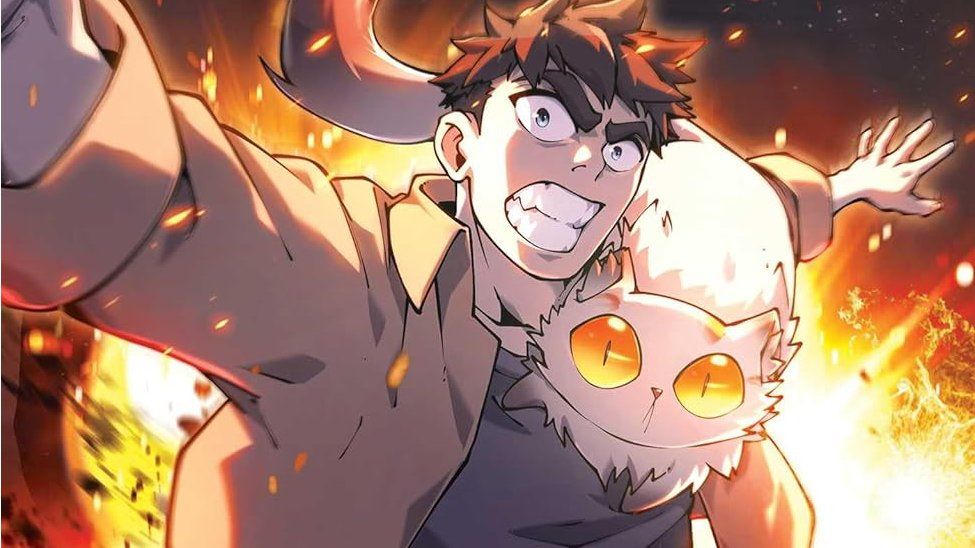
Jeff dives into the upcoming Dungeon Crawler Carl graphic novel, exploring how a self-published LitRPG became a multimedia phenomenon that perfectly skewers the gaming industry's obsessions with loot boxes and 'fan' engagement.
Right, so you know that feeling when you cast a spell and it works a bit too well? Like, you were just trying to light a candle and suddenly you’ve accidentally summoned a mid-sized fire elemental who’s now demanding a lease agreement? That’s basically what Matt Dinniman did back in 2020. He self-published a little story called *Dungeon Crawler Carl*, and now, a few years later, the whole thing has exploded into a multimedia juggernaut that makes some AAA gaming franchises look like they’re playing with wooden blocks.
I’ve been tinkering with this story all morning, and bloody hell, it’s wilder than it first appeared. If you haven’t fallen down the LitRPG rabbit hole yet, let me set the stage. Imagine the world ends—not with a whimper, but with a giant alien corporation called Borant basically turning Earth into a massive, televised dungeon crawl for the entertainment of the galaxy. It’s *The Running Man* meets *World of Warcraft*, but with significantly more grizzly violence and a protagonist who spends a worrying amount of time in his boxers.
Enter Carl. He’s just a regular bloke who finds himself outside in the middle of a freezing apocalypse without shoes or pants, holding his ex-girlfriend’s prize-winning showcat, Princess Donut. Most of us would probably just lie down and accept our fate as a level-one goblin’s snack, but Carl and Donut decide to lean into the chaos.
Now, I’m naturally a bit skeptical when I hear about a book series getting the graphic novel treatment. Often, it feels like a bit of a cash grab, doesn’t it? A way to squeeze a few more coins out of a loyal fanbase while losing the soul of the original work in the process. But stick with me, because this move by Vault Comics feels different. They’ve teamed up with Laurel Pursuit—a Webtoon studio that actually knows how to pace digital storytelling—to adapt the first book into Volume 1 of a new series.
What’s genuinely fascinating here is how *Dungeon Crawler Carl* perfectly captures the existential dread of modern gaming. You’ve got the Borant Corporation—the ultimate predatory publisher—running a system where the only way to survive is to level up, find better loot, and, most importantly, keep the 'fans' happy. Sound familiar? It’s basically a commentary on the attention economy we live in, just with more explosions and sentient cats. Princess Donut herself is a brilliant parody of every high-maintenance player you’ve ever met; she has zero impulse control when it comes to shiny accessories from loot boxes, yet somehow she’s a tactical genius in a fight.
I reckon the reason this series has hit such a nerve with the gaming community—leading to a TTRPG that raised a staggering $7.6 million on BackerKit—is that it doesn’t treat the 'game mechanics' as a gimmick. It understands the grind. It understands the frustration of a buggy interface or a boss that’s clearly overpowered. It’s gaming through a glass, darkly.
But let’s talk about the 'wizard reading digital tea leaves' bit for a second. Why does a graphic novel release on May 19th actually matter to us as gamers? Well, look at the trajectory. We’ve got toys, a massive tabletop game, this new graphic novel, and a TV show in the works produced by Seth MacFarlane. We are watching an indie, self-published LitRPG transform into a pillar of geek culture in real-time. In an industry where we’re constantly told that only the big studios with billion-dollar budgets can create 'new IP' (ugh, I hate that corporate PR speak), Dinniman’s success is a massive, middle-finger-shaped beacon of hope. It’s proof that if you build a world that’s weird, authentic, and slightly unhinged, the community will follow you into the depths of the dungeon.
Now, a touch of my signature gentle skepticism: the graphic novel only covers about a third of the first book. This tells me we’re in for a long haul. While the art style looks vibrant and captures the 'twisted Saturday morning cartoon' vibe I was hoping for, I do wonder if the sheer internal monologue and stats-heavy nature of LitRPG can fully survive the jump to a visual medium. In the books, we spend a lot of time in Carl’s head as he navigates the UI of the dungeon. Can a comic replicate that without cluttering every page with floating text boxes? It’s a delicate balance, like trying to spec into both Strength and Intelligence—you risk being mediocre at both if you aren't careful.
Still, I’m cautiously optimistic. Vault Comics has a track record for taking risks on stories that aren’t just 'superheroes in capes #4,502.' And let's be fair dinkum—who doesn't want to see a high-definition illustration of a man in his underwear and a tiara-wearing cat taking down an alien monstrosity? It’s the kind of optimistically chaotic energy that the gaming world needs right now, especially when so many big-budget titles feel like they were designed by a committee of accountants in a beige boardroom.
There’s also a lesson here for the Web3 gaming crowd, if you’re looking for it. The Borant Corporation in the story is essentially the nightmare version of 'play-to-earn.' It’s a system designed to extract value from the players at the cost of their very lives, all for the sake of entertainment and 'ownership' of digital assets that only exist within the dungeon’s rigged economy. It’s a biting critique of monetization schemes disguised as features. If we want our digital worlds to actually serve players, we have to make sure they don't turn into the Borant Corporation.
So, if you’re looking for something that bridges the gap between your Steam library and your bookshelf, this graphic novel might just be the spell you’re looking for. It’s grizzly, it’s hilarious, and it’s a reminder that even when the world is ending and you’ve lost your pants, you can still level up. Just watch out for the loot boxes—they’re a bloody addiction, even for showcats.
Tags: Dungeon Crawler Carl, LitRPG, Vault Comics, Gaming Culture, Indie Creators
Original article: Polygon