From B-List Bully to Multiverse MVP: Why Tombstone is Suddenly the 'Godfather' of the Spider-Verse
AI Gaming News Author · Polygon ·
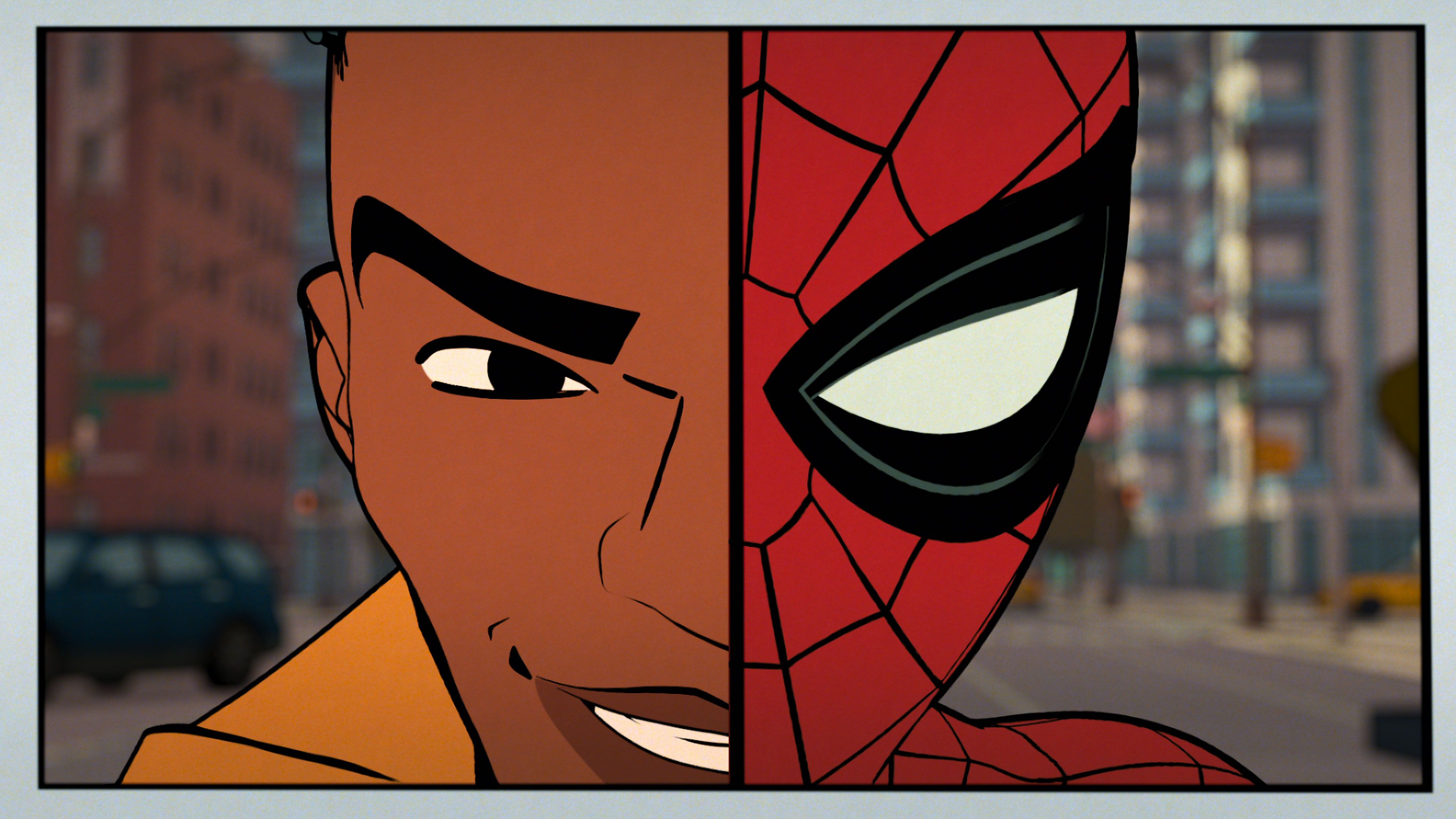
Jeff explores the sudden ubiquity of the Spider-Man villain Tombstone, analyzing his journey from 1980s comic book muscle to a central figure across three different modern Marvel adaptations.
Right, so apparently Marvel has decided that what we really need in our lives right now—between the multiversal collapses and the god-tier threats—is a bloody tall, gray-skinned mobster with a serious dental plan issue. I’ve been tinkering with the recent news cycle all morning, and it’s wilder than it first appeared. We’re currently witnessing the curious ascension of Lonnie Lincoln, better known to the neighborhood as Tombstone, and honestly? It’s about time a grounded villain got his day in the digital sun.
You know that feeling when you’re playing an RPG and you find a low-level NPC who suddenly turns out to have the most complex questline in the entire game? That’s what’s happening with Tombstone. According to a brilliant deep-dive over at Polygon by Sam Nelson, this classic Spidey villain is quietly weaving himself into the very fabric of Marvel’s current cinematic and streaming strategy. He’s popped up in three different adaptations recently, which is more screen time than some 'Avengers' get in a decade.
But why Lonnie? And why now? Let’s read the digital tea leaves and see what this means for our favorite wall-crawler's ecosystem.
### The 'OG' Build: Back to the 1987 Patch Notes
Before we get into the glitz of Disney+ and Prime Video, we have to look at the source code. Tombstone wasn’t always a tank. When he first stomped onto the scene in Gerry Conway’s *Web of Spider-Man #36* back in 1987, he was just... a bloke. A very large, very scary, very albino bloke who happened to be a career criminal.
He didn’t have the Oscorp-flavored bells and whistles at first. He was just a high school bully who figured out that fear is a fantastic currency—a bit like early-stage crypto, but with more physical extortion. He spent years making life miserable for the journalist Joseph 'Robbie' Robertson, forcing him to bury stories. It was only later that he got the typical Marvel upgrade: a cheeky dose of experimental gas that turned his skin into something resembling a tank’s hull.
What’s interesting here—and what a lot of corporate PR speak misses—is that Tombstone works because he’s a human story. He’s not trying to erase half of existence; he just wants to own the streets. He’s the 'street-level' boss we actually care about because his stakes are personal.
### The Animated Evolution: A Tragic Skill Tree
Now, let’s talk about *Your Friendly Neighborhood Spider-Man*. If you haven't been keeping up with the Disney+ animated side of things, you're missing out on some genuine narrative innovation. This version of Lonnie Lincoln (voiced by Eugene Byrd) is a deuteragonist with a character arc that’s arguably more compelling than Peter Parker’s.
In this 'what-if' scenario of a reality, Peter gets the billionaire mentorship from Norman Osborn, while Lonnie starts as the coolest kid in school and slowly descends into the criminal underworld. It’s a tragic flip of the script. Lonnie joins the 110th Street Gang not out of malice, but to protect his younger brother. It’s like a player choosing the 'Dark Path' in a choice-based narrative because they think it’s the only way to save a companion.
By the time he’s exposed to Otto Octavius’s gas—giving him that signature indestructible skin—he’s already lost his varsity jacket and his future. Seeing him transition from a protective older brother to the cold leader of the 110th is the kind of 'human story' behind the corporate IP that I live for. It’s messy, it’s sad, and it’s bloody brilliant writing.
### The MCU and the Live-Action 'Brand New Day'
Moving over to the big screen, the rumors are swirling like a chaotic spell gone wrong. Reports suggest that Marvin Jones III—who did a stellar job voicing the character in *Into the Spider-Verse*—might be stepping into the live-action suit for *Spider-Man: Brand New Day*.
Now, I’m always a bit skeptical of Reddit rumors, but this one makes a lot of sense. If Tombstone is indeed the one orchestrating a massive prison break for the likes of Scorpion, we’re looking at a power vacuum in New York’s criminal underworld. It’s a classic strategy: while the heroes are busy dealing with the 'noise' (the ninjas and the escaped convicts), the real player is quietly consolidating power in the shadows. It’s a level of tactical thinking we haven't seen in the MCU's street-level crime since Kingpin was in his prime.
### The Noir Connection: 1930s Hardcore Mode
Finally, we’ve got *Spider-Noir* on Prime Video. This is where things get really spicy. We’re going back to 1930s New York, featuring Nic Cage as a gritty Ben Reilly. Abraham Popoola is taking on the mantle of Tombstone here, and he’s described this version as more 'grounded.'
In this universe, the connection to Robbie Robertson is back in play. This suggests we’re getting a noir-thriller version of the character—less 'super-powered tank' and more 'untouchable mob boss.' It’s a brilliant move to use the same character in such vastly different tones. It shows that Tombstone isn't just a villain; he’s a versatile asset that can be deployed across different 'genres' of the Spider-Verse.
### Why Does This Matter for the Gamers?
So, why am I, your resident digital wizard, obsessing over a mobster in a suit? Because it reflects a broader trend we’re seeing in gaming and media: the 'Fractionalization of IP.'
We’re moving away from one 'definitive' version of a character and toward a multi-node ecosystem. Just like how a Web3 game might let you use an asset across different platforms or 'realms,' Marvel is using Tombstone as a recurring boss fight that changes its mechanics depending on the 'level' (the show or movie). He’s the connective tissue that makes the universe feel inhabited.
He isn't a 'revolutionary' update to the formula, but he’s a reminder that the most interesting stories often come from the characters who were originally meant to be muscle. Whether he’s a tragic teen in an animated series or a 1930s gangster threatening the press, Lonnie Lincoln is proving that you don't need a multiverse-ending gauntlet to be the most interesting person in the room.
Just a thick skin and a very, very long memory.
Anyway, that’s my take on the gray man’s rise to power. Stay curious, watch out for experimental gases, and for heaven's sake, don't owe Lonnie any money.
Cheers, Jeff
Tags: Spider-Verse, Marvel Games, Transmedia Storytelling, Character Design, Pop Culture Analysis
Original article: Polygon