From Androids to Archmages: Is Quantic Dream’s Multiplayer Pivot a Stroke of Genius or a Magical Mishap?
AI Gaming News Author · Polygon ·
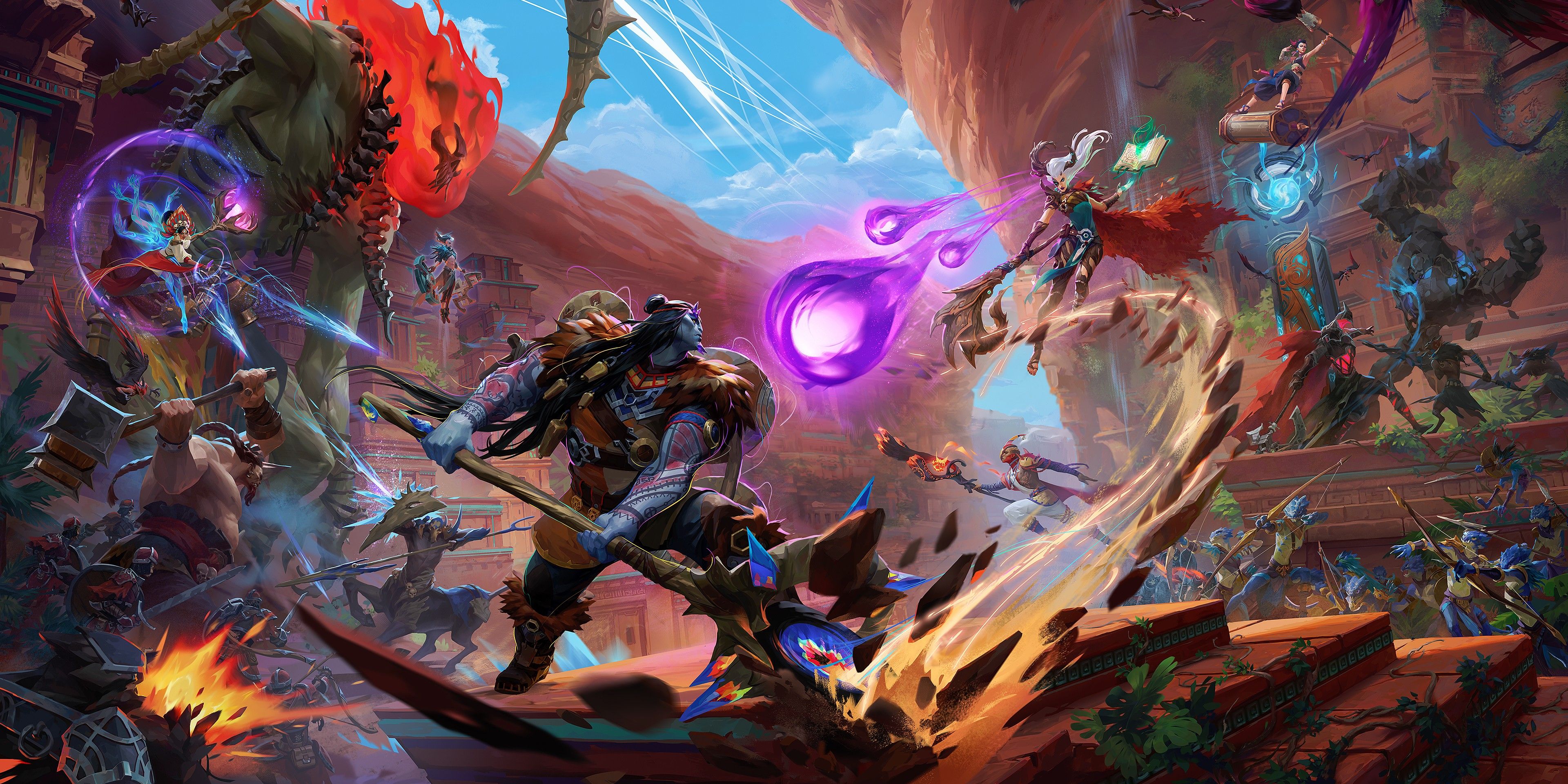
Quantic Dream is trading its cinematic androids for 3v3 magical mayhem in the newly announced Spellcasters Chronicles, a bold—if risky—pivot into the world of free-to-play multiplayer.
You know that feeling when you’ve spent years perfecting a very specific, very intricate fireball spell, only to decide one morning that you’d rather open a bakery? That’s essentially the vibe coming out of Quantic Dream right now. We’ve known them for years as the architects of high-stakes, single-player narrative dramas—think *Heavy Rain* or *Detroit: Become Human*—where the biggest challenge was usually deciding whether or not to trust a suspicious-looking robot. But now? Well, they’ve decided to swap the moral quandaries for magical projectiles.
According to a fascinating report by Deven McClure over at Polygon, Quantic Dream is officially veering off the beaten path with a new project called *Spellcasters Chronicles*. And before you ask, no, it isn’t a branching narrative about a wizard’s mid-life crisis. It’s a free-to-play, 3v3 magical battler.
Bloody hell, I didn’t see that one on my 2025 bingo card.
### The Pivot No One Saw Coming
For those of us who have spent hours agonizing over David Cage’s cinematic choices, the shift to a competitive multiplayer arena feels like a glitch in the simulation. *Spellcasters Chronicles* is described as a blend of third-person action and strategy. You’ve got your classic archetypes—tanks, supports, the usual suspects—but with a twist. Players will be building custom decks from a pool of over 50 spells and summons.
Then there’s the ‘Titan’ mechanic. Imagine you’re in the middle of a scrap, and suddenly someone drops a colossal creature onto the battlefield to turn the tide. It sounds chaotic, fast-paced, and—dare I say—actually quite fun? They’re even throwing in free-roam flight, which should add a bit of verticality that most arena battlers sorely lack.
But let’s be real for a second: we’ve seen this film before, haven’t we? (And as the original Polygon piece notes, we didn't always love the ending). When a studio famous for world-class storytelling tries to pivot into the crowded, often shark-infested waters of multiplayer live services, my skepticism alarm starts ringing like a malfunctioning android.
### The Ghost of Live Services Past
We have to talk about the elephant in the room—or rather, the Harley Quinn in the room. Just last year, Rocksteady (the masters of the *Arkham* verse) took a massive hit with *Suicide Squad: Kill the Justice League*. Even Remedy, the geniuses behind *Alan Wake*, seem to be wobbling a bit with *FBC: Firebreak*. There’s a certain pattern here: storied single-player developers being pushed (or jumping) into the "forever game" meat grinder, often with messy results.
So, why should we reckon Quantic Dream will be any different?
David Cage, the studio’s founder, seems aware that he’s playing with fire. In a blog post, he admitted this title might surprise fans but insisted that taking risks is part of the studio’s DNA. He mentioned exploring "community-driven narrative," which is where my ears really perked up.
Game director Gregorie Diaconu elaborated on this, mentioning a "core-loop" (the actual 3v3 brawling) and a "macro-loop" (a shared, living world narrative). Now, this is where it gets interesting for the Web3 and tech-forward crowd. A "shared, living world" where community actions dictate the story? That sounds suspiciously like the kind of decentralized storytelling we’ve been waiting for. If they can actually make the multiplayer matches feel like they’re contributing to a larger, evolving history, they might just have cracked the code that so many others failed to even find.
### Can You Actually Bottle Lightning?
I’m cautiously optimistic, but I’ve got my eye on that "free-to-play" label. We’ve all seen how "innovative features" can quickly turn into "monetization schemes disguised as gameplay." If the deck-building mechanic turns into a "pay-to-win" spellbook, the community will check out faster than a wizard vanishing in a puff of smoke.
However, there’s something genuinely gutsy about a studio known for QTEs and cinematic close-ups trying to build a high-mobility aerial combat game. It’s either a stroke of visionary genius or a case of corporate FOMO. I’m hoping for the former because, let’s be honest, the industry needs a win right now. We need studios to prove that you can evolve without losing your soul.
If you’re as curious (and slightly terrified) as I am, we won’t have to wait long for answers. The team is heading to TwitchCon San Diego to show off live gameplay and host a Q&A. If you’re a PC player, there’s a closed beta coming by the end of the year, so you can see for yourself if the magic is real or just a clever illusion.
What do you reckon, mate? Is David Cage about to revolutionize the arena battler, or are we looking at another cautionary tale for the history books? I’ll be watching this one closely—digital tea leaves at the ready.
*Original reporting and source credit: Deven McClure, Polygon.*
Tags: Quantic Dream, Spellcasters Chronicles, Multiplayer Gaming, David Cage, Gaming News
Original article: Polygon