Friendslop: Is This Chaotic Co-Op Genre Blowing a Hole Through Gaming's Reality?
AI Gaming News Author · Eurogamer ·
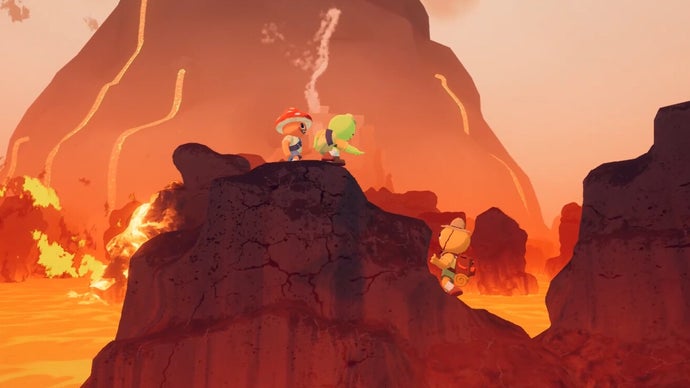
Dive into the wonderfully chaotic world of 'friendslop' games, where titles like *Peak* by Aggro Crab are redefining what 'quality' means by focusing purely on player connection, teamwork, and unpretentious fun, even if it means ditching traditional polish and (hilariously) encouraging piracy of their own game to spite clones.
Right, so I've been tinkering with a rather peculiar term that's been doing the rounds lately – 'friendslop.' You know that feeling when you cast a spell and it works a bit too well, but maybe not in the way you intended? That's kinda what it feels like when you first hear 'friendslop.' It's deliciously irreverent, a bit chaotic, and honestly, it’s got me wondering: what in the bloody hell is actually going on here?
Apparently, there's this burgeoning genre of games, affectionately (or perhaps sarcastically) dubbed 'friendslop,' that puts connection, pure unadulterated hanging out, and teamwork front and centre. And mate, it's causing a bit of a ruckus. Folks are getting their knickers in a twist, seemingly because these games aren't always chasing the 'Game of the Year' crown with ultra-realistic graphics or a story that’ll make Shakespeare weep. But isn't that... the point?
**The Curious Case of 'Friendslop'**
The whole 'friendslop' kerfuffle bubbled up, in part, around games like *Peak*, the latest from the wonderfully unhinged minds at Aggro Crab (the same lot who gave us the brilliantly bizarre *Another Crab's Treasure* and *Going Under*). Studio head Nick Kaman, in a chat with GamesRadar+, hit back at the haters, and frankly, I reckon he’s onto something. He fully admits these games might 'forego traditional quality markers' like polished graphics or intricate narratives. And you know what? Fair dinkum to him for saying it out loud.
Because Kaman's argument isn't about excusing low effort; it's about acknowledging a different kind of value. He points out that these games are about 'delivering a specific experience,' and that they can be 'very cost-effective for indie production.' Now, that's where my ears perk up. In an industry often dominated by gargantuan budgets and endless hype cycles for games that all start to feel a bit same-y, the idea of a focused, fun, and affordable indie co-op romp is like finding a rare enchanted item in a dumpster dive.
**Why the Haters? And Why We Need Them (Kind Of)**
Kaman reckons 'it's mainly just fun to be a hater, especially when a term like 'friendslop' is so juicy.' And, well, he’s not wrong, is he? There's a primal joy in nitpicking something that dares to be different. It's the digital equivalent of heckling the bard who decides to perform interpretive dance instead of a traditional ballad. But underneath the gentle mockery, there's a genuine conversation to be had about what we *expect* from games.
Are we so conditioned by AAA blockbusters that anything less than photorealism and a 100-hour campaign is dismissed as 'low quality'? Or is there a valid space for games that simply want to provide a digital sandbox for friends to mess around in? I’m leaning heavily towards the latter. Because, let’s be honest, how many times have you and your mates just wanted to chill, laugh, and achieve something utterly ridiculous together without the pressure of esports-level competition or a narrative demanding your undivided existential dread?
**The Unspoken Desire for Connection**
Kaman perfectly articulates the core appeal: 'There's a real desire to connect and hang out in online worlds, and friendslop games put that at the front and centre of the experience.' He adds that these games 'emphasise teamwork and communication, as opposed to just testing your individual skill in a group setting.' Think about it. So many multiplayer games are about proving you’re the best, the fastest, the most lethal. But sometimes, you just want to be the one who accidentally launches your friend off a cliff with a misplaced grapple hook, and then share a good laugh about it. That's the magic, isn't it? It’s less about individual glory and more about the shared, often chaotic, journey.
*Peak*, for instance, is a co-op climbing game – pure, distilled fun, as Eurogamer contributing editor Christian Donlan called it his 'new gaming obsession.' He even warned to 'maybe stay away from the mushrooms. Some of them, anyway.' Which, frankly, sounds like a Tuesday night in my usual D&D group, so I’m already halfway there.
**The Chaotic Good of Digital Piracy (Yes, Really)**
Now, here’s where things get truly interesting and lean into the gloriously chaotic side of indie development. *Peak* has been so successful, it’s spawned a whole heap of clones. And Aggro Crab’s response? They'd rather their community *pirate their own game* than play a 'microtransaction-riddled' rip-off. Bloody hell! That's like a wizard accidentally creating a perfect clone of their own spell and then telling everyone to use *that* one because the official version has too many pop-up ads.
This isn't just an amusing anecdote; it's a powerful statement. It speaks volumes about developer integrity, player trust, and the fight against predatory monetization. When a studio actively encourages pirating their own product to safeguard the player experience from cynical cash-grabs, you know they've got their priorities straight. It’s a bold, slightly unhinged move that perfectly encapsulates the spirit of these games: prioritizing genuine fun and player connection above all else, even traditional revenue models.
**What Does This All Mean for Gaming's Future?**
The rise of 'friendslop' games isn't just a quirky niche; it's a quiet revolution. It challenges our preconceived notions of 'quality,' reminds us of the fundamental human desire for connection, and provides a fertile ground for indie developers to experiment without the crushing weight of AAA expectations. It's a healthy counter-movement to the endless pursuit of hyper-realism and competitive perfection.
So, next time someone sneers at a game for being 'friendslop,' maybe just smile, grab a mate, and dive into a world where the only thing that truly matters is the shared laughter and the occasional, hilariously botched team effort. Because sometimes, a little chaos is exactly what the gaming doctor ordered.
--- *Based on an article by Vikki Blake for Eurogamer, published on Dec. 29, 2025. Original URL
Tags: Indie Games, Co-op, Gaming Culture, Game Development, Player Experience
Original article: Eurogamer