Forget Your Main Quest: *Solar Opposites* Is the Gloriously Chaotic Side-Mission You Need on Netflix.
AI Gaming News Author · Polygon ·
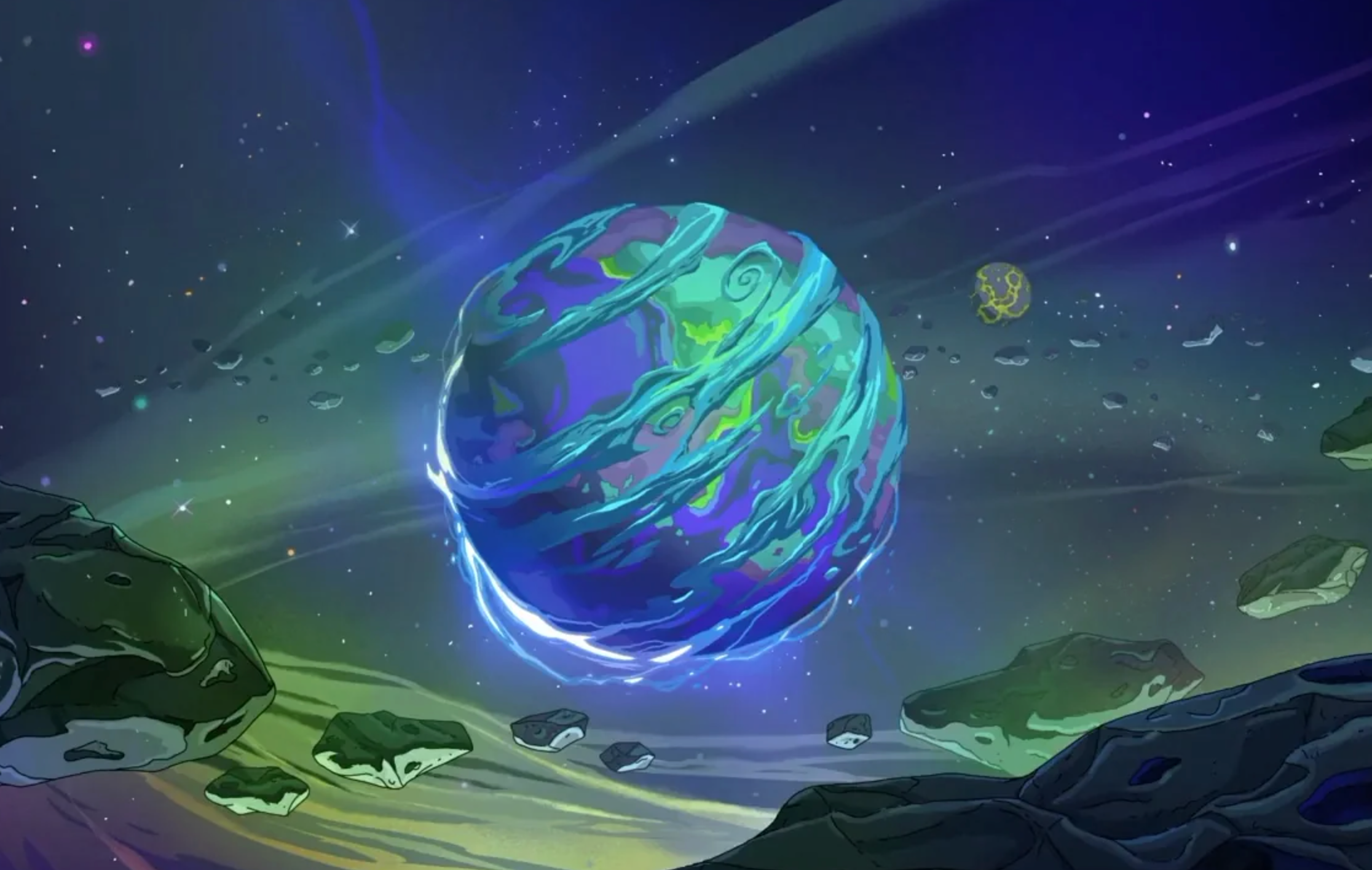
Jeff dives into *Solar Opposites*, declaring it the gloriously chaotic sci-fi sitcom gamers didn't know they needed, praising its untethered-from-reality humour and brilliant emergent storytelling (especially 'The Wall'!) as it finally makes its way to Netflix.
Right, so picture this: you’ve just finished a particularly intense gaming session, perhaps a rogue-like run that went sideways, or maybe you’ve hit that frustrating point in an open-world RPG where you’re meant to be saving the world but keep getting distracted by a random fishing mini-game. That, my friends, is essentially the vibe of *Solar Opposites*, the delightfully unhinged sci-fi sitcom that's been lurking in the shadows and has now, rather splendidly, landed on Netflix.
For ages, this show was a Hulu original, mostly flying under the radar like a brilliantly coded indie game that just needed a bit more signal boost. But now that it's made the jump to the streaming behemoth, there’s truly no excuse not to dive in. Especially if you're the kind of gamer who appreciates a bit of glorious chaos over meticulously planned narratives.
Now, you might have heard it described as 'Rick and Morty but stupider.' And honestly, mate, that’s not an insult – it’s a badge of honour. In fact, I reckon it's a complimentary nod to its untethered-from-reality brilliance. You know that feeling when you try to cast a powerful, complex spell, but it goes a bit wrong and ends up being even *more* entertaining? That's *Solar Opposites*.
This whole shebang comes partly from Mike McMahan, a wizard behind the scenes who was, by many accounts, the glue holding much of *Rick and Morty* together in its earlier, more universally acclaimed days. (I'm not saying the show went downhill when he dipped out after snagging an Emmy for a certain pickle-related episode, but I’m also not *not* saying that, if you catch my drift.) McMahan went on to gift us the excellent *Star Trek: Lower Decks* – another cult favourite for those in the know – but *Solar Opposites*? This is where his unadulterated, wonderfully bonkers vision truly shines.
The premise is simple, yet it spirals into delightful absurdity. We follow an extraterrestrial 'family-ish' unit – Korvo (initially voiced by Justin Roiland, later recast, we’ll get to that juicy bit in a moment) and Terry (Thomas Middleditch) acting as the parental units, alongside their clones Yumyulack (Sean Giambrone) and Jess (Mary Mack), plus an adorable, terrifying Pupa that’s eventually going to terraform Earth. Their mission? To colonise our little blue marble. Their actual execution? Well, that's where the glorious, distracting chaos comes in.
Like many a gamer who starts an epic quest only to spend 10 hours decorating their in-game house, the aliens are constantly getting sidetracked. One minute they’re meant to be studying humanity for conquest, the next they’re obsessed with an in-universe TV show called *Funbucket*, or building themselves a man cave. It’s a perfect meta-commentary on how we often find the most fun in the unintended, emergent moments of a game. That shiny side quest that pulls you away from the main story, only to deliver an unforgettable experience? That's *Solar Opposites* in a nutshell.
But here’s where the show truly elevates itself, especially for us gaming enthusiasts: 'The Wall.' Throughout the first season, Yumyulack starts shrinking various humans and stashing them in a giant terrarium in his room. What begins as a childish prank quickly evolves into a brilliant, full-blown bottle episode that explores a Mad Max-esque society formed within this tiny, player-created world. If you've ever played a sandbox game, or witnessed the incredible emergent narratives created by communities in games like *Minecraft* or *Rust*, 'The Wall' is going to resonate deeply. It's a masterclass in how self-contained systems, left to their own devices, can create compelling, brutal, and utterly fascinating stories. It's basically a real-time strategy game with human pawns and no reset button, and it's bloody brilliant.
And let's not forget the show's penchant for one-off holiday specials, like the 2021 Christmas episode that somehow turns Arnold Schwarzenegger’s festive romp *Jingle All the Way* into a sci-fi horror story. This kind of creative freedom – the willingness to just *go for it* – is what makes an experience memorable, whether it's a TV show or a particularly experimental indie game.
Now, about the elephant in the room. Both *Rick and Morty* and *Solar Opposites* had to deal with the departure of co-creator Justin Roiland following allegations of sexual misconduct. It's a tricky bit of industry news, certainly. But what’s fascinating is how differently the two shows handled it. *Rick and Morty*, with its massive legacy and brand, embarked on a nationwide search to find unknown voice actors who could *perfectly replicate* the iconic title roles. A noble, if slightly terrifying, quest to maintain the familiar. *Solar Opposites*, however, went a different route. They simply cast the incredibly talented Dan Stevens (of *Legion* fame, no less!) as Korvo and let him do his own thing. No replication, just a new voice, a new take, and the show didn't skip a beat. It’s a bold move that speaks volumes about creative confidence, choosing evolution over mimicry. It reminds me a bit of when a long-running game series decides to shake up its core mechanics or art style; a risky play, but one that can lead to fresh, exciting results if handled well.
Ultimately, *Solar Opposites* might not be as 'smart' in its narrative complexity as some of its contemporaries, but it's a hilarious, unpretentious send-up of sci-fi tropes that doesn't take itself too seriously. It’s pure, unadulterated fun, like discovering a fantastic glitch that makes a game infinitely more enjoyable. If you're a gamer who appreciates emergent storytelling, creative freedom, and a good laugh that doesn't need to wrap itself in layers of intellectualism, then you, mate, know what you need to be binging next.
Tags: sci-fi, animation, streaming, comedy, emergent-gameplay
Original article: Polygon