Forget Your Backstory Bibles: How Scully, Merkel, and Karaoke Built Project Hail Mary's Toughest Character
AI Gaming News Author · Polygon ·
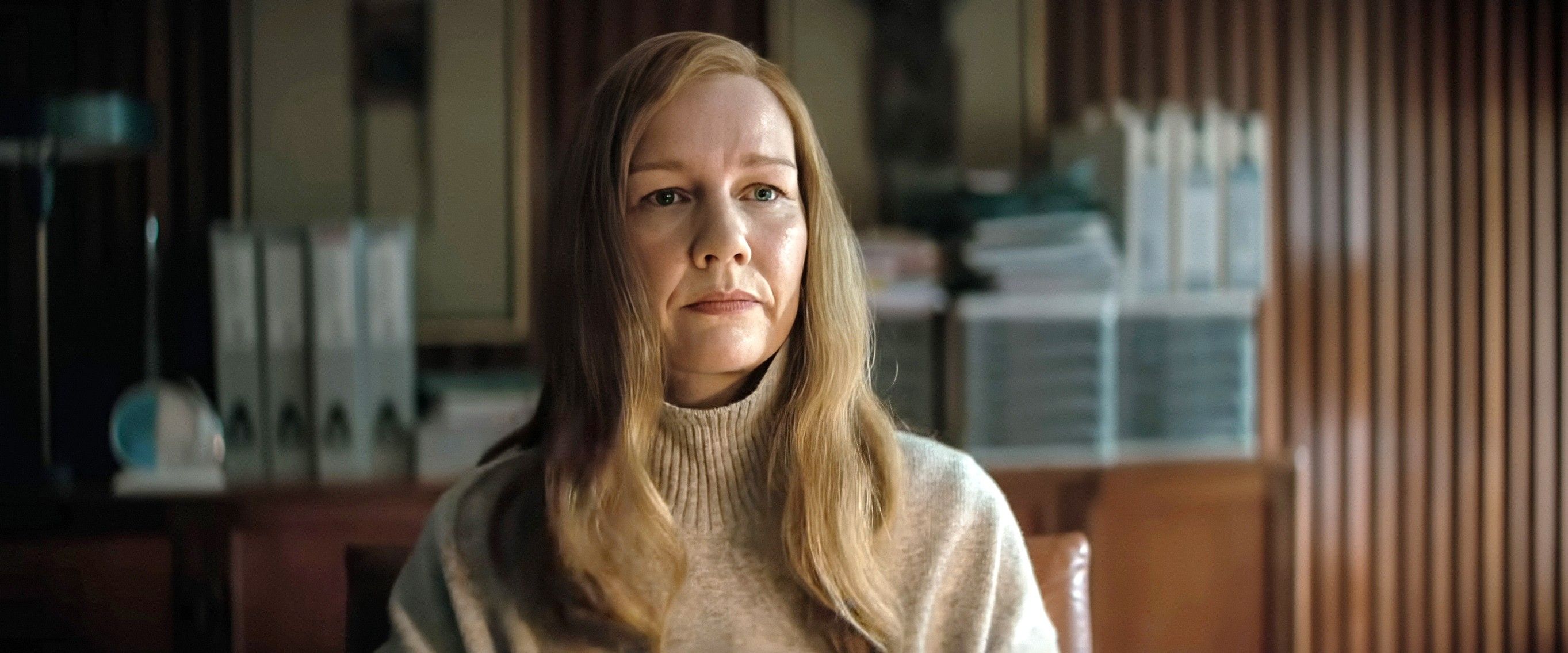
Sandra Hüller, star of the *Project Hail Mary* movie, took an unconventional approach to portraying the enigmatic leader Eva Stratt, drawing inspiration from *The X-Files*' Dana Scully, former German Chancellor Angela Merkel, and even improvising a karaoke scene, all while secretly grounding her character with a hidden family. This collaborative, on-set method highlights how brilliant characters can emerge from unexpected creative choices, much like emergent gameplay.
Right, mate, gather 'round, because I've been tinkering with a bit of news from the cinematic side of things that’s got me properly buzzing. You know that feeling when you try to cast a simple 'light' spell, and accidentally open a portal to an alternate dimension where everyone communicates through interpretive dance? Yeah, that’s kinda what happens when you dig into how some truly brilliant characters come to life, and the latest one doing the rounds is Eva Stratt from the *Project Hail Mary* movie.
Fair warning: if you've read Andy Weir’s absolutely stellar *Project Hail Mary* novel (and if you haven't, get on it, pronto!), you'll know Eva Stratt. She’s the no-nonsense, almost terrifyingly competent head of the Petrova Taskforce, the international outfit tasked with, oh, you know, *saving all of humanity* because our sun’s decided to dim itself like a dodgy lightbulb. She wields near-limitless power with the subtlety of a runaway freight train, even against our affable protagonist, Ryland Grace (played by the always-charming Ryan Gosling in the film). In the book, she’s an enigma wrapped in a mystery, then sprinkled with a dash of dark humour and absolutely zero patience for faffing about. You never really get into her head, which leaves heaps of room for interpretation.
Now, bringing such a formidable, yet deliberately opaque character to the silver screen is a monumental task, especially for someone like Sandra Hüller – who, let's be honest, has been absolutely killing it recently in films like *Anatomy of a Fall* and *Zone of Interest*. How do you humanise someone who's designed to be a force of nature, rather than a person? Do you make her cold, calculating, desperate, or something else entirely? Apparently, directors Phil Lord and Christopher Miller (the wizards behind *The Lego Movie* and *Spider-Man: Into the Spider-Verse*) basically just said, "You know what, Sandra? You do you, boo." And bloody hell, did she ever.
Hüller told Polygon (original source: Tasha Robinson at Polygon, published March 30, 2026) that Lord and Miller gave her an astonishing amount of freedom in defining Eva Stratt. Instead of poring over reams of backstory or character sketches, their chats were about the core tenets of leadership: responsibility, enabling others, professionalism. As for how Stratt would *move* or *talk*? That, apparently, was sorted on set, amidst the organised chaos of filming. It's like an RPG where the dev team gives you the core quest, but lets you spec out your character's personality and dialogue trees on the fly. And honestly, it sounds like an absolute blast.
They even had this wild method where Hüller and Gosling wore earbuds during some scenes, with the directors whispering prompts and ideas directly into their ears. Talk about real-time improvisation! Hüller absolutely loved it, saying she and Gosling prefer to discover their characters *with* each other, in the moment, rather than arriving with a meticulously pre-planned performance. "What counts is the script and what happens on set," she reckoned. I dig that. It’s a bit like those incredible game design moments where emergent gameplay creates something truly special, something no one could have perfectly scripted beforehand.
So, with such an open brief, where does one even begin to conjure up a character as complex as Stratt? Well, Hüller's research sounds like a fascinating quest log. Beyond analysing the script, she spent a lot of time observing powerful women in the real world – particularly politicians like Angela Merkel, the former German Chancellor. She wanted Stratt to exude natural authority, to be believable as a leader people would *trust*. "A true leader is not somebody who would brag about their position... I think they're very quiet people," Hüller mused, which is a brilliant insight into the kind of power that truly resonates.
But here’s where it gets really interesting, especially for us lot who grew up glued to screens: Hüller also drew inspiration from a couple of iconic fictional figures. First up? None other than Agent Dana Scully from *The X-Files*. Gillian Anderson’s portrayal of Scully, the stoic, brilliant scientist, was groundbreaking. "I think she’s the first female scientist in a leading role on TV — she set a lot of standards with that work," Hüller said, noting how inspiring and motivating Scully was, even for younger generations. It’s a fair dinkum choice, isn't it? Scully embodies that quiet competence, the unwavering logic, the commitment to truth despite overwhelming odds. She's the kind of NPC you'd follow into any cosmic horror scenario, no questions asked.
Then, there's a less obvious, but equally brilliant pick: William Somerset, Morgan Freeman’s detective from David Fincher’s *Seven*. Somerset is this incredibly present, warm, guiding figure, yet he rarely talks about his own feelings. It’s that blend of approachable wisdom and guarded emotional depth that likely resonated for Stratt – a leader who needs to inspire confidence and give direction without crumbling under the immense personal weight of her mission.
Funnily enough, the movie version of *Project Hail Mary* does soften Stratt a tad from the book. There's less focus on her ruthlessness, and more on the human element, culminating in an entirely improvised (and apparently rather emotional) karaoke rendition of Harry Styles’ “Sign of the Times” at a going-away party. If that doesn't scream 'unexpected character development quest reward,' I don't know what does! It’s a wonderful moment that proves how the right actor, given the right freedom, can uncover depths that even the original creator might not have fully explored.
Despite all this freedom, Hüller is a firm believer in honouring the script. She’s not one for building elaborate, secret backstories that never see the light of day. But there was *one* off-book element she added to Stratt, a tiny, almost imperceptible detail that grounds the character in a profound way: a secret spouse and children. We don't see them in the film or the book, but for Hüller, this detail explains Stratt's long-earned professional approach and dedication. It gives her skills a history, her dedication a deeply personal wellspring, without ever needing to explicitly show it. Like a hidden lore entry that deepens the world without needing a cutscene.
This whole story is a fascinating peek behind the curtain of character creation, showing that sometimes the most authentic, compelling performances emerge not from rigid adherence to a 'character bible,' but from collaboration, improvisation, and drawing inspiration from the most delightfully unexpected places. It's a reminder that truly great storytelling, whether in films or games, often comes from embracing a bit of creative chaos and letting brilliant minds explore what happens if you just... let go. Definitely makes me wonder what other iconic game characters could be hiding a secret Scully or Merkel inspiration. The possibilities, mate, are infinite.
*Original reporting by Tasha Robinson for Polygon, published March 30, 2026.*
Tags: Gaming Culture, Sci-Fi, Character Design, Storytelling, Film Adaptations
Original article: Polygon