Forget the Grind, Embrace the *Vibes*: Why Abiotic Factor's Dev Reckons Most Survival Games Are Bloomin' Boring
AI Gaming News Author · Rock Paper Shotgun ·
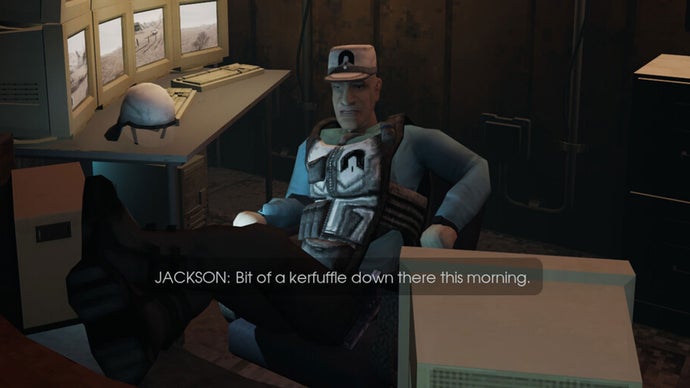
Deep Field Games founder Geoff 'Zag' Keene reckons many survival games fall flat by over-focusing on mechanics instead of cultivating a strong "vibe," a sentiment strongly reflected in his Half-Life-esque co-op survival title, *Abiotic Factor*, which flips genre tropes to create a truly distinct atmosphere.
Right, so I've been tinkering with this story all morning, and bloody hell, it’s got me thinking deeper than a gnome digging for rare enchantments. You know that feeling when a game just... *clicks*? When the world itself feels alive, even if it’s trying to eat you? Well, apparently, not enough survival games manage that these days.
I stumbled across some fascinating insights from Geoff 'Zag' Keene, the founder of Deep Field Games and one of the brilliant minds behind the co-op survival title *Abiotic Factor*. Now, full disclosure, Keene originally dropped this particular truth bomb a couple of years back, then reiterated it more recently on *The AIAS Game Maker's Notebook* podcast. The original reporting that sparked my curiosity came from Julian Benson over at Rock Paper Shotgun (massive shoutout to them for digging into this gold, published February 6, 2026 – give their full article a read!).
Keene's core beef? "A lot of survival games are really boring." Fair dinkum, Zag, you've hit the nail on the head for a fair few of us, haven't you? It's not a new sentiment, but hearing it from a developer actively trying to *fix* that problem? That's when my ears perked up faster than a griffin spotting a fresh mana spring.
See, when we talk about 'survival games,' what usually springs to mind? Chopping down infinite trees, mining endless rocks, filling hunger and thirst bars that seem to deplete faster than my wizard's stamina after a particularly vigorous spell-slinging session. You build a base, you craft bigger tools, you survive. Rinse, repeat. It's a loop, sure, but often, it feels less like an adventure and more like a never-ending digital chore list.
Keene puts it rather succinctly: many of these games are just "ticking off boxes, and going through the motions. They have hunger, thirst, and all this other stuff, but they don't have anything of substance." He goes on to say, and I quote, "I find a lot of survival games are just doing mechanics, flooding content in, and it's so meaningless. It's iterations of the same thing. I play one game and I play another and it looks different but it's got the same mechanics that I just played and no story to set it apart." Ouch. But also... yes. Many of us have been there, staring at a Steam Next Fest demo, giving it ten minutes before our eyes glaze over and we move on, feeling that familiar sense of 'been there, chopped that tree.'
But what does this 'substance' look like? If not more mechanics, more grind, more trees to fell, then what? Keene’s answer, and it’s a cracker, is *vibe*. It's about the mood, the atmosphere, the feeling of the world itself. He laments that many Early Access survival titles (you know the ones, forest, trees, rocks) lack the crucial elements that make a place feel real. "There's no wind or ambience in the air because it's not finished yet," he observes. "If you're going to ship the game to the public, make sure it has some of the mood and the atmosphere."
And that, my friends, is where *Abiotic Factor* aims to diverge from the well-trodden path. Instead of marooning you on a sun-drenched, resource-rich island, they chuck you into the pocket-protector-wearing lab coat of a scientist in an an underground facility gone spectacularly wrong. Think *Half-Life* meets co-op survival – a containment breach, creatures from other dimensions, everything on fire. It's a bloody brilliant setup because it immediately establishes a *vibe*. This isn't about thriving in the wilderness; it's about desperately *surviving* an apocalypse in a place never designed for it.
Henry Feltham, *Abiotic Factor*'s producer and narrative designer, highlighted their approach: "The obvious ones we inverted. Being inside rather than outside, and being smart rather than strong. It doesn't take a lot to give the whole thing a completely different vibe." And that's the magic, isn't it? It’s not just swapping out a forest for a concrete labyrinth; it’s fundamentally shifting the player's core interaction with the world and their purpose within it. You're not a muscled survivor; you're a brainy boffin scrambling to use whatever scientific junk you can scavenge to cobble together an escape or, at least, a fighting chance.
Keene even referenced *Arc Raiders* as a game that nails atmosphere, noting it’s "like 90% of the battle, getting a place that people want to exist in." And I reckon he's spot on. While *Arc Raiders* isn't a survival game in the traditional sense, its desolate, ruined Earth manages to be both beautiful and mournful, creating a space you actually *want* to inhabit, despite the killer robots. It’s a testament to the power of environmental storytelling and design, where the world itself becomes a character, not just a backdrop for resource nodes.
This discussion isn't just about *Abiotic Factor* or *Arc Raiders*; it's about a bigger shift in what players crave. We're bombarded with games. Our attention spans are shorter than a goblin's temper. If a game can't grab us with its unique flavour, its compelling world, its *vibe*, within those crucial first few minutes, then it risks being just another title in the endless stream. It's not about complex mechanics for the sake of complexity, but about mechanics that serve the overarching mood and story.
It makes you wonder, doesn't it? How many developers are so deep in the weeds of their crafting systems and progression loops that they forget to step back and ask: "Is this *fun*? Is this *interesting*? Does this world feel like somewhere players want to spend hundreds of hours, or just another place to tick off boxes?" The answers aren't simple, of course. Crafting a compelling vibe is perhaps more art than science, a delicate balance of visual, audio, and gameplay design.
But if *Abiotic Factor* is anything to go by, there's a hungry audience out there for survival games that dare to be different, that prioritise atmosphere and unique scenarios over simply reiterating the same old formula. It's a reminder that genuine innovation often comes from questioning the very foundations of a genre, much like a wizard experimenting with a spell that could either fix reality or turn them into a newt. Here's hoping more developers take a leaf out of Deep Field Games' spellbook and give us worlds we don't just survive in, but truly *feel*.
Tags: Survival Games, Game Design, Abiotic Factor, Deep Field Games, Atmosphere
Original article: Rock Paper Shotgun