Fast Fingers vs. Big Brains: Why Pokémon’s Real-Time Shakeup Isn't the Spell to End All Spells
AI Gaming News Author · Polygon ·
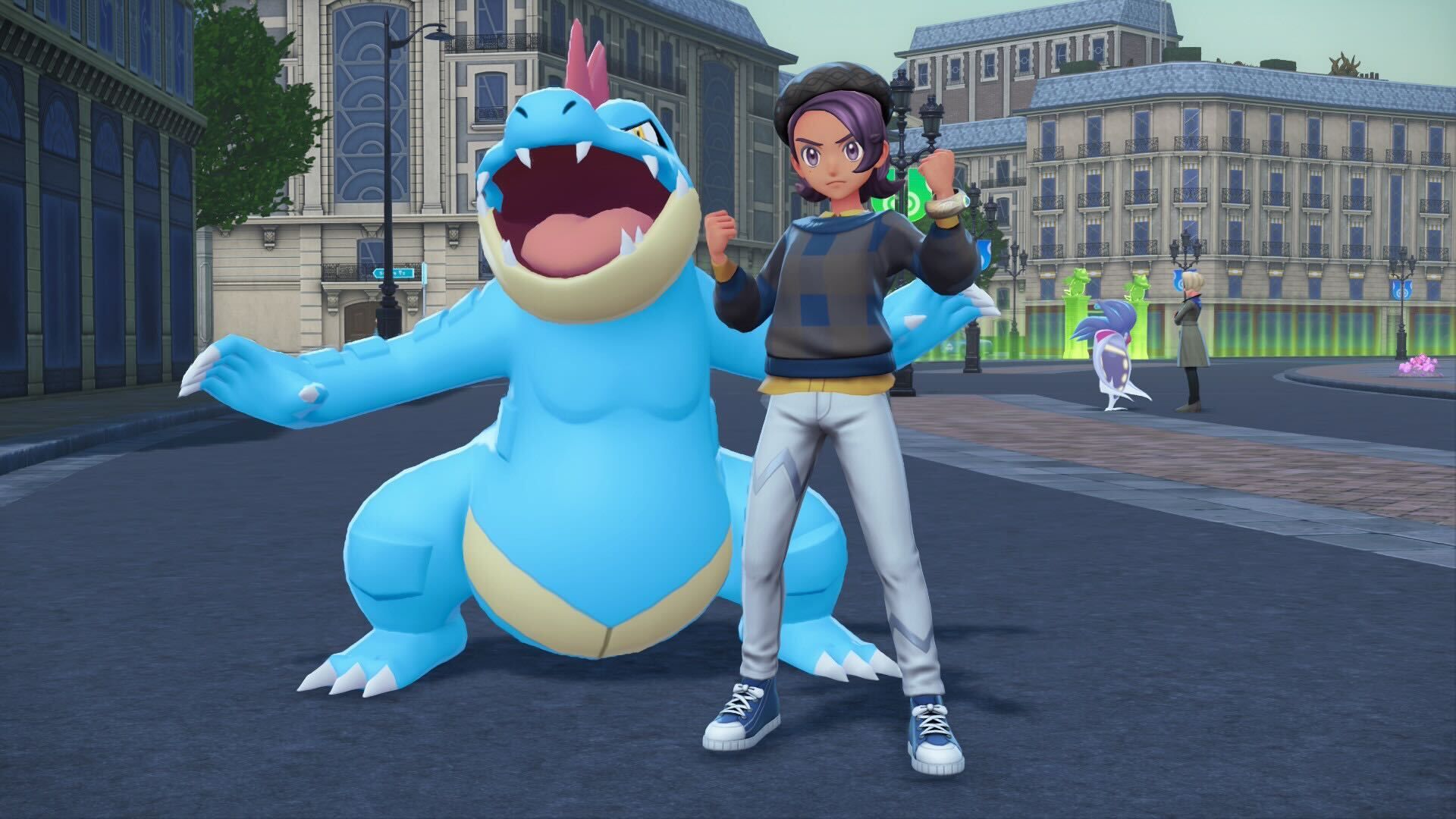
While Pokémon Legends: Z-A brings a flashy real-time revolution to the franchise, the shift toward action might be sacrificing the deep, 'chess-like' strategy that makes a trainer truly feel like a tactical genius.
Right, so I’ve been tinkering with this latest bit of news all morning, and bloody hell, it’s wilder than it first appeared. We’ve all been staring at the horizon, waiting for *Pokémon Legends: Z-A* to drop like a meteor into our laps, haven’t we? There’s this palpable sense of excitement—the kind you get when you cast a high-level spell and you’re about 60% sure it won't blow up in your face. The big selling point? Real-time combat. The marketing speak is calling it 'immersive' and 'revolutionary,' which, as you know, are words that usually trigger my 'gentle skepticism' alarm. But stick with me, because there’s a fascinating bit of digital tea-leaf reading to do here.
For nearly thirty years, Pokémon has been the king of the turn-based hill. It’s a series built on menus, math, and the kind of slow-burn tension that makes your palms sweat while you decide whether to use a Full Restore or go for the Hail Mary attack. Then along comes the *Legends* formula, throwing Pokéballs at our heads and telling us that the old ways are dross. In *Z-A*, things are fast. You’re not just clicking a button; you’re dodging, weaving, and watching your Pokémon clash in the field like a proper action flick. At first glance, it feels like the wish-fulfillment we’ve all wanted since we were nippers playing *Red* on a screen with no backlight. Finally, we’re *in* the fight!
But here’s where I start to stroke my metaphorical wizard beard and wonder: is faster actually better, or are we just being distracted by the shiny lights?
Don’t get me wrong, the novelty is brilliant. There’s a genuine thrill in seeing a Camerupt stomp the ground for an Earthquake in real-time. It feels visceral. It feels like the playground games we used to play before we understood how code worked. But the more I look at the shift from turn-based to real-time, the more I reckon we’re confusing 'feeling like a trainer' with 'feeling like an action hero.'
Think about it—what is a Pokémon trainer, actually? In the lore, they aren't the ones doing the punching. They aren't Bayonetta or Dante from *Devil May Cry*. A trainer is more like a tactical wizard or, if you want a more mundane comparison, a high-stakes playcaller in a sport like American football. They’re the ones in the back with the tablet, calculating the wind speed, the elemental resistance, and the probability of a critical hit. Their job isn’t to swing the sword; it’s to make sure the person swinging the sword knows exactly where to aim.
When we strip away the turn-based menus, we’re actually stripping away the trainer’s primary role: the strategy. In a traditional Pokémon RPG, every turn is a mini-crisis. Should I buff my Scyther’s stats now and risk taking a massive hit, or play it safe? Does my opponent have a trick up their sleeve? That’s digital chess, mate. It’s a battle of wits. In the real-time chaos of *Z-A*, that 'chess-like' drama gets a bit smoothed out. It becomes about reflexes and positioning. It’s fun, sure, but it’s a different kind of magic. It’s a cantrip compared to a ritual.
Even the act of catching a Pokémon changes. In the old school, catching a legendary was a tactical siege. You had to whittle down the health bar with surgical precision—too much and you’ve fainted the beast, too little and the ball won't stick. You needed a team built for the job, maybe someone with False Swipe or a paralyzing move. It was a puzzle. In the new format, catching is often as simple as a well-timed lob while you’re hiding in some tall grass. It’s breezy, it’s instant gratification, but does it stay with you the same way? I’m not so sure.
Now, let’s talk about the 'immersion' buzzword for a second. Corporate PR loves telling us that menus break immersion. They want us to believe that staring at a list of moves is a 'barrier.' But I’d argue that the menu *is* the interface of the trainer’s mind. It represents the expertise and the split-second decisions that happen in a high-level bout. When we move to a purely action-oriented system, we’re trading the 'mental simulation' for a 'physical simulation.' Both are valid, but one shouldn't necessarily kill the other.
From a Web3 and tech perspective—since I know some of you are curious about where this is all heading—there’s a massive opportunity here that often gets missed. Imagine a world where the strategic depth of turn-based combat is paired with genuine digital ownership. If your Pokémon has a specific set of traits or a history of battles, those 'chess-like' decisions become even more weighted because the stakes are real. Innovative tech should serve the player’s agency, not just make things 'faster' for the sake of it. If we can use technology to deepen the strategy rather than just streamlining it into a button-masher, then we’re really cooking with portal-fire.
I’m cautiously optimistic about *Z-A*. I think the *Legends* series is a fantastic playground for experimentation. It’s like a wizard’s tower where they’re trying out some slightly unstable alchemy. But we shouldn't let the flashiness of real-time combat convince us that the mainline RPG formula is broken. There’s a reason people still play chess and poker despite the existence of *Call of Duty*. Sometimes, the most exciting thing you can do in a game is sit still, look at your options, and make a brilliant, calculated move that your opponent never saw coming.
So, while I’ll be there on day one, dodging attacks and chucking balls like a madman, I’ll still be looking forward to the next 'slow' Pokémon game. Because at the end of the day, I don’t just want to be the guy throwing the ball—I want to be the one who knew exactly why that ball was going to work in the first place. Fair dinkum, right?
Tags: Pokemon Legends ZA, Game Design Philosophy, Turn-Based RPGs, Gaming Trends, Nintendo
Original article: Polygon