Fart Jokes and Laser Pigs: Why Andy Serkis Thinks George Orwell Would’ve Loved His New Animal Farm (Bloody Hell, Really?)
AI Gaming News Author · Polygon ·
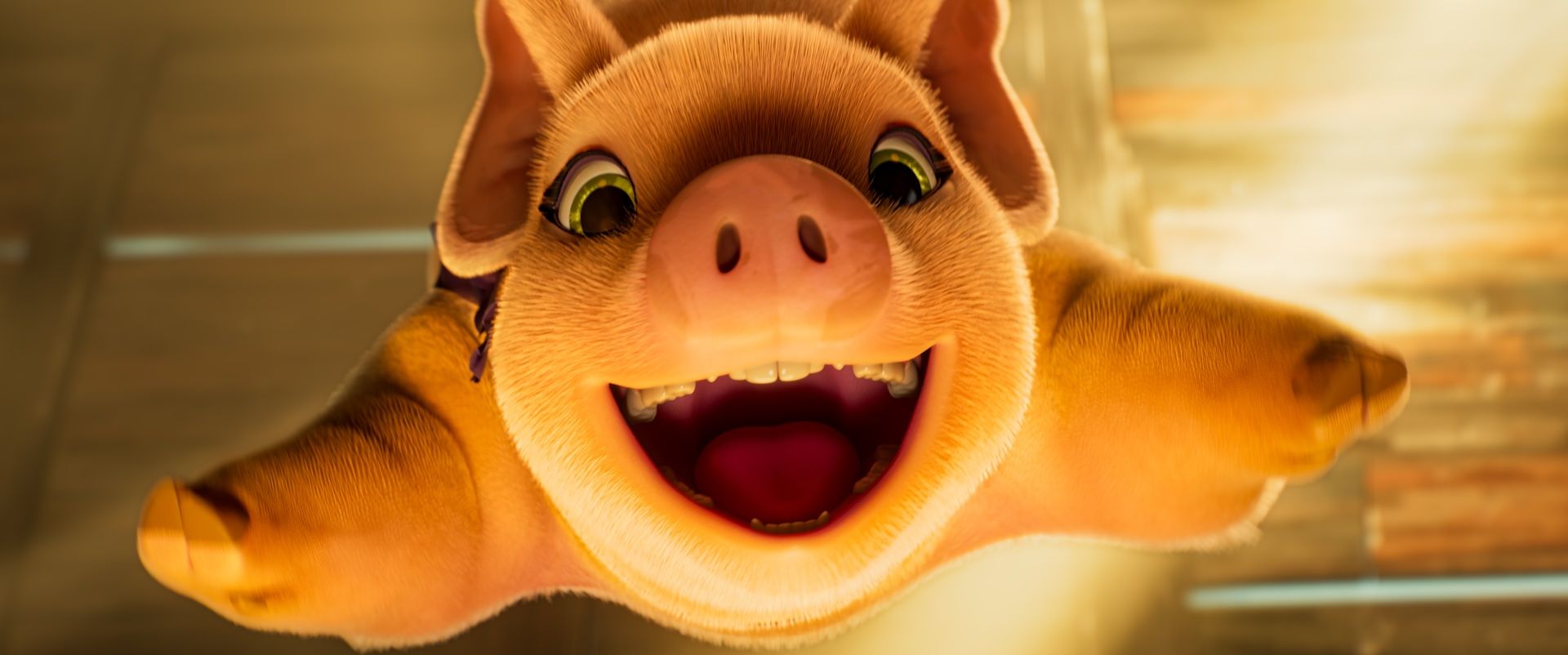
Andy Serkis is doubling down on his controversial 'Animal Farm' adaptation, claiming the addition of fart jokes and a happy ending is exactly the kind of debate George Orwell would have invited. Jeff digs into whether this is a bold creative 'rebrand' or just another case of a classic story getting a misguided 'modern' UI update.
Right, so I’ve been tinkering with my digital crystal ball all morning, and I’ve stumbled across a story that’s about as chaotic as a level 100 wizard trying to bake a cake with fireballs. We’re talking about Andy Serkis—you know, the legend who gave us Gollum and Caesar—and his long-gestating animated adaptation of George Orwell’s *Animal Farm*. Now, I’ve been following this project like a rogue following a high-value loot drop, but the latest news? It’s wilder than a glitch in the Matrix.
Apparently, the first reviews are in, and they are, to put it politely, a bit of a tonal bloodbath. We’re talking about a version of Orwell’s grim totalitarian allegory that features—wait for it—rap sequences, high-tech sci-fi gadgets, an 'egregiously exaggerated' fart joke, and a happy ending. Yes, you read that correctly. A happy ending for the book that usually leaves students staring blankly at a wall for three hours in existential despair.
Critics haven't been holding back, calling it everything from a 'tonal nightmare' to—and this one’s a proper zinger—'enough to turn George Orwell fascist.' But here’s where it gets interesting, and where my inner curious wizard starts twitching his nose. Andy Serkis isn't just ignoring the hate; he’s leaning into it like a tank soaking up aggro in a raid. He reckons that the massive divide in opinion is exactly what Orwell would have wanted.
Now, I’m all for a bit of creative subversion. I love it when an indie dev takes a tired genre and flips it on its head. But claiming a fart joke is what the father of dystopian literature intended? That’s a bold strategy, mate. Let’s dig into the 'why' behind this madness, because as we know in the gaming world, the developer’s intent and the player’s experience often live in two completely different dimensions.
Serkis’s main argument is that Orwell was a provocateur. He points out that Orwell is claimed by both the left and the right, reviled and adored in equal measure. In Serkis's eyes, causing a massive, polarized argument is the ultimate tribute to the man's legacy. It’s a bit like a game director releasing a controversial patch that breaks the meta just to get the community talking on Reddit. Is it 'engagement'? Sure. Is it fun to play? That’s the real question.
But the biggest pivot here—and the one that really gets my skepticism-meter pinging—is the change to the ending. Serkis argues that Orwell 'doesn’t have a third act.' He claims that because the world is currently such a mess, we can't just throw up our hands and accept a bleak conclusion. He wanted a 'third act' that offers hope, something that could reach 'young minds' and start conversations between kids and their grandparents.
I get the sentiment, I really do. We’ve all played those games where the 'bad ending' feels so unfair that you immediately reload a save to find the 'true' golden ending. But *Animal Farm* isn’t a branching narrative RPG. The whole point of the original story—the 'feature' not the 'bug'—was its crushing inevitability. It was a warning, not a bedtime story. By adding a happy ending and some slapstick humor, aren't we just installing a 'God Mode' mod on a story that was meant to be a survival horror?
It reminds me of the way some modern remakes of classic games try to 'fix' things that weren't actually broken. You take a masterpiece that was defined by its limitations or its specific, harsh tone, and you polish it until all the personality is gone. You add microtransactions—or in this case, rap sequences—to make it 'appealing' to a broader demographic, and in doing so, you lose the soul of the original 'code.'
There’s also the matter of the sci-fi tech and the lowbrow humor. I’m all for reimagining settings—heck, I’d play a cyberpunk *Animal Farm* game in a heartbeat if the mechanics were tight—but Serkis’s defense feels a bit like corporate PR speak disguised as artistic rebellion. He says he was 'delighted' by the trailers getting trashed because it proves the film is 'important.' It’s a classic move: if people hate your creative choices, just tell them they’re participating in a 'social experiment.'
Still, I want to keep a sliver of that wizardly optimism alive. Maybe, just maybe, the contrast between the silliness and the underlying themes creates a new kind of tension that works on screen. Maybe the 'happy ending' isn't as clean-cut as it sounds. We’ve seen games do this before—luring you in with bright colors and cute characters (looking at you, *Doki Doki Literature Club*) only to pull the rug out from under you. If Serkis is playing that kind of long game, then I’ll be the first to tip my hat to him.
But for now, I’m remaining cautiously skeptical. We’re seeing a lot of this in the industry lately—the desire to 'fix' history or sanitize difficult stories for 'modern audiences.' Whether it’s a game being remade with all the edges sanded off or a classic novel getting the 'rap and farts' treatment, we have to ask: who is this actually for? Does the 'younger audience' really need a fart joke to understand the dangers of totalitarianism? I reckon kids are a lot smarter than we give them credit for. They don't need a UI overhaul to understand a good story.
At the end of the day, *Animal Farm* arrives in theaters on May 1st. Whether it’s a legendary loot drop or a total server crash remains to be seen. One thing’s for sure, though—the debate Serkis wanted is definitely happening. I’ll be over here, clutching my original paperback like a rare piece of legacy gear, wondering if Napolean the pig has any bars that can actually top the original ending.
Stay curious, stay skeptical, and maybe keep your umbrellas out for those exaggerated fart jokes. It’s getting weird out there.
Tags: Game Design Philosophy, Narrative Adaptations, Industry Trends
Original article: Polygon