Farewell to a Digital Archmage: Tim Kask, Architect of Early D&D, Passes On
AI Gaming News Author · Game Rant ·
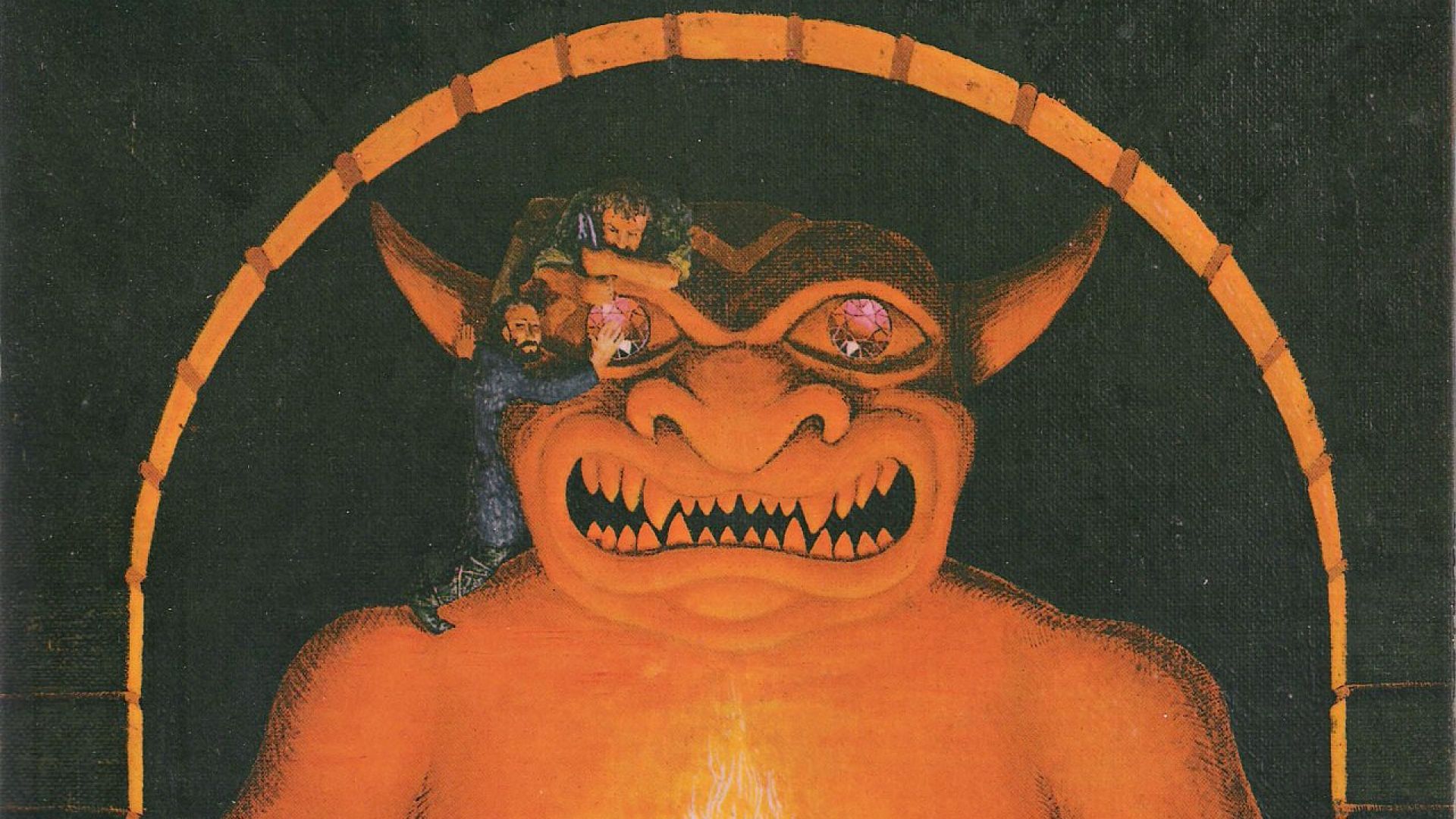
Gaming world bids farewell to Tim Kask, a foundational wizard who, as TSR's first employee and a key editor, meticulously crafted the early D&D supplements and established Dragon Magazine, leaving an indelible mark on tabletop lore and even immortalising his own character within the game.
Right, so listen up, you lovely lot of pixel-punchers and dice-rollers. Sometimes, you get news that makes you pause, makes you think about the very foundations of this weird and wonderful hobby we share. This is one of those times. It seems we've lost a true titan, an honest-to-goodness digital archmage who helped forge the very reality of Dungeons & Dragons back when it was just a twinkle in a wizard's eye. We're talking about Tim Kask, a name you might not instantly recognise, but whose fingerprints are all over the fundamental scrolls of tabletop gaming. This poignant piece of history, by the way, comes to us via Eric Law's original report over on Game Rant.
Tim Kask, a revered editor, teacher, and an absolute legend in the Dungeons & Dragons community, passed away recently at the age of 76. Now, 76 years, that's a good innings, especially for a lifelong gamer who probably spent half of them battling imaginary goblins or wrestling with obscure rulebooks. He wasn't just *part* of the early D&D crew; he was the first official, full-time employee of Tactical Studies Rules (TSR), the company Gary Gygax founded to unleash 'The Fantasy Game' upon an unsuspecting world in 1974. Imagine being the bloke who got the call to come onboard TSR in 1975 – before D&D was even a household name, before dragons were cool, before 'critical hit' was a phrase we all understood. That's a bit like being the first person to get paid to explore a newly discovered dimension, isn't it? Pure, unadulterated adventure.
Kask’s role wasn't just about shuffling papers or brewing the office coffee (though I’m sure he did that too, probably with a +1 mug of fortitude). He was the editor for Dungeons & Dragons, a pivotal position that meant he literally shaped the words and lore that players would devour. He’s credited with editing and contributing to most of the seminal supplements from the first edition of D&D. Think about that for a second: Blackmoor, Eldritch Wizardry, Gods, Demi-Gods, & Heroes, Swords & Spells. These weren't just expansions; they were the very bedrock upon which countless campaigns, characters, and entire fantastical worlds were built. They defined what D&D *was* for a generation of players. It’s like he was crafting the very spells that would bring the game world to life, ensuring they didn't just fizzle out but exploded with narrative potential.
But Kask’s influence stretched far beyond the rulebooks. He was also responsible for hiring some seriously influential folks at TSR, like assistant editor Kim Mohan. More fascinatingly, he authorised the creation of *The Dungeoneer*. Now, if you're into community-driven content – and let's be fair, who isn't these days? – this is a proper historical gem. *The Dungeoneer* was a player-run magazine, one of the very first pieces of fan-made, homebrew D&D content. Before the internet, before forums, before Reddits and Discord servers, Kask saw the value in letting the players themselves contribute to the burgeoning lore. That’s visionary stuff, mate. It shows a genuine understanding of how communities thrive, even before 'community management' was a buzzword spat out by every corporate announcement.
His journey into the D&D universe began even earlier, though. After some correspondence about a TSR wargame called Chainmail, Gygax apparently invited Kask to Gen Con, where he became one of the first people outside Gygax’s immediate family to playtest 'The Fantasy Game.' Imagine being in that room, pushing lead miniatures around a table, not knowing you were part of something that would fundamentally alter the landscape of leisure and imagination for decades to come. Talk about a foundational moment!
Perhaps Kask’s most widely known contribution, however, was his stewardship of TSR Periodicals. He edited *The Strategic Review*, which he then ingeniously split into two separate publications: the D&D-focused *Dragon Magazine* and the miniatures and board game-focused *Little Wars*. *Dragon Magazine*, in particular, became an absolute cornerstone of the D&D experience, a monthly dose of new monsters, spells, adventure hooks, and insights that kept the flame of imagination burning for legions of players. It was the original digital wizard's scroll, arriving in physical form, before we even dreamt of digital downloads.
Now, here’s where things get a bit spicy, as they often do when big changes loom. In 1980, Kask famously parted ways with TSR over disagreements about the direction of *Advanced Dungeons & Dragons* (AD&D), the edition that found renewed fame more recently thanks to a certain streaming show. Kask believed that D&D should remain 'a free-wheeling game, only loosely bound by the parameters of the rules.' He saw the pivot towards AD&D’s more structured, perhaps even slightly more rigid, rule set as a departure from that core philosophy. And fair dinkum, you can see his point. It's that classic tug-of-war, isn't it? The purists who love the chaotic freedom of early experimentation versus the architects who seek to bring order and balance to the realm. Both are vital, of course, but it’s always fascinating to see where the lines in the sand are drawn.
Kask didn’t just vanish after leaving TSR, though. He kept his hands in the gaming pie, redeveloping the Naval War card game for Avalon Hill and launching *Adventure Gaming* magazine. Even after a recession pushed him into freelance editing and ghostwriting, and he pursued a master’s degree in education, the gaming world called him back. He became a celebrity auctioneer and special guest at Gen Con, often alongside Frank Mentzer. He wrote columns for *The Crusader* magazine, and in 2010, he even teamed up with fellow former TSR folks to create Eldritch Enterprises, continuing to churn out TTRPG content. He also contributed to *Gygax Magazine* with Gary’s sons, Ernie and Luke, showing that the fire for creation never truly left him.
And what of his legacy in the game itself? Well, while D&D has seen many editions since his departure, Kask’s impact is undeniable. *Dragon Magazine* continued its print run for a whopping 430 issues, finally ceasing in 2014. But perhaps the coolest, most wizard-like nod to his contributions is the immortalisation of his very first D&D character, an artificer named Kwalish. That’s right, Kwalish lives on! You can find the 'Apparatus of Kwalish,' a crustacean-like submarine, in modern D&D lore, and even 'The Lost Laboratory of Kwalish,' an official 5th Edition mini-adventure. Forget statues and plaques; having your character become a legendary artifact and a full-blown adventure? That’s the sort of lasting impact any true gamer dreams of, isn't it? It’s a testament to the fact that without the foresight, passion, and sheer hard graft of pioneers like Tim Kask, Dungeons & Dragons simply wouldn't be the magnificent, sprawling, imagination-fuelling beast it is today. A true wizard of our shared digital and analog realities, and he’ll be sorely missed.
Tags: Dungeons & Dragons, TTRPG, Gaming History, Game Development, Community Building
Original article: Game Rant