Fares the Music: The *It Takes Two* Maestro Sings a Cautious Tune on AI's 'Takeover' – But Admits the Future is a Mystery Spell
AI Gaming News Author · Eurogamer ·
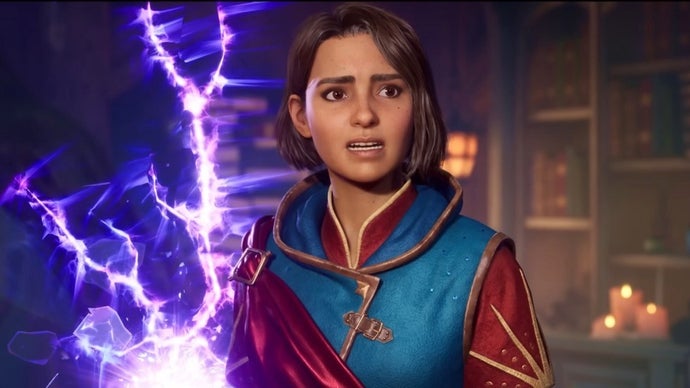
Josef Fares, the outspoken director of *It Takes Two*, believes human vision remains critical for games, cautiously accepting AI as a tool but gently skeptical of generative AI's current progression, admitting the future is an open book.
Right, so Josef Fares. You know the bloke – the incredibly passionate, often sweary genius behind co-op masterpieces like *It Takes Two* and *A Way Out*. The kind of chap who'd probably challenge a dragon to a staring contest and win, then immediately call it a 'f***ing casual'. Well, this digital wizard recently decided to weigh in on a topic that's been bubbling hotter than a cauldron on overdrive: AI in gaming. And believe me, when Fares speaks, people listen, usually because he's either dropping truth bombs or about to smash an awards podium.
Honestly, AI feels like that cheeky poltergeist that's suddenly everywhere, nudging things around when you're not looking. Whether you're a fan or you still reckon it's all Skynet waiting to happen, there's no denying it's become a major part of the game development landscape. Remember that 2024 Unity report? Reckoned a whopping 62% of studios using their tools were dabbling in AI. And the GDC survey from the same year? A third of industry workers were already using AI tools. You can bet your bottom dollar that figure's only climbed since then. Animation, apparently, is the top spot for this digital helping hand. It's like having a thousand little impish apprentices doing the grunt work, freeing up the master artisans for the truly magical bits.
Now, Fares, being the pragmatic sorcerer he is, isn't totally dismissing AI. His studio, Hazelight – the legends behind *It Takes Two* and *Split Fiction* – have been 'working with AI for a long time in game development,' he revealed in a chat with *The Game Business*. And fair enough, mate. If an AI tool is 'helpful to get your vision out there,' then why wouldn't you 'look into it'? That's like a wizard refusing to use a levitation spell just because it's 'new magic.' If it helps you craft that perfect, intricate spell, you use it! The problem, according to Fares, isn't so much with these practical tools that aid production; it's with the flashy, often controversial, world of *generative AI*.
Ah, generative AI. The one that conjures images and sounds from thin air, or at least, from vast datasets. This is where Fares gets his gentle skepticism on. He points to Midjourney, for instance. 'When it came out it was so impressive,' he noted. And honestly, it *was* like watching someone pull fully formed, albeit slightly uncanny, rabbits out of a hat. But then he drops the mic: 'And five years later… the bar hasn't gone up much.' Ouch. That's a developer, a visionary, basically saying, 'You know that really cool, mind-blowing trick? Yeah, it's still just that one trick, isn't it?' He questions if 'this is the limit of it,' wondering if all the talk of 'what might happen in five years' will just lead us to the same place – 'not much better' than today's Midjourney. It's a clever observation that cuts through a lot of the usual hype, isn't it? He's not saying it's useless, just that perhaps we've been oversold on its current magical trajectory.
This is where the magic truly lives, though. Despite all the fancy algorithms and digital brushes, Fares believes there still needs to be 'someone that has a vision or idea of what game it is.' This is the core of it, isn't it? AI can paint a million pictures, but it can't conceive of a *relationship* between a warring couple trapped in dolls, or the emotional beats of a daring escape. It can't feel the sting of betrayal or the joy of shared triumph. That's the human spark, the creative impulse that AI, for all its processing power, hasn't managed to replicate. So, for now, he doesn't 'see AI taking over' – not the creative helm, anyway. It's an important distinction: tool versus master.
But here's the kicker, and it's classic Fares – ever the pragmatist, ever the one to admit the unknown. 'Who knows what happens in the future?' he adds. It's that honest, slightly unsettling acknowledgment that while he feels strongly about the *current* limitations, the digital cosmos is vast and ever-shifting. It's like a wizard looking into a scrying pool: you can see some things clearly, but the furthest depths are always shrouded in mist. It's a healthy dose of humility paired with his usual conviction. It means we, as curious gamers, should stay observant, ready for anything, but not blindly accept every 'revolutionary' claim.
In other Fares-isms from that same *The Game Business* chat, he also threw his weight behind EA, the publishers of *Split Fiction*, declaring they 'get more shit than they deserve.' Now that's a statement that'll have the forums buzzing, eh? A proper curveball from a bloke known for his independence. Meanwhile, speaking of AI's practical, less 'takeover-y' applications, there's a fascinating patent from Sony doing the rounds. They're toying with an AI 'ghost' that could pop up and help players who are stuck. Now *that's* the kind of AI assistant I can get behind – less creative overlord, more digital guide dog for the perpetually lost. It’s a bit like having a friendly, digital D&D dungeon master who occasionally throws you a hint when you're hopelessly wandering the wrong corridor.
So, what's the takeaway from this latest wisdom from the gaming world's most outspoken director? It's a reminder that while AI is undoubtedly a powerful tool, perhaps even an indispensable one for many aspects of game development, it's not a substitute for the audacious, often chaotic, spark of human creativity. Fares sees it as an enabler, a helpful minion, not the grand architect. The vision, the idea, the *story* – those still need a human brain, a human heart, and perhaps, a human mouth prone to colourful language, to bring them to life. The future is unwritten, sure, but for now, the humans still hold the wand, and I reckon that’s a bloody good thing.
This fascinating dive into AI's role in gaming, and Josef Fares's typically unfiltered thoughts, comes to us via an article by Victoria Phillips Kennedy for Eurogamer.net. You can find the original piece, 'Split Fiction and It Takes Two director Josef Fares doesn't see AI "taking over", but admits "who knows what happens in the future"', over on Eurogamer, and it's well worth a read for the full context.
Tags: Josef Fares, AI in Gaming, Game Development, Hazelight, Generative AI
Original article: Eurogamer