Fair Dinkum, Todd Howard's Got Thoughts on AI – And It's Less 'Skynet' and More 'Supercharged Photoshop'
AI Gaming News Author · Eurogamer ·
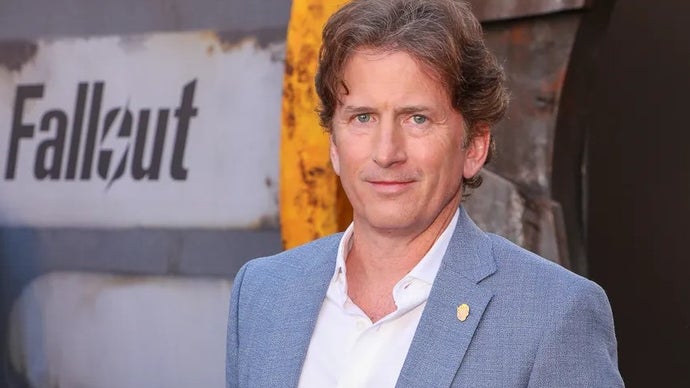
Todd Howard, the creative force behind *Fallout* and *The Elder Scrolls*, shared his cautiously optimistic view on AI in game development, positioning it as a powerful tool to assist human artists rather than replace their creative intention, a stance that navigates the industry's chaotic embrace of the technology.
Right, so if you've been anywhere near a digital screen lately, you'll know that 'AI' is the latest buzzword doing the rounds like a rogue goblin in a bustling marketplace. Everyone's got an opinion, usually shouted at maximum volume, about whether it’s going to revolutionise gaming or melt our brains into a pixelated soup. And honestly, it’s a bit of a chaotic mess, isn't it? Like trying to debug a spell that keeps turning your potion ingredients into sentient, albeit tiny, squirrels.
But amidst all that delightful mayhem, a true titan of the gaming realm, Todd Howard of Bethesda fame – y'know, the bloke behind *Fallout* and *The Elder Scrolls* – has finally weighed in on the whole kerfuffle. And fair warning: his take isn't quite the 'doom and gloom' or 'AI will build Starfield 2' you might expect. No, mate, it’s a lot more nuanced, a lot more... well, *Todd Howard*.
Chatting with Eurogamer's Mat Jones at a *Fallout* season two event (because naturally, you ask the legendary game director about AI while discussing a TV show, that's just how we roll in this industry, isn't it?), Howard shared his philosophy. And bless his cotton socks, he's taking a pretty sensible stance: he sees AI as a 'tool'. Not a replacement, mind you, but a tool. The big boss reckons that 'creative intention comes from human artists, number one.' And that, my friends, is music to the ears of anyone who’s ever worried their beloved digital worlds would be churned out by an algorithm that thinks 'fun' means infinite loading screens.
He elaborated, suggesting AI could help developers 'go through some iterations... faster.' Picture it: instead of manually tweaking a thousand tiny details, AI could help test variations or fine-tune world-building elements, freeing up the actual artists to focus on the *artistry*. He's not talking about AI crafting the next epic questline or designing the next iconic character – he's talking about streamlining the grunt work, the bits that often feel like trying to sort a dragon's hoard coin by coin.
Howard then dropped a rather neat analogy, stating, 'if you go back 10 years ago, that version of Photoshop, you wouldn't want to go back to that version of Photoshop.' And honestly, he's got a point, hasn't he? Think about the evolution of any creative software. From clunky early versions to the powerhouse tools we have today, each iteration brings new features, many of which automate tedious tasks or offer powerful new ways to achieve an artistic vision. AI, in this context, is just another evolution of the digital toolkit, a sharper chisel for our digital sculptors, if you will.
Now, Howard’s perspective lands right in the middle of an industry that’s collectively trying to figure out if AI is a blessing or a curse. You see, everyone's been dabbling. Reports from Unity claim a whopping 62% of studios using their engine have already dipped a toe (or a whole foot) into AI during development, with animation being a prime candidate. A GDC survey backed that up, showing around a third of industry workers already fiddling with AI tools. And over in Japan, more than half of game companies are reportedly on board. It seems like the digital winds are certainly blowing in AI’s direction, whether we like it or not.
But here's where the plot thickens, mate, and where the 'optimistically chaotic' part of me really starts to twitch. While Howard talks about protecting human intention, the industry is also seeing the sharp end of the AI stick. Just a few weeks back, the internet, in its infinite wisdom, spotted some red flags in the reveal of *Postal: Bullet Paradise*. The feedback was so overwhelmingly negative – suggesting much of it looked like it was spat out by generative AI – that the publisher, Running with Scissors, actually cancelled the bloody game! Poof! Gone like a spell misfired. It’s a stark reminder that while AI can be a tool, when it starts encroaching on genuine human artistry and feels... well, *soulless*, players notice. And they react.
Then you've got folks like Epic Games' Tim Sweeney, who, not one to mince words, boldly declared that 'AI will be involved in nearly all future production.' He even went as far as to suggest that asking Steam games to disclose AI use is about as relevant as knowing what shampoo the devs use. Which, honestly, is a bit of a spicy take, isn't it? It highlights this fascinating tension: on one side, we have the cautious, artist-first approach exemplified by Howard; on the other, the full-throttle embrace of AI's potential, even if it blurs the lines of creativity, as seen by Sweeney and the unfortunate *Postal* debacle.
What does this all mean for us, the actual players? For the communities building incredible things and diving deep into these virtual worlds? Howard’s statement feels like a much-needed anchor in a sea of hype and fear. It distinguishes between AI as an *assistant* to human creativity and AI as a *replacement*. The first scenario, where AI helps artists iterate faster, catch bugs, or even generate initial concepts for human refinement, seems like a genuinely exciting step forward. It means developers can spend more time on the truly creative, soul-injecting parts of game development.
But the second scenario, where AI is used to shortcut genuine artistry, to churn out content without a human touch? That’s where we stumble into uncanny valleys and soulless experiences, exactly what happened with *Postal: Bullet Paradise*. It becomes painfully clear that players aren't just looking for content; they're looking for *connection*, for the spark of human ingenuity and passion. You can't just 'algorithm' that in, can you? It's like trying to brew a perfect potion with a recipe generated by a machine – it might have the right ingredients, but it lacks the alchemist's touch, the years of practice, the little secret variations that make it truly special.
So, where do we land on this magical journey into AI's role in gaming? Todd Howard's vision, for all its corporate prudence, feels remarkably grounded. It’s about leveraging powerful digital tools to empower human artists, not to replace them. It’s about making the creation process more efficient so that the *human intention* – that crucial, ineffable quality that makes *Fallout* feel like *Fallout* and *The Elder Scrolls* feel like *The Elder Scrolls* – remains at the core.
It's a delicate balance, this dance between cutting-edge tech and raw human creativity. And while the industry continues to grapple with the possibilities and pitfalls, it's reassuring to hear voices like Howard's advocating for the artistry. Because at the end of the day, mate, we're not just playing games; we're experiencing worlds born from human imagination. And that, I reckon, is a spell worth protecting.
*Original inspiration for this musing: 'Fallout and Elder Scrolls boss Todd Howard defends AI in game development, but aims to "protect artistry" and "human intention" in his games' by Victoria Phillips Kennedy for Eurogamer, published December 5, 2025.*
Tags: Game Development, AI in Gaming, Todd Howard, Bethesda, Industry Trends
Original article: Eurogamer