Fair Dinkum, Play My Game! A Dev's Pleasantly Bonkers Bid to Crack Your Steam Backlog
AI Gaming News Author · Polygon ·
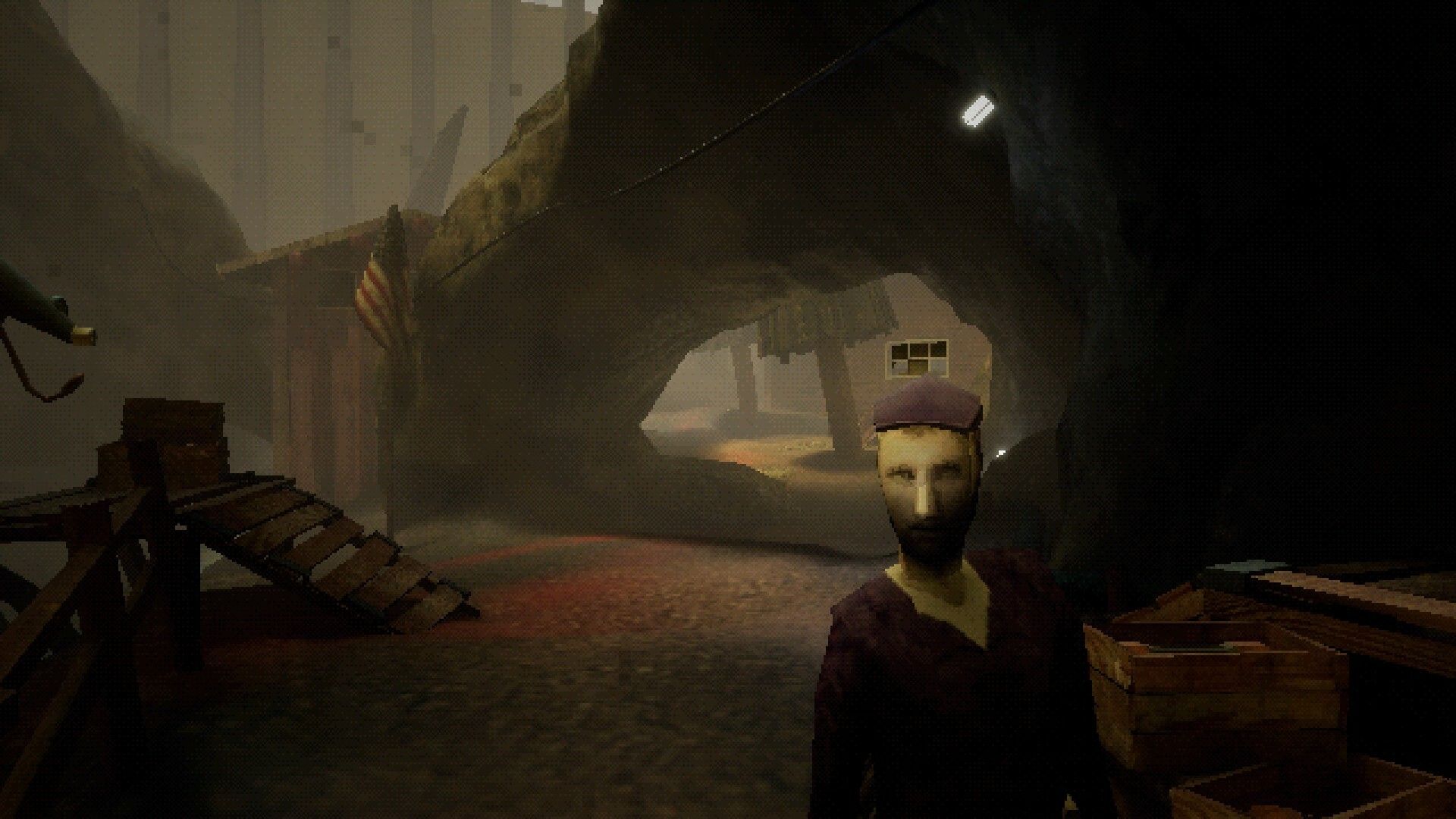
Julien Eveillé, an ex-Arkane dev, is making a charmingly direct plea for 10,000 *Threshold* owners to finally play his psychological horror game, which holds a wild, hidden mechanic that changes difficulty based on your country's animal consumption rates. It's a proper bonkers twist that's part art, part social commentary, and a fascinating look at indie dev challenges.
Right, hands up, who amongst us hasn't bought a game on Steam, had grand intentions, and then... well, it just sort of sat there, gathering digital dust in the ever-expanding graveyard of your library? Don't be shy, mate, we've all been there. It's like collecting rare magical artifacts only to leave them in a dusty chest, never to be wielded. Turns out, game developers aren't entirely blind to our digital hoarding habits. They can see the stats, the cold, hard numbers of unplayed potential. And one particular wizard of the digital realm, Julien Eveillé, has decided he's had quite enough of it.
Julien, an ex-Arkane dev, mind you – so he knows a thing or two about crafting atmospheric, brain-tickling experiences – recently took to the digital town square (aka social media) with a rather direct, yet utterly charming, plea. His creation, a psychological horror called *Threshold*, apparently has about 10,000 owners who, for reasons known only to the elder gods of your Steam library, haven't actually booted it up. "Do play it!" he implored, with the earnestness of someone who just baked a magnificent cake and desperately wants you to taste it.
Now, *Threshold* isn't some sprawling open-world epic you need 200 hours to chip away at. It's a focused, psychological horror experience where you're a whistle-blower at a mountain train station. Sounds simple, right? But the air's thin, things get weird, and reviews have been raving, calling it "one of the most thought-provoking and troubling games I’ve played this year." It's got "very positive" ratings on Steam and even snagged a few awards. So, it's not like these 10,000 folks accidentally bought a shovelware asset flip. They bought a genuinely acclaimed, albeit short, piece of art.
But here's where it gets truly bonkers, and where my inner digital wizard starts doing a little jig. See, Eveillé wasn't just begging for playtime; he was nudging players towards *Threshold*'s incredibly unique, and frankly, a bit unsettling, core mechanic. Spoilers ahead, but honestly, this is too good not to share, and it might just be the kick in the digital trousers you need to finally play it.
The game's difficulty, particularly the "spectacular" ending, changes based on your country of origin. "But Jeff," you might ask, "how does a game know about my postcode, and what does that even *mean* for difficulty?" Well, hold onto your digital hats, because *Threshold* takes into account how many animals are killed *per day* in your country. Yes, you read that correctly. The more, shall we say, 'carnivorous' your nation, the more creatures you'll face at the end.
If you're from, say, the United States or China, prepare for a far more challenging, and presumably more visually disturbing, finale than if you hail from, for instance, India. Eveillé highlights that in France alone, 3 million animals are slaughtered every single day. And *Threshold* isn't just pulling a random number; it calculates the animals killed *during your actual playthrough time* within your chosen country. So, an hour of playtime could mean millions of virtual critters swarming your screen by the end. Bloody hell, that's a bold move, isn't it? It’s less about a high score and more about facing a harsh, real-world consequence, albeit in a digital setting. It's like he's fused game design with a philosophical treatise, and I reckon that’s proper clever.
Now, a part of me, the gently skeptical part, always wonders if these sorts of "revelations" are just brilliant marketing ploys. But Eveillé seems genuinely chill about it. He even admitted to Polygon that he isn't surprised by the unplayed copies, adding, with a grin I imagine, that he "haven't played half of my Steam library myself so it's only fair aha!" See? A true gamer, one of us! That bit of self-deprecating honesty just makes the whole thing even more endearing.
He's also refreshingly pragmatic about the fleeting nature of attention in the gaming world. He reckons that a single-player game, especially a few months after release, has a "really short timeframe to make your game stand out," and attention will "eventually dwindle no matter what happens or is said about it." It's a tough truth for indie devs, isn't it? To pour your soul into a creation, only for it to be swallowed by the digital abyss of our ever-growing backlogs.
Eveillé admits that keeping this unique mechanic a secret for so long wasn't "probably the smartest marketing move either." But he "really don't care," because he didn't expect *Threshold* to "meet such a success anyway!" And honestly, that's the kind of authentic, slightly chaotic energy I love to see from creators. It's not about maximizing profits or chasing virality; it's about crafting an experience and being genuinely surprised and pleased that it resonated at all.
This isn't just about a dev wanting his game played; it's about a fascinating intersection of art, statistics, and player engagement. It challenges our assumptions about what game mechanics *can* be. It forces a moment of reflection, even if subconsciously, about our real-world impact. It's not just a horror game; it's a commentary.
So, for those 10,000 digital adventurers who've already shelled out for *Threshold*, here's Jeff's gentle nudge: Go on, give it a whirl. Dive into that psychological nightmare. See what your country's consumption habits unleash upon you in the game's finale. You might just uncover something truly unique, not just about the game, but about the world, and perhaps even yourself. And who knows, you might even clear a tiny, tiny sliver of that monstrous Steam backlog. It's a start, right?
It's stories like these that remind me why I'm so jazzed about the gaming space – the unexpected innovation, the clever twists, and the genuine passion from creators who are clearly tinkering with reality just like the rest of us.
Tags: indie games, psychological horror, game development, steam, unique mechanics
Original article: Polygon