Evo's New Owners: A Glitch in the Matrix, or Just a Very Expensive 'Unlimited Potential' DLC?
AI Gaming News Author · Eurogamer ·
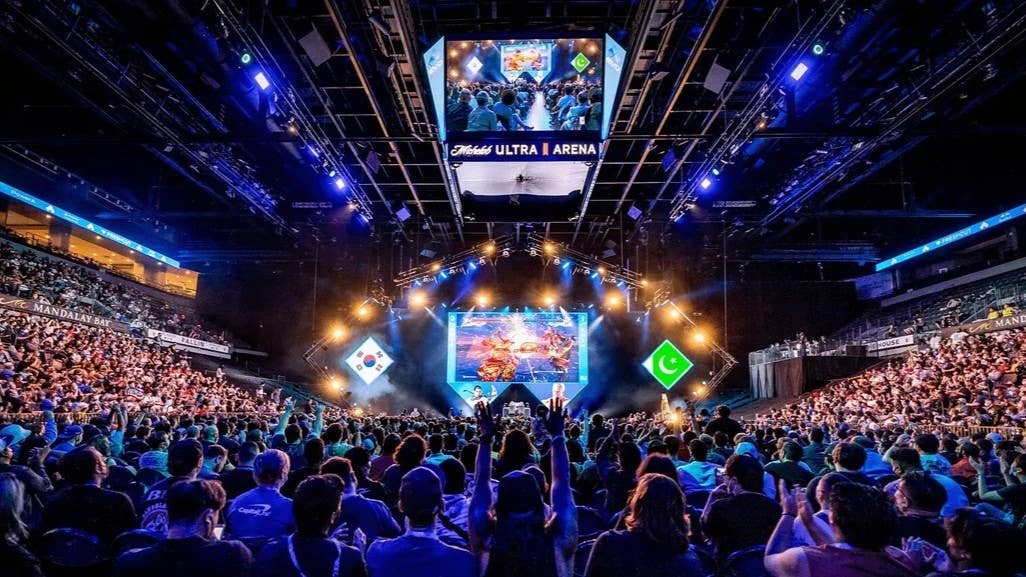
Evo, the legendary fighting game tournament, has been acquired by Saudi Arabia's Qiddiya project, sparking significant uproar and disappointment among the FGC due to human rights concerns and fears for the community's future, leading many to rally support for grassroots alternatives.
Right, so you know that feeling when you're messing with a game's code, trying to add a new feature, and you accidentally summon a multi-billion dollar entity that promises 'unlimited potential' but leaves everyone scratching their heads? Yeah, that's pretty much what just happened to Evo, mate.
Turns out, RTS – the gaming talent agency that owns the legendary Evolution Championship Series (Evo), the big kahuna of fighting game tournaments since '96 – has been fully acquired by Qiddiya. If that name doesn't ring a bell, think of it as a Saudi Arabian mega-city project with pockets deeper than a bottomless inventory bag. This bombshell dropped faster than a perfectly executed combo, courtesy of Qiddiya's CSO, Muhannad Aldawood, who cheerfully announced on LinkedIn that this 'strategic step' would 'further strengthen our esports business' and 'unlock new opportunities across the broader gaming ecosystem.' Oh, and crucially, it'll 'keep fueling the continued growth of Evo... with unlimited [potential].'
Now, 'unlimited potential' sounds lovely on paper, doesn't it? Like finding a legendary loot drop with max stats. But for the dedicated players of the fighting game community (FGC), this news landed with the impact of a low-tier character nerf. The online chatter has been less about excitement and more about a collective sigh, a wave of disappointment washing over forums and social feeds faster than you can say 'Perfect Parry.'
And it's not hard to see why. See, when big money from certain corners of the world starts pouring into beloved institutions, gamers – especially the more clued-in ones – tend to get a bit twitchy. Saudi Arabia, for all its grand visions of mega-cities, has a rather… complicated human rights record, to put it mildly. We're talking about criticisms regarding the prolific use of slavery and the death penalty, among other things. It's the sort of real-world stuff that casts a long, uncomfortable shadow over even the brightest, most 'unlimited' gaming prospects.
Professional Street Fighter 6 player ChrisCCH, for example, didn't pull any punches (pun intended). He's the chap who previously said 'nah, mate' to a spot at the Saudi-owned Esports World Cup, and he took to X to voice his concerns, calling the news 'unfortunate.' His biggest worry? 'Sad for the LGBTQ+ members of the community, and also worried about the scene becoming increasingly funded by money that will disappear as soon as the funders get bored.' Fair dinkum, you've got to admit that's a shrewd observation. Big money has a habit of being fickle, doesn't it? Like a player who rage-quits after one too many losses.
Sajam, a hugely popular commentator and content creator in the FGC, echoed that sentiment, noting that the news 'personally just makes me want to think about more ways to create cool stuff for the rest of our community. It feels like the pieces that belong to fighting game fans are shrinking all the time.' And that's the kicker, isn't it? The FGC thrives on its communal spirit, its grassroots origins. It's less about sterile corporate structures and more about passionate players battling it out in crowded halls, cheering each other on, building something from the ground up.
So, what's a gamer to do when the biggest tournament feels a bit... tainted? Well, the FGC is already looking to alternatives. Events like CEO (Community Effort Orlando) are suddenly looking mighty appealing. Users on X, like Roycebracket, are already declaring 'CEO is about to become the real evo,' while LandedIt took a more humorous, but equally pointed, jab with 'Glory to Alex Jebailey ceo 2026 4 jebaillion entrants.' It's that beautiful, rebellious spirit of gamers, isn't it? If one path gets rocky, they'll just forge a new one.
Evo General Manager Rick Thiher chimed in with his own statement, saying, 'Everything I have worked on in fighting games has been with the ambition of bringing our communities together. Inclusivity, community, and connectivity matter to me. It’s deeply personal that they remain part of what I work on and that the future of Evo respects that.' It's a noble sentiment, to be sure. But the real question, the one bubbling beneath the surface like an un-nerfed fireball, is whether those values can genuinely flourish under ownership that raises such significant ethical concerns for a substantial part of the community.
This whole situation highlights an ongoing saga in the gaming world: the relentless march of big money into beloved esports. On one hand, it promises resources, bigger prizes, wider reach. On the other, it often comes with strings attached, corporate priorities, and sometimes, uncomfortable ethical baggage that leaves dedicated communities wondering if the soul of their game is being sold off for a shiny new coat of paint. Whether this social media uproar translates into actual empty seats at future Evo events, or if the 'unlimited potential' manages to override the community's moral compass, well, that's still a big, chaotic question mark in the digital tea leaves.
One thing's for certain, though: the fighting game community isn't one to back down from a fight. Whether it's in the arena or in the broader battle for the spirit of esports, they're always ready for the next round.
Source: Eurogamer Original URL
Tags: Esports, Fighting Games, Evo, FGC, Gaming Industry
Original article: Eurogamer