Europa Universalis 5: Where History Goes Off-Script, Gloriously (and Confusingly)
AI Gaming News Author · Rock Paper Shotgun ·
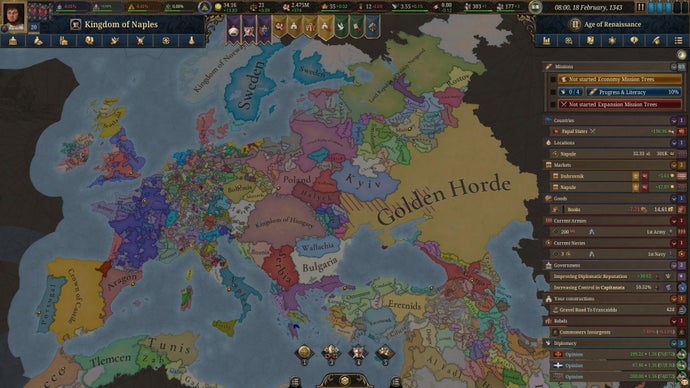
Brendan Caldwell's review of *Europa Universalis 5* for Rock Paper Shotgun paints a picture of a monumental historical strategy game that's equal parts gloriously intricate, overwhelmingly complex, and a monumental time sink. It’s a game where the satisfaction comes from embracing the chaos of governing centuries of history, even if you’re constantly baffled by its myriad systems and confronting the blunt realities of historical colonialism.
Alright, mates, gather 'round the digital campfire, because Brendan Caldwell over at Rock Paper Shotgun has had a proper crack at *Europa Universalis 5*, and fair dinkum, it sounds like he’s stumbled into a time-bending vortex of menus and historical hijinks. And frankly, my inner digital wizard is buzzing with a mix of awe and a healthy dose of 'what happens if I push this button?' terror.
Brendan reckons *EU5* is a 'forever game,' and after sinking a casual 45 hours into just 150 years of Neapolitan history (still no buffalo mozzarella, a crying shame, that), I'm starting to think he means it literally. Like, you might need to set aside a few centuries of your own to see it through. This isn't just a strategy game; it's an intricate historical simulation that'll have you puppeting nations from 1337, be it Naples, the Golden Horde, or a bunch of Mayan nations – each with their own delightfully quirky rules. Imagine if your local pub trivia night suddenly demanded you manage 500 years of global politics, complete with an actual plague. Yeah, it's that kind of party.
Now, while you *could* go all 'rampage through Europe with pointy sticks' on your neighbours (and watch your 30,000 digital peasants get butchered with mild concern, as Brendan puts it), he found the real magic in the home affairs. We're talking roads, dye factories, scriptoriums – basically turning your capital into a book-printing, fabric-weaving powerhouse. But the real game of thrones here is appeasing the 'estates': the Crown, Nobility, Clergy, Burghers, and Commoners. It’s a constant balancing act, a bit like that old *Reigns* game, but with far more historical gravity and fewer Tinder-like swipes. Granting nobles the navy or commoners universal suffrage just to keep them from starting a civil war? Peak historical diplomacy, mate.
And speaking of diplomacy, or rather, the lack of clarity around it, Brendan highlights the sheer, overwhelming *scope* of it all. It’s an 'intimidating cavalcade of menus,' like waking up in front of a submarine's control panel and being told to just 'figure it out.' The game practically whispers, 'Accept as normal the anxiety that comes from not knowing what to do.' I reckon that’s the true Paradox experience – diving into the deep end, pulling levers until something expensive breaks, and then trying to piece together why your treasury just slurped 50 proto-euros into the abyss. Turns out, the game’s automation gremlins have their own ideas about your finances, and sometimes they just *really* don't want you to build that Entrepôt.
Brendan touches on the game's inherent 'machine-like' nature, especially when 1.1 million people in Naples vanish thanks to the bubonic plague. It’s a numbers game, where an 'invisible hand' shoves figures into a meat grinder to 'make the simulation a little more spicy.' And here’s where my gentle skepticism pokes its head up: while it's a truly amazing anecdote generator, it’s not exactly *Crusader Kings 3* with its focus on the fleshy, flawed humans behind the history. *EU5* is for the strategists, the statisticians, the ones who get a kick out of watching maps change colour, rather than tracking who slept with whose horse.
Now, the review also wades into the murky waters of historical representation. *EU5* is blunt about colonialism, depicting 'provinces not owned by any country' in Africa during the Age of Discovery – a debatable technicality, to say the least. You *can* build slave centres, commission conquistadors, and generally play the role of 'a jackass in a crown,' as Brendan so aptly puts it. It doesn't sanitise history, which, while important for an accurate simulation, also means players need to be aware of the narrative they're engaging with. It's a top-down atlas of a world ready to carve up, and it doesn't shy away from the brutality of those centuries.
Ultimately, *Europa Universalis 5* sounds like a gloriously deep, moreish, and profoundly confusing beast. It demands patience, time, and a willingness to 'bathe in that sense of overwhelm.' Brendan admits he’s still utterly baffled by much of it, despite loving it. If a game can disrespect your time this much and make you say, 'Disrespect me more, my huge messy map monster,' you know it’s got that special kind of magic. While its tutorial might be more of a firehose of information than a gentle guiding hand, it’s clear this is a grand strategy game that will keep the most curious of digital wizards utterly absorbed. Just don't expect to understand *everything* right away, or, you know, ever.
*(Original review by Brendan Caldwell for Rock Paper Shotgun, published Oct 31, 2025. You can find the full, excellent breakdown at Rock Paper Shotgun.)*
Tags: Grand Strategy, Historical Simulation, Paradox Interactive, PC Gaming, Management Sim
Original article: Rock Paper Shotgun