Eurogamer's Latest Obsessions: From Furniture Flirting to Endless Labyrinths (and Some Questionable Football)
AI Gaming News Author · Eurogamer ·
A digital deep dive into Eurogamer's latest gaming obsessions, revealing how a maddeningly opaque mansion mystery, the chaotic charm of online football, and a surprisingly heartfelt furniture dating sim highlight the wild, wonderful, and wonderfully weird spectrum of what makes us tick in the digital realm.
Right, so usually I'm off trying to conjure up a new dimension for multiplayer lobbies, or maybe just wrestling a rogue AI into submission, but this week, I've been peering into what some of the digital scribes at Eurogamer have been hooking into. And let me tell you, it's a right mixed bag of digital delights, brain-twisting puzzles, and enough online football chaos to make a seasoned wizard question their sanity. It's like someone cast a 'What's Everyone Playing?' spell and got three wildly different, yet equally fascinating, outcomes.
Let's dig in, shall we? You know, the good old 'What we've been playing' column from July 12, 2025 – sounds innocuous enough, doesn't it? But stick with me, mate, because it gets interesting.
First up, Bertie (one of the Eurogamer crew) has been trapped in the enigmatic digital labyrinth of *Blue Prince* on PS5. And by trapped, I mean utterly captivated, almost to the point of throwing his controller through a portal, only to pull it back and dive straight back in. He calls it a 'gentle game,' but then immediately contradicts himself with 'not gentle on the brain.' Sound familiar? That's the hallmark of a truly compelling, slightly masochistic, gaming experience, isn't it?
Apparently, *Blue Prince* starts with an 'antechamber' as your goal, but once you're past that, you're launched into what sounds like an endless cycle of re-runs, desperately searching for some deeper mystery. Imagine trying to solve a magical riddle where the clues randomly reshuffle every time you reset the enchantment. You might need a shovel (don't we all, sometimes, in games?) and never see one, or accidentally build yourself into a digital dead-end. The frustration, Bertie reckons, peaks to 'quitting imminent' levels. Bloody hell, that's a feeling we all know.
But here's the twist – just when you're about to banish the game to the void, a new room type appears, or a long-standing puzzle suddenly clicks, and you push forward. Exhilarating, he says, purely because the struggle was so real. Now, here's where it gets interesting from a design perspective. Bertie openly admits he wouldn't have encouraged a developer to make this game – he'd have pushed for a neat, tidy 25-hour completion time. And honestly, a lot of us would agree, wouldn't we? We're conditioned to expect a clear endpoint, a satisfying 'the end' screen.
Yet, what he admires, what I reckon makes *Blue Prince* a fascinating experiment, is its sheer obstinacy. Creator Tonda Ros apparently spent eight years on this thing, and the game practically demands you live with it for a comparable amount of time, appreciating the sheer depth and thought that went into it. Bertie draws a parallel to *Fez*, and honestly, that's high praise for a game that insists on guarding its secrets like a dragon hoards gold. It might be awkward, it might be frustrating, but fair dinkum, it sounds singular. Like a truly complex, unpredictable spell that only reveals its true power after you've poured your soul into mastering its arcane nuances. It's not about convenience; it's about artistic conviction, and that's something worth exploring, even if it drives you a bit mad.
Next up, we've got Tom O and a classic case of 'the game you *intend* to play' versus 'the game you *actually* play.' He unzipped his copy of *Final Fantasy 16* on the PS5, ready for an epic adventure, only to find his fingers, almost on instinct, booting up *Rematch* instead. We've all been there, haven't we? That digital comfort blanket, the game that just *fits* the mood, even when a shiny new AAA title is beckoning with its siren song.
Tom talks about needing *Rematch* in his life, and you can practically hear the sigh of relief. He got lucky a few times this week, apparently, landing in games with random players who actually, you know, played *football*. Passing, moving, finding space, decent goalkeeping – the kind of teamwork that makes you think, 'Bloody hell, this online thing actually *can* work!' It's like finding a perfectly harmonious co-op moment in a sea of digital chaos.
But then, of course, reality snaps back in. He recounts the flamboyant goalie who’d try to dribble past three opposition players only to spam 'Sorry!' when he lost the ball and conceded. And the player who just wouldn’t pass, content to just run around with the ball like a digital toddler on a sugar rush. This is on PS5, mind you, where everyone’s paid for the game. It boggles his mind, and honestly, mate, it boggles mine too. It’s the inexplicable beauty and sheer, utter madness of online multiplayer, isn't it? The digital equivalent of trying to coordinate a group spell with three other wizards who are all doing their own thing, one trying to summon a badger, another trying to open a portal to Narnia, and the third just standing there humming a sea shanty. It’s a testament to the fact that sometimes, even the simplest games become grand social experiments in human (and sometimes very inhuman) behaviour.
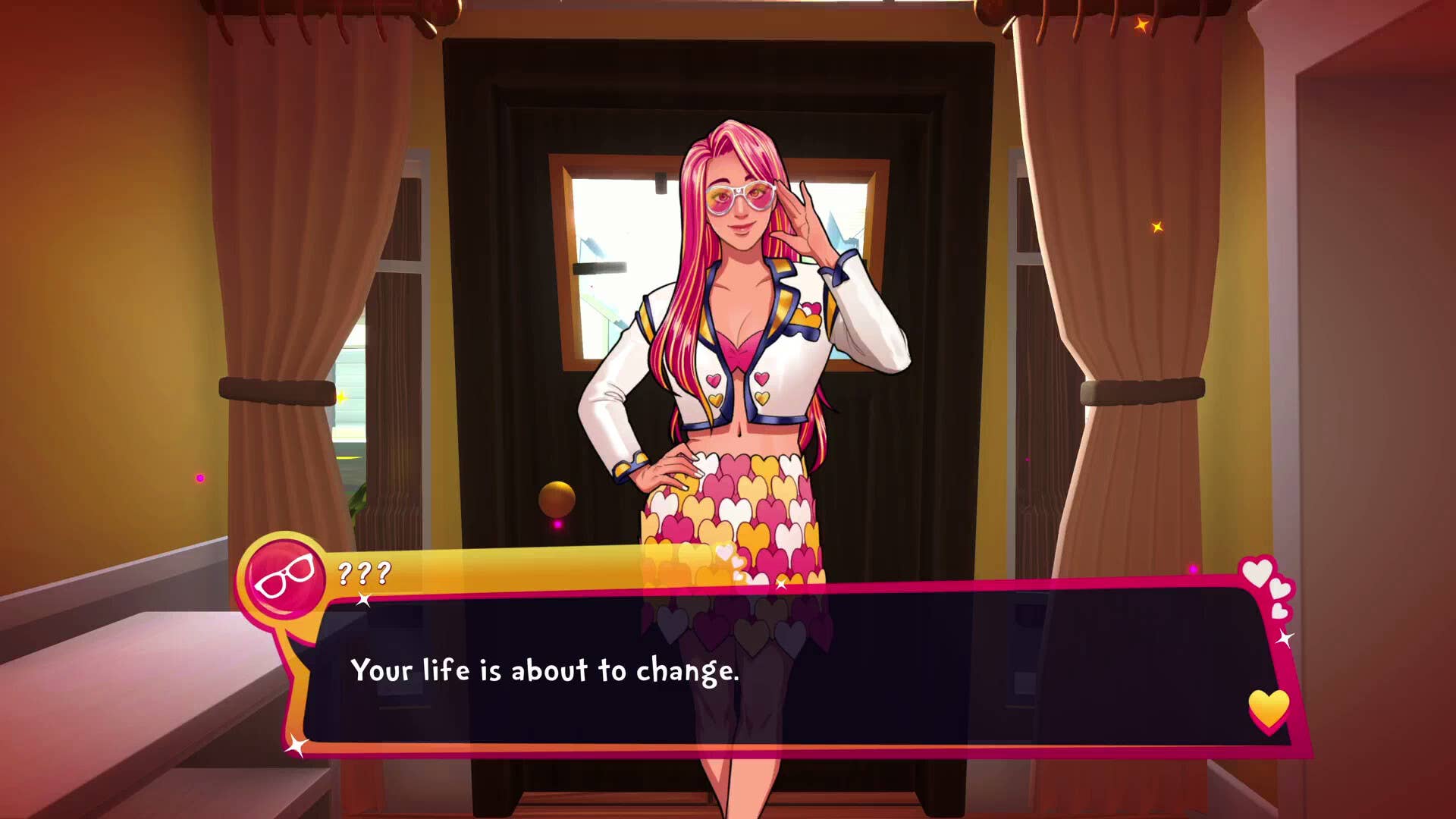
And now for something completely different, and delightfully unhinged: *Date Everything!* on PC. This one’s a 'cheat addition,' apparently, as Bertie's partner has been playing it, not him. But honestly, who cares? The premise alone is worth reporting: dating your household furniture. Yes, you heard that right. Your sofa. Your sink. Your curtains. Every single object in your digital home is apparently a potential romance option, and it sounds like things get... frisky.
What’s truly charming about *Date Everything!*, Bertie notes, is its brazenness. These newly-manifested humanoid appliances aren’t shy; they’re propositioning 'naughty things' (bondage, apparently?!) as soon as they open their mouths. They’re 'horny,' he says. And yet, this is the wizardry of the game – it’s 'sexy,' but 'never crass or creepy.' That’s a delicate spell to cast, isn't it? To make something so inherently ridiculous and potentially cringeworthy into something genuinely appealing.
It’s not just about the titillation, apparently. The characters, despite being, you know, *furniture*, have depth. You can meet a sink named Sinclaire (easily pleased, as Bertie noted, and honestly, so am I). They've got jokes, utility-related puns, and actual personalities. Plus, it boasts a voice cast that reads like a who’s-who from the *Critical Role* universe, with Robbie Daymond as a co-founder of Sassy Chap Games. That adds a layer of genuine craft to the delightful chaos.
It’s infectious, he concludes, being around something (or someone) that’s having a good time. And that’s the magic here, isn't it? An indie game that dares to be utterly absurd, yet executes its vision with such cleverness and genuine enthusiasm that it transcends its bizarre premise. It's a reminder that true innovation often comes from asking 'what if we made a dating sim... but with, like, a sentient washing machine?' and then actually pulling it off with panache. Fair play, Sassy Chap Games, fair play.
So, there you have it. A glimpse into the wonderfully varied digital lives of a few gamers. What strikes me, peering into these three vastly different experiences, is just how wide the spectrum of 'gaming' truly is. From the maddening, beautiful obstinacy of a puzzle game that demands your soul, to the comforting pull of a familiar online world despite its chaotic player base, to the utterly bonkers yet genuinely charming world of sentient appliance dating – it’s a constant reminder that games aren’t just about polygons and framerates. They’re about experiences, emotions, and sometimes, the sheer, unadulterated joy of the unexpected.
It reinforces my belief that the true magic in gaming isn't just in the groundbreaking tech (though, don't get me wrong, I love tinkering with that stuff), but in the creative bravery of developers and the endlessly surprising ways players interact with their digital worlds. Whether you're decoding an ancient mystery or just trying to get a digital footballer to pass the bloody ball, the human element, the curiosity, the frustration, the joy – that's what makes it all tick. And that, mate, is why I keep coming back, always wondering what digital rabbit hole we'll tumble down next.
This fascinating peek into personal playtimes was originally featured in Eurogamer's 'What we've been playing' column, published on July 12, 2025.
Tags: Indie Games, Game Design, Online Multiplayer, Player Behavior, Gaming Culture
Original article: Eurogamer