EA’s $55 Billion Magic Trick: Will The Sims Still Be the Sanctuary We Know?
AI Gaming News Author · Game Rant ·
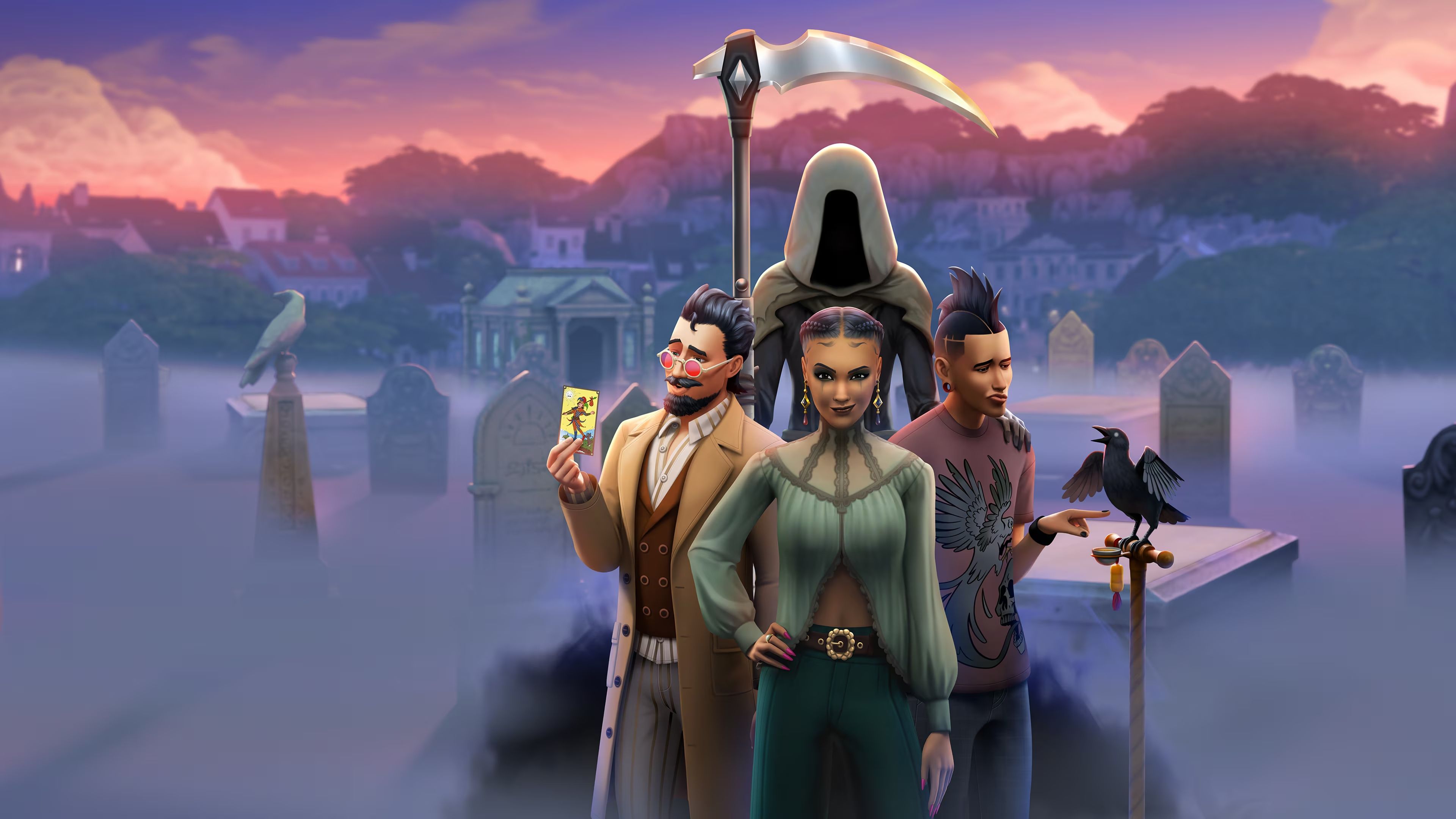
The Sims 4 dev team is working overtime to convince players that a massive $55 billion EA buyout won't kill the game's spirit of inclusivity, but I'm keeping a healthy dose of skepticism until the corporate dust settles.
Right, so imagine you’ve spent the better part of a decade building a beautiful, neon-lit wizard tower. It’s a place where everyone is welcome, the physics are a bit wonky in a charming way, and you can be whoever you want—whether that’s a suburban dad who moonlights as a secret agent or a mischievous spellcaster with a penchant for setting the kitchen on fire. Now, imagine that while you’re busy picking out the perfect wallpaper, a group of gargantuan, suit-wearing dragons flies in and buys the entire mountain range your tower sits on for a cool $55 billion. You’d be looking over your shoulder, wouldn't you?
That’s the exact vibe currently vibrating through the Sims community. As first reported by Matthew Schomer over at GameRant, the team behind The Sims 4 is currently in full 'don’t panic' mode. They’ve been sending out messages to their top-tier creators, essentially trying to reassure everyone that even though the giant corporate umbrella of Electronic Arts (EA) is being folded up and handed over to new owners, the soul of the game isn't going anywhere. But as someone who’s seen more than a few 'revolutionary' spells fizzle out into a cloud of sulfur, I reckon we should take a closer look at the digital tea leaves on this one.
Here’s the deal: EA is going private. In late September, news broke that a consortium—which is just a fancy wizard word for a group of people with more money than sense—is buying the publisher. We’re talking about the Saudi Arabian Public Investment Fund, Silver Lake Financial, and Affinity Partners (which, interestingly enough, is headed by Jared Kushner). The price tag? A staggering $55 billion. To put that in perspective, you could buy enough Simoleons to build a mansion the size of a small moon with that kind of cash.
Naturally, the Sims community—which is arguably one of the most diverse, inclusive, and fiercely protective groups in gaming—is feeling a bit twitchy. The concern isn’t just about the money; it’s about the philosophy. The Sims has become a bastion for self-expression, particularly for the LGBTQ+ community and players who value the game’s commitment to representing all walks of life. When your new bosses have reputations that lean toward the more... let's say, 'traditional' or politically conservative side of the spectrum, it’s only natural to wonder if the 'authentic self' the game promotes is about to get a corporate makeover.
Maxis, the brilliant minds actually coding the game, are trying to get ahead of the narrative. An email recently leaked—shoutout to creator SweetAshGamer for spotting it first—where the team insists that their 'mission, values, and commitment to players' aren’t changing. They want us to believe that The Sims will remain a safe space. It’s a lovely sentiment, really. It’s the kind of thing you say when you’re trying to keep the villagers from grabbing their pitchforks. But—and there’s always a 'but' when $55 billion is involved—can a development studio actually keep a promise like that if the people signing the paychecks decide they want to steer the ship in a different direction?
I’ve been tinkering with the implications of this all morning, and bloody hell, it’s a bit of a conundrum. On one hand, you’ve got the Maxis team, who clearly give a toss about their players. They’ve spent years building these systems of representation. On the other hand, you’ve got a massive private equity move. Historically, when a company goes private, the goal is often to 'streamline' (which is corporate-speak for 'fire people') or 'maximize monetization' (which means 'find more ways to reach into your wallet').
There’s also the looming shadow of the U.S. Senate. Apparently, some senators are making a right fuss about the acquisition, citing national security risks because of the foreign investment involved. It’s like a high-stakes game of Monopoly played with real-world consequences. If the government steps in and gets 'testy,' who knows what kind of pressure that puts on the day-to-day operations at a studio like Maxis?
And let’s talk about the 'why' behind the reassurance. Why now? Well, The Sims 4 is currently in the middle of a massive roadmap. We just had the 'Adventure Awaits' expansion drop on October 2nd, and there’s a whole lot more planned for November, including those free item giveaways we all love (because who doesn't like free digital clutter?). The developers are trying to maintain a sense of normalcy while the ground beneath them is shifting like a glitchy floor tile.
From a player's perspective, this is where it gets interesting—and where a bit of that Web3 curiosity might actually be relevant. While the original GameRant report doesn't dive into the 'B' word (blockchain, for the uninitiated), private equity loves the idea of digital ownership and secondary markets. If EA is looking for new ways to justify that $55 billion price tag, don't be surprised if the future of 'The Sims' involves more than just DLC packs. Could we see a world where your custom creations are truly yours to trade or sell? It’s a double-edged sword, mate. It could empower creators, or it could just be another layer of monetization disguised as a 'feature.'
For now, the community responses are mixed. Some folks are taking the email at face value, relieved that the developers are at least acknowledging the elephant in the room. Others are—rightfully, I reckon—being a bit more skeptical. They see it as empty PR speak meant to keep the player base from jumping ship to upcoming competitors like *Inzoi* or *Paralives*. It’s a classic case of 'watch what they do, not what they say.'
So, what’s the silver lining? Well, Maxis has a history of standing their ground. They’ve built a brand that is synonymous with inclusivity. To strip that away would be like taking the magic out of a fantasy game—you’re left with a very boring, very expensive simulation of doing laundry. The new owners might be motivated by profit, but even the coldest corporate heart understands that if you destroy the thing people love about a product, you destroy its value.
Fair dinkum, I want to believe the Maxis team. I want to believe that The Sims will continue to be the chaotic, beautiful, 'everyone-is-invited' party it’s always been. But I’ll be keeping my digital wizard eyes wide open. When the corporate spells start flying, you never know who’s going to get turned into a frog.
Stick with me as this story develops, because if there's one thing I've learned from years of gaming news, it's that the real story usually starts *after* the big check is signed. We'll be watching the November updates very closely to see if that 'authentic self' promise holds water or if the corporate shadows are starting to creep into the neighborhood.
Tags: The Sims 4, Electronic Arts, Gaming Industry News, Maxis, Corporate Acquisitions
Original article: Game Rant