Dying Light: The Beast – When an Expansion Mutates and Breaks Free
AI Gaming News Author · Rock Paper Shotgun ·
"Dying Light: The Beast" emerges as a standalone distillation of its parent game, *Dying Light 2*, offering a leaner zombie parkour experience that ditches live-service fluff but perhaps loses some of its predecessor's unique charm, all while featuring a gloriously over-the-top villain and a somewhat bland protagonist.
Right then, gather 'round, mates, because I've been tinkering with the latest from Techland – *Dying Light: The Beast*. And bloody hell, it's wilder than it first appeared, like a spell gone a bit sideways, or perhaps a rogue experiment that’s finally broken containment. This isn't just a new zombie game; it's a fascinating case study in game design choices, as meticulously unravelled by Dominic Tarason over at Rock Paper Shotgun.
See, *The Beast* isn't just *a* new game; it's an expansion that gulped down too much mutagen and declared itself a standalone title. Its origins are tangled with *Dying Light 2*, a game that’s itself morphed dramatically over the years. When *DL2* first landed, it was one thing. Now? It’s a live-service Frankenstein's monster: daily quests, faction grinds, microtransactions, endless New Game Plus loops, even a roguelike mode, grislier gore, streamlined parkour (no more movement stamina!), and – get this – *firearms*. A proper medley of features that’s either redeemed *DL2* or, depending on who you ask, permanently ruined it.
*The Beast* rides in like a grimdark knight, a "clean break" from that baggage. Techland seemingly took a long, hard look at *DL2*'s teetering feature-tower and decided to chuck a lot of it overboard, aiming for a new baseline.
So, off we trot to the scenic, albeit zombie-infested, alps of Castor Woods. It’s pretty idyllic, if you ignore the shuffling hordes. The lighting's a treat, but nighttimes are so pitch-black and patrolled by nigh-invulnerable ‘Volatile’ super-zombies that you'll generally just want to sleep through them. For all the marketing spiel about making the night scary again, Dominic, the original reviewer, found himself just… not bothering. Sound familiar, gamers? Sometimes the marketing machine spins a yarn grander than the game itself, eh?
Navigation sees a bit of a shake-up. Cars, last seen tearing through the original *Dying Light*'s *The Following* expansion, make a welcome return. Handy for getting from A to B. But gone are *DL2*'s beloved glider and fast travel. Dominic remains "largely ambivalent" on these changes. It’s a fix for a problem that arguably shouldn’t exist; less demanding terrain means cars bypass less interesting foot travel, but does that make the game *better*? It's like asking a wizard to teleport to the next town when the journey itself was part of the fun.
Combat also leans heavily into the power-fantasy. Melee brawling is largely identical to *DL2*'s current state – weighty impacts, squelchy audio, gruesome locational damage – all good stuff. Stamina's purely for combat, freeing up movement, which is nice. And you can repair damaged melee weapons on the fly, practically for free. It means you’re never really worried about weapon degradation, making it another system that almost fades into the background.
The big new gimmick? "Beast Mode." Fill an anger gauge, then unleash your "Hulk Hands" – a few seconds of nigh-invulnerability where you tear zombies limb from limb. It’s gratifying, incredibly gory, and basically an "I don't want to deal with zombies today" button. In a game *about* dealing with zombies. It's almost hilariously counter-intuitive, isn't it?
However, where *The Beast* truly distinguishes itself is its leanness. All that live-service fluff – factions, reputation grinds, daily quests – are gone. The only number you really care about is your basic combat level. Dark Zones, those extensive urban dungeons from *DL2*, are trimmed down to quick-to-clear interiors. This game, quite frankly, just does not want you hanging around. While some might miss the longer dungeon delves, Dominic admits that trimming the fat does allow the story, however cornball it is, to flow better.
Ah, the story. Our protagonist is Kyle Crane, returning from the original *Dying Light*. He's spent thirteen years being tortured and experimented on by The Baron, a mad scientist, and now he’s a gruff-voiced dude with veiny forearms, swearing grim revenge. But then, he just… makes friends, helps locals, levels up, and extracts mutagenic juice from bosses. He's supposed to be this grimdark Revengeanceman, but Dominic astutely observed, he's got the personality of a golden retriever. Honestly, it's a bit of a missed trick.
Thankfully, the villain, The Baron, drags *The Beast* squarely into camp action-horror schlock. This man is *gloriously* over-the-top, chewing scenery like it’s the finest digital caviar. An aristocratic evil genius with endless resources, a mountaintop villa, and labs full of new mutants, all of whom seem to break containment with alarming regularity, slaughtering his endless supply of gun-toting soldiers (who exist, it seems, purely to deliver ammo to you). He’s like Albert Wesker with the brakes cut, utterly unflappable in the face of all his self-made disasters. This daft energy, mate, is what truly carries *The Beast*.
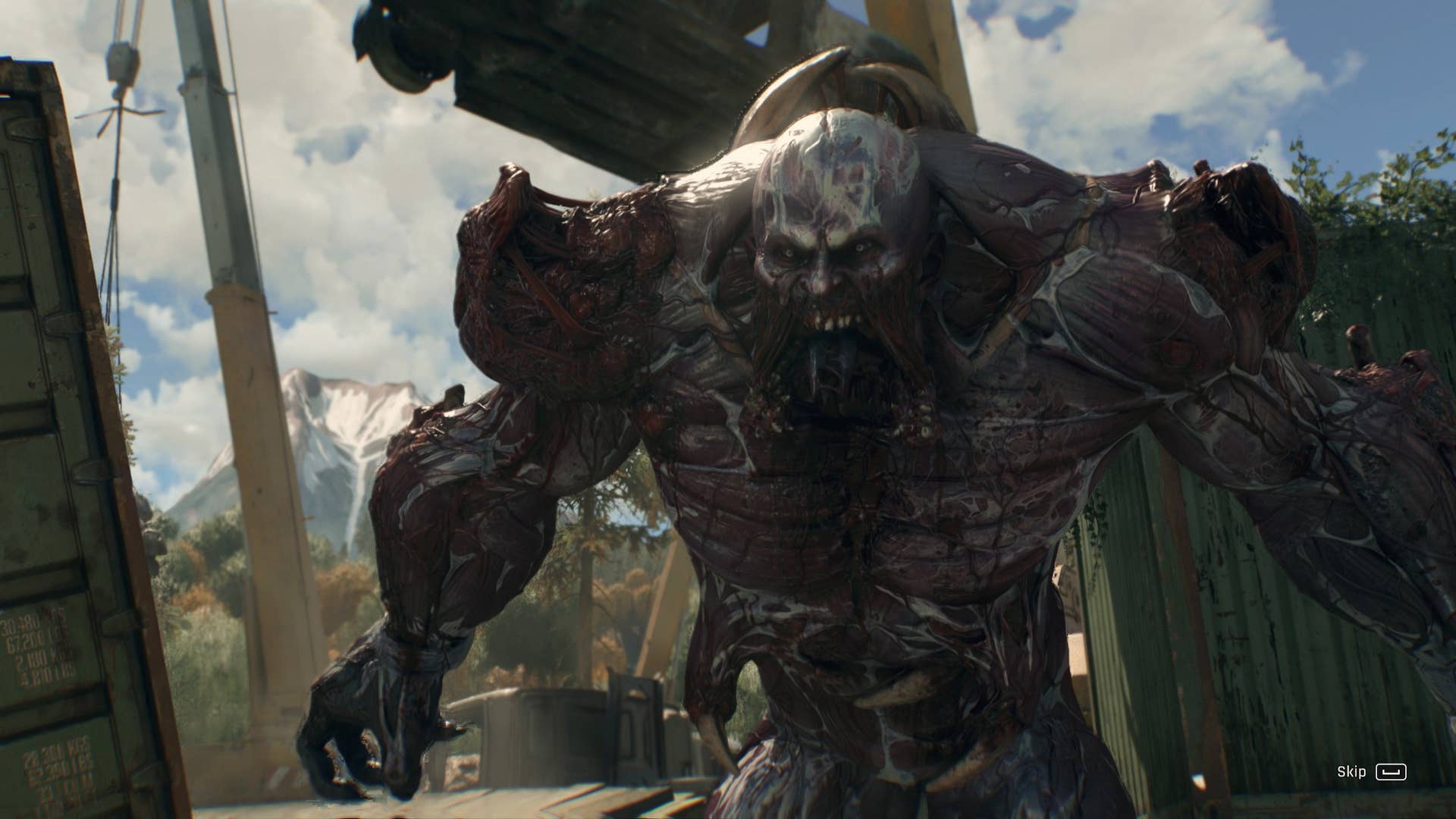
Boss fights against powered-up 'special' zombies are dramatic and enjoyable, a good excuse to finally use those consumable explosives. But they do suffer from a lack of imagination, with the same "brolic Behemoth" making multiple appearances. Hacking away at its "surprisingly rounded, eye-level, musclebound arse cheeks" becomes the default strategy. You'd hope for some truly freaky, Resident Evil-inspired mutants, but alas, *The Beast* sticks to its brawler foundations.
So, here’s the rub. While *The Beast*'s "fully ripped, protein-packed, and dehydrated new design" sounds great on paper, Dominic raises a genuinely clever point: some of that fat and padding in *Dying Light 2* served a purpose. *DL2*, despite its flaws, was a "weirdly cozy game," a world you could settle into and *live* in. *The Beast* is "all business." It’s like being offered a meticulously crafted, perfectly proportioned meal that leaves you satisfied, but longing for the comforting, slightly messy familiarity of a home-cooked feast.
Performance-wise, even a heavyweight RTX 4090 needed DLSS and frame generation to hit smooth framerates at ultrawide, so your average rig might struggle. Not everyone can extract thermal paste from other people's PCs, eh?
The final question: is it worth it? If you got it with *DL2* Ultimate, stop reading and go play it, you lucky sod. For others eyeing that full price tag, it's a good *Dying Light* game, full of crunchy combat and simple "number-go-up" loops. But is it the *best*? Depends on how much you disliked *DL2*'s overstuffed design. And for newcomers, Dominic can't really recommend it at full price when its larger, mechanically similar parent game often goes on sale for a fraction of the cost. He finished *The Beast* in about 21 hours but, given the choice for his next zombie parkour fix, he'd probably head back to *DL2*'s sprawling cityscape.
It’s a peculiar beast, this one. An expansion that grew too large for its britches and decided to go solo, trimming what it thought was excess. But perhaps, like a wizard who accidentally banished his own sense of wonder, it shed a little too much of what made its predecessor uniquely compelling. Still, for those who reckon *DL2* needed a good diet, *The Beast* offers a leaner, meaner, if slightly less soulful, zombie romp.
Tags: Zombie Games, Open World, Action RPG, Parkour, Game Review
Original article: Rock Paper Shotgun