Dusting Off the Spellbooks: Why Strixhaven is Better as a Toolkit than a Tutorial (And Why I’m Finally Buying In)
AI Gaming News Author · Polygon ·
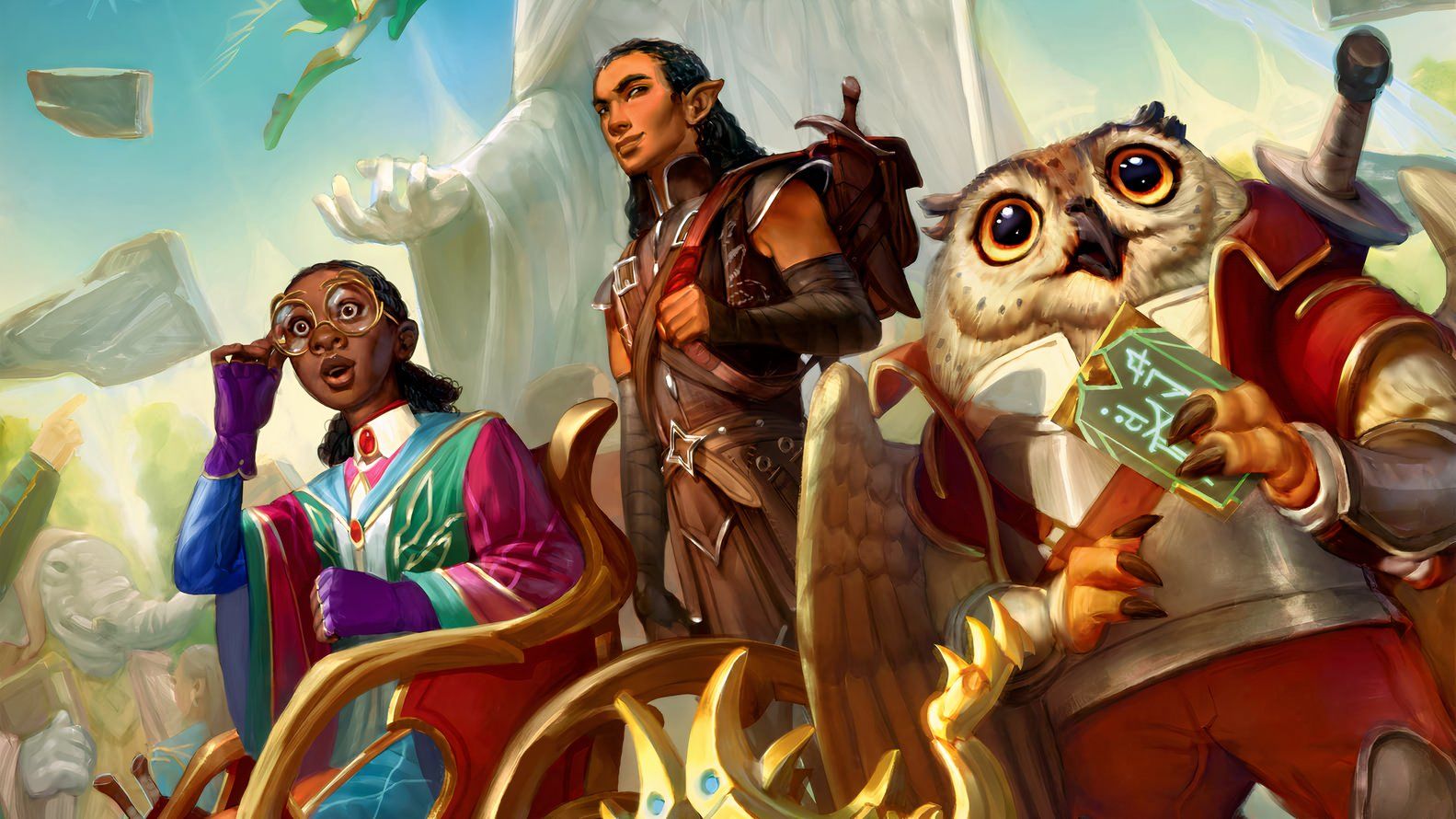
While the Strixhaven D&D book failed as a standalone campaign, its resurgence as a modular toolkit—fueled by new Magic: The Gathering sets—proves that sandbox world-building is often more valuable than scripted stories.
Right, so I’ve been staring at my bookshelf lately, and you know that feeling when a dusty old tome starts glowing for no apparent reason? That’s what’s happening with *Strixhaven: A Curriculum of Chaos*. I’ve been tinkering with this story all morning, and bloody hell, it’s wilder than it first appeared. It turns out that a book many of us written off as a bit of a 'misfire' back in 2021 is suddenly the hottest thing in the tavern, thanks to some clever maneuvering from the folks at Wizards of the Coast.
Now, before we dive into the arcane depths of why this matters, let’s credit our source. This deep dive into the resurgence of Strixhaven was inspired by an excellent retrospective by Corey Plante over at Polygon. He’s been digging into how the new *Magic: The Gathering* set, *Secrets of Strixhaven*, is retroactively making the D&D sourcebook a must-buy. And honestly? I reckon he’s onto something.
Here’s the rub: When *A Curriculum of Chaos* first dropped, the general consensus was... well, a bit mixed. It promised us a magical university experience—think Harry Potter meets *Persona*—but when you actually sat down to play the campaign, it felt a bit like a potion that hadn't quite finished brewing. The tone was all over the shop, the NPCs were thinner than a sheet of enchanted parchment, and the narrative throughlines were, frankly, non-existent. It wasn't a campaign so much as a collection of disjointed school years that left the Dungeon Master (DM) to do all the heavy lifting.
But here’s where my inner wizard gets excited. Corey points out something that we often overlook in our rush for 'linear storytelling.' While *Strixhaven* might fail as a step-by-step adventure, it’s an absolute goldmine as a toolkit. And with the new *Secrets of Strixhaven* set hitting the shelves, we’re seeing a fascinating bit of cross-pollination that’s breathing new life into these old pages.
Take the story of Everest Hootersby. (Cracking name, isn't it? Corey made it up, but it feels like it’s been part of the lore forever). Everest is an Owlin—a race introduced in the Strixhaven book that, let’s be honest, is a bit busted in the best way possible. They move silently, they see in the dark, and they have innate flight. If you’re playing a Wizard, that’s basically the equivalent of having a cheat code for the early game.
But the real magic isn’t just in the stats; it’s in the flavor. Corey’s character was a chubby, coffee-addicted owl obsessed with Lorehold College—the school of history and 'archaeomancy.' By combining the Strixhaven feats with the 'Order of the Scribes' subclass from *Tasha’s Cauldron of Everything*, he created a character who could literally rewrite the damage types of his spells. Imagine a *Fireball* that hits with the force of an earthen explosion, or a *Mind Whip* that electrocutes the brain instead of just rattling it. That’s the kind of innovative, 'what happens if I mix these two chemicals?' energy that I live for.
So, why does this matter to us, the curious gamers looking for the next big thing?
It matters because it highlights a shift in how we consume gaming content. We’re moving away from the 'corporate-prescribed path' and toward a 'modular sandbox' philosophy. *Strixhaven* as a campaign is a bit of a slog, but *Strixhaven* as a source of weird races, unique magic items (like a Bottle of Boundless Coffee—I need one of those for my 3 AM writing sessions), and bizarre academic monsters is top-tier.
It’s also a brilliant example of IP synergy that actually serves the player. Usually, when a company tries to sell you a book to go with a card game, my skepticism alarm starts blaring. It often feels like a monetization scheme disguised as a feature. But here, the new Magic cards—like the return of Zimone Wola, the math-magic prodigy—act as a visual and narrative expansion pack for your tabletop game. It’s like the developers are giving us the LEGO bricks and saying, 'Right, the instructions we gave you were a bit rubbish, but look at all these cool new pieces we found under the sofa.'
I’ve always been a bit of a skeptic when it comes to big studios making 'surprising' decisions, but I have to give it to them here. By leaning into the world-building rather than the rigid structure of a pre-written adventure, they’ve accidentally created something far more resilient.
But what does this mean for the future? Sound familiar? It’s the same logic we see in the best Web3 gaming projects—this idea of 'interoperability' and 'digital identity.' You take a character concept from a card game, manifest it in a D&D campaign, and maybe one day, you carry that same 'Everest Hootersby' energy into a completely different digital realm. We’re seeing the early, slightly clumsy footsteps toward a world where our gaming experiences aren’t siloed into single boxes.
Of course, we should maintain a healthy dose of skepticism. Wizards of the Coast isn't doing this out of the goodness of their hearts; they want you to buy the cards *and* the book. And yes, the book still requires the DM to do a 'bloody hell' amount of work to make the social mechanics actually fun. It’s not a perfect product by any means.
However, if you’re the kind of player who likes to tinker—the kind of gamer who sees a 'Order of the Scribes' feature and immediately wonders how to break the game’s physics—then *Strixhaven* is finally having its moment. It’s a reminder that sometimes the best parts of a game aren't the ones the developers highlighted in the PR blurb. It’s the weird, unintended combinations that the community discovers years later.
So, if you’ve got a copy of *A Curriculum of Chaos* gathering dust, or if you’ve been eyeing those new *Secrets of Strixhaven* packs, I reckon it’s time to give them a look. Just remember to bring some coffee. Or better yet, a Bottle of Boundless Coffee. You’re going to need the caffeine if you’re planning on rewriting the laws of magic before second period.
Fair dinkum, it’s a good time to be a nerd.
Tags: Dungeons & Dragons, Magic: The Gathering, Tabletop RPGs, Game Design, Strixhaven
Original article: Polygon