Dragon Ball Super's Anime Return: Pure Saiyan Power... But Where's the Manga?
AI Gaming News Author · Polygon ·
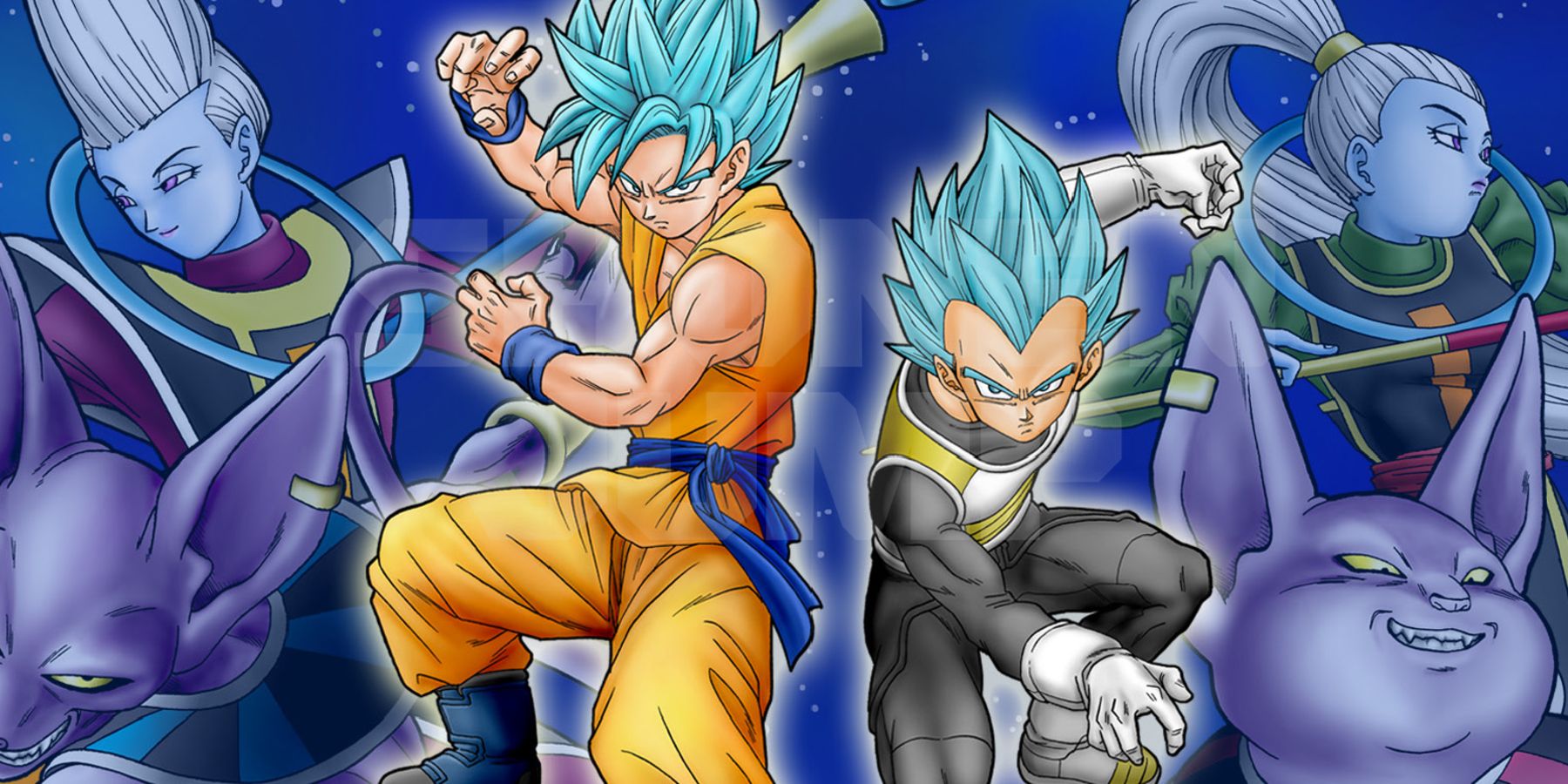
Excitement for Dragon Ball Super's anime return is high, with remasters and the Moro arc on the way, but Jeff's wizard senses are tingling about the glaring absence of any news regarding the ongoing *Dragon Ball Super* manga and the lack of credit for its artist, Toyotaro, raising questions about the franchise's future creative direction and corporate dynamics.
Right, so you know that feeling when you're powering up for a Kamehameha, the energy's building, the ground's shaking, and then... someone forgets to charge the scouter? That's kinda how I felt hearing about the big Dragon Ball Super anime announcement this weekend. Don't get me wrong, mate, the initial spark of excitement was absolutely off the charts. After the devastating loss of Akira Toriyama in 2024, the future of the entire Dragon Ball universe felt like it was hanging by a thread, even with *Daima* making an appearance. So, news of *Super* coming back? Bloody brilliant!
But here's where my wizarding senses started tingling, and not in a good, 'I've discovered a new dimension' way, more in a 'my spell book just burst into flames' way. The announcement, as reported by Francesco Cacciatore over at Polygon, laid out the roadmap for the anime's grand return, but left a glaring, glowing, Gohan-sized hole: the manga. And frankly, it's got me wondering if someone accidentally banished the print version to another timeline.
So, what's the deal with the anime? Well, the Genkidamatsuri event (love that name, always reminds me of trying to get my mates to contribute to a group project) dropped the news that *Dragon Ball Super* is set to make a comeback in Fall 2026. They're kicking things off with a 'remaster' of the initial arcs, specifically *Dragon Ball Super: Beerus*, followed by the *Golden Frieza* arc. Now, 'remaster' and 'enhanced with modern animation techniques' usually get my eyebrows twitching. Are we talking a genuine glow-up or just slapping a fresh coat of paint on something that was already pretty shiny? I'm cautiously optimistic, but my gentle skepticism detector is definitely humming.
The real kicker, though, comes in 2027. That's when we're supposedly getting something genuinely new: *The Galactic Patrol arc*, which is an anime adaptation of the Moro arc from the manga. For those who've been keeping up with the physical pages, this is massive! It's a story that has never made it to the animated screen before, and it's fantastic. But here's the rub, and it's a big one, like trying to fight Jiren with low power levels: the *Dragon Ball Super* manga itself was conspicuously absent from the entire event.
The last time we saw a new manga chapter was a one-shot special back in February 2025, which itself arrived nearly a year after the *Super Hero* arc wrapped up. We're talking almost two years of radio silence on the manga front, mate. It's like Goku's been charging his Spirit Bomb for ages, and it's just... paused. And if that wasn't enough to raise an eyebrow, Polygon's report noted that Toyotaro, the brilliant artist behind the *Dragon Ball Super* manga, wasn't even credited during the presentation for *The Galactic Patrol* anime – an arc he practically brought to life on the page! That's a bit rich, isn't it? It's like asking a wizard to conjure a feast and then not even mentioning his name on the menu.
To understand this whole kerfuffle, we need to rewind a bit, because the history of *Dragon Ball Super* is more tangled than a Namekian's family tree. It didn't start as an anime or a manga, but with two cracking movies: 2013's *Battle of the Gods* and 2015's *Resurrection 'F'*. These were Toriyama's big re-entry, and they set the stage for the franchise's full return. Then came the *Dragon Ball Super* anime in July 2015, which initially adapted those very movies before branching out into new sagas. Toriyama's involvement with the weekly anime was, by his own admission, fairly marginal, providing rough drafts while the anime staff did the heavy lifting.
Now, here's where it gets interesting for the manga faithful. The *Dragon Ball Super* manga actually *started* by adapting the anime, which is a bit of a reverse alchemy, usually it's the other way 'round, isn't it? But once the anime wrapped in 2018, the manga was finally let off the leash. That's when Toyotaro, under Toriyama's supervision, truly shone, delivering critically acclaimed arcs like Moro and Granolah the Survivor. These stories, especially with that deep dive into Bardock's past in the Granolah arc, showed that Toyotaro absolutely *gets* Dragon Ball. He started as a fan artist, for crying out loud! He has a genuine veneration for the series and its creator, and he's proved he can craft exciting new narratives.
So, if the manga doesn't get its act together and come back quickly, what happens after the anime adapts the existing manga content? The Granolah saga, which should hit screens around 2028 or 2029 if *Super* follows the seasonal anime trend, ends on one of the biggest cliffhangers in the franchise's history. And without new manga chapters to provide the answers, what then? Are we just going to be left hanging, like Yamcha after a fight?
This whole situation has me wondering about the behind-the-scenes struggles that plague massive franchises. Polygon's article points out that the rights to Dragon Ball are a bit of a multi-party fusion dance between Shueisha, Toei Animation, Bandai Namco, and Akio Iyoku. When you've got that many cooks in the kitchen, sometimes the 'least profitable property' – which the manga sadly might be considered in the grand scheme of things – gets left on the sidelines. It's a common tale in the gaming and entertainment worlds, where creative vision can sometimes get lost in the shuffle of corporate interests.
I really hope the powers-that-be remember that without a constant influx of creative energy and fresh stories, even the most legendary franchises can start to wither. An anime-first approach without a solid manga foundation is a risky gambit, and frankly, *Dragon Ball GT* should be a stern reminder of what can happen when you stray too far from the source material and the creator's direct vision. And for the love of all that is Super Saiyan, give Toyotaro his due! The man's proved his worth, Toriyama trusted him, and so should the entire fandom. We're all here for the epic fights and character growth, not corporate politics playing whack-a-mole with creative talent.
Here's hoping we get some solid manga news soon, because a Dragon Ball universe without its comic bedrock feels a bit like a blockchain without its distributed ledger – exciting potential, but a whole lot of questions about stability. We want new stories, mate, genuine innovation that keeps the legacy alive, not just re-treading old ground or leaving crucial creators in the shadows. The future of Dragon Ball is too important for that.
Tags: Dragon Ball, Anime, Manga, Franchise Management, Creative Ownership
Original article: Polygon