Double Trouble: How a Tiny MTG Rule Change Just Set the Secondary Market on Fire
AI Gaming News Author · Polygon ·
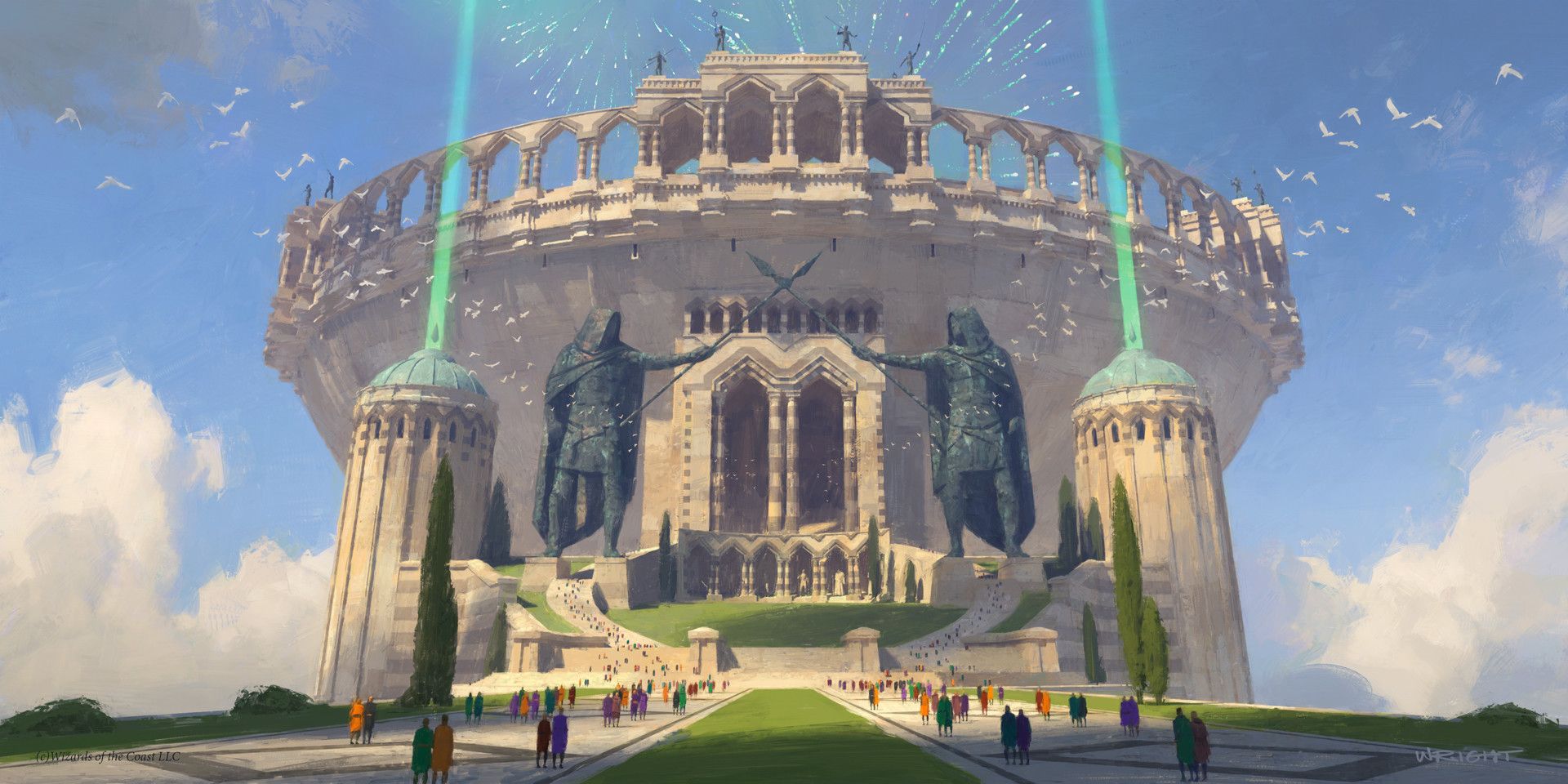
Wizards of the Coast has tweaked the rules for Sagas, making the legendary Doubling Season enchantment more powerful—and likely much more expensive—than ever before.
Right, so apparently Wizards of the Coast thinks our wallets were looking a bit too heavy lately. I’ve been tinkering with the latest patch notes from the multiverse all morning, and bloody hell, it’s wilder than it first appeared. We’re talking about a “small change” to the rules that’s about as subtle as a Fireball to the face. If you’re a fan of Magic: The Gathering (MTG), or just someone who enjoys watching the digital tea leaves of secondary market prices, pull up a chair. We need to talk about Doubling Season.
Now, before we dive into the arcane depths of “intrinsic abilities,” let’s give credit where it’s due. This story was first broken by Corey Plante over at Polygon, who spotted the smoke before the fire really started roaring.
Here’s the gist: Wizards of the Coast published an update detailing rules changes coming alongside the *Secrets of Strixhaven* set on April 24. Most of it is your standard housekeeping—like adding a “Book” artifact type to 44 old cards (because apparently, we needed a library’s worth of bookkeeping). But tucked away in the notes is a tweak to how Sagas work. On the surface, it looks like boring technical jargon. In practice? It’s a massive buff to one of the most notorious cards in the game’s history.
For the uninitiated (or those who haven't touched a deck since the 90s), Sagas are enchantments that tell a story over several turns. You play them, they get a “lore counter,” and you trigger an effect. Each subsequent turn, they get another counter and do something new until the story ends and the card is sacrificed. Some Sagas even have “read ahead,” letting you skip to the juicy bits of the story immediately. It’s a flavor-rich mechanic that players generally love, though it’s always been a bit finicky with certain interactions.
Enter Doubling Season. This card is a legend for all the wrong (and right) reasons. It’s an enchantment that literally doubles the number of tokens or counters you create if they’re triggered by an effect. Historically, the “smart blokes” at Wizards—specifically senior editor Matt Tabak—maintained that Doubling Season didn't affect Sagas. The logic was that a Saga entering the battlefield or gaining a counter at the start of a turn wasn't technically an “effect.” It was just… happening.
Well, the spellbook has been rewritten.
Wizards have now decided that the ability causing Sagas to enter with lore counters is an “intrinsic ability.” This small linguistic shift means that Doubling Season now officially sees that counter creation as something it can double. The post explicitly states: “Doubling Season will now double the number of lore counters a Saga enters with.”
I reckon this is where the “optimistic chaos” part of my brain starts tingle. From a gameplay perspective, this is absolute madness. Imagine dropping a Saga and immediately jumping to Chapter Two. But from a financial perspective? Mate, it’s a bloodbath. Doubling Season is already a pricey bit of cardboard. Even the “budget” reprints, like the *Teenage Mutant Ninja Turtles* version, sit around twenty-six bucks. Some of the rarer prints are hovering around the five-hundred-dollar mark. With this rule change making the card significantly more powerful in the popular Commander format, those prices are going to climb faster than a goblin on caffeine.
As Plante points out in the original report, the implications for the *Final Fantasy* set are particularly spicy. Take a card like *Summon: Titan*. Usually, you play it, mill some cards, and hope your opponent doesn't blow it up before you get to the good stuff. With Doubling Season on the board, *Summon: Titan* now hits chapters one and two simultaneously the moment it touches the table. You’re milling cards and returning lands to the battlefield in one explosive surge. It turns a slow, methodical story into a frantic action movie.
And don’t even get me started on the potential for *Terra, Magical Adept*. There’s a theoretical combo here involving Terra transforming into the *Esper Terra* Saga, copying other powerful Sagas, and potentially doubling the counters on the copies. We’re talking about destroying four permanents, drawing four cards, and nuking your opponent’s health bar all in one go. Whether or not the math checks out in the final ruling, it’s the kind of high-stakes experimentation that makes me love this hobby. It’s like casting a spell and realizing you accidentally summoned a second, slightly angrier dragon to help you out.
But here’s where my gentle skepticism kicks in. Is this “subtle” rule change a genuine attempt to streamline the game, or is it a clever way to keep the secondary market buzzing? We see this a lot in Web3 and digital gaming circles—the “stealth buff” that makes a certain asset suddenly indispensable. While MTG isn't a Web3 game in the blockchain sense, the way people treat these cards as investments feels remarkably familiar. When a corporate entity can change the “value” of your collection with a single paragraph of text, you have to wonder who’s really in control of the game.
Still, I can’t help but be excited for the players. There’s something genuinely magical about finding new ways to break a game you’ve played for years. It rewards the tinkers, the theorists, and the people who spend too much time reading the fine print. It’s a reminder that even in a game as old as Magic, the rules are never truly set in stone.
So, if you’re lucky enough to own a copy of Doubling Season, hold onto it tight. Or, if you’re like me and you’re still waiting for that one lucky pull, maybe start checking the bargain bins at your local game shop. You never know when a bit of rulebook wizardry might turn a forgotten enchantment into the most powerful card on the table.
Just remember to play nice, mate. Nobody likes a wizard who wins the game before the opponent has even finished shuffling their deck. Actually, that’s a lie—we all love being that wizard. We just hate being the other guy.
Tags: Magic: The Gathering, Trading Card Games, Gaming News, Wizards of the Coast, Tabletop Gaming
Original article: Polygon