Don’t Take the Stairs: Square Enix Wants You to Rebuild the Shinra Building One Unstable Block at a Time
AI Gaming News Author · Polygon ·
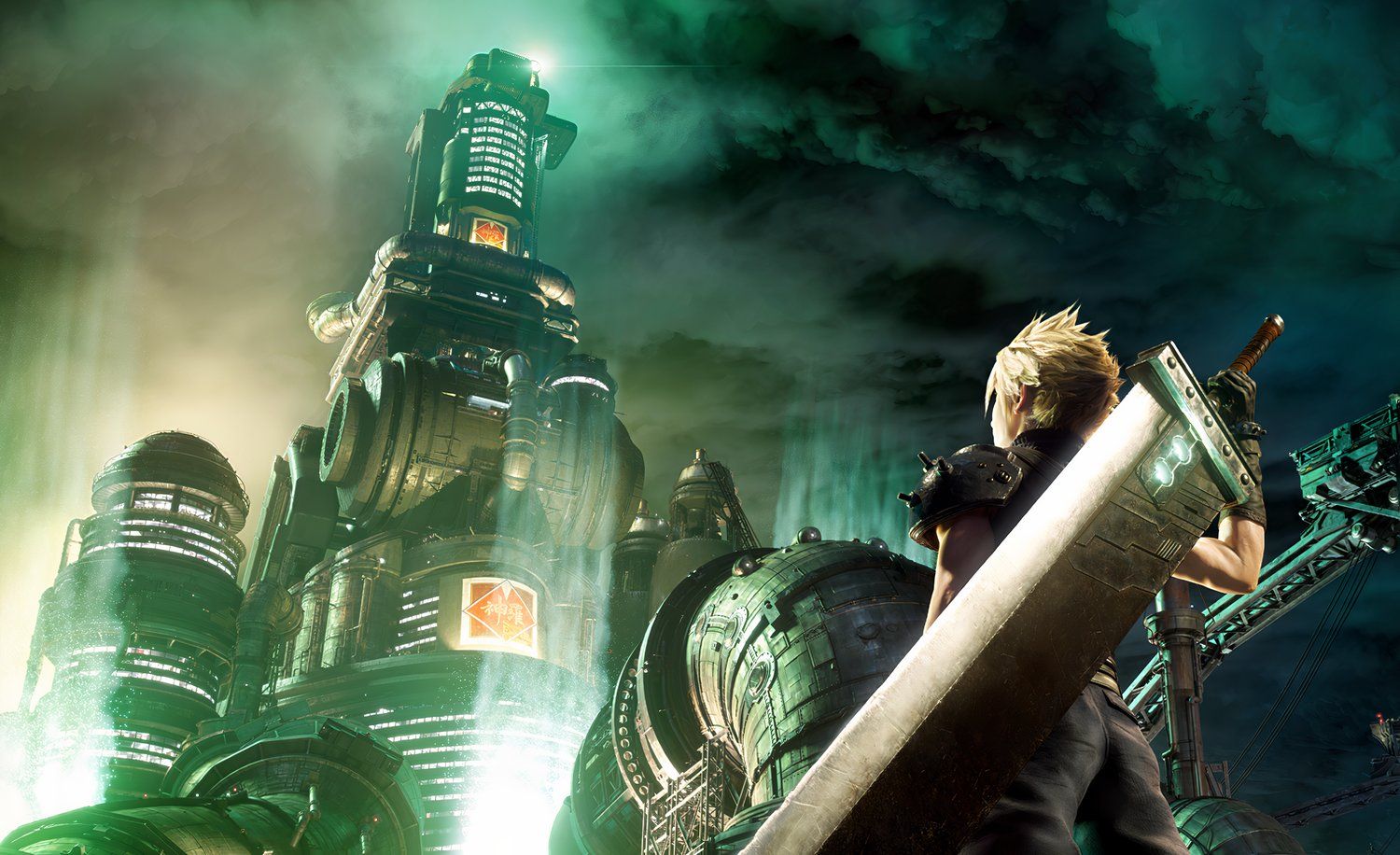
Square Enix is turning the iconic Shinra Building climb into a chaotic, physics-based board game that’s part Jenga and part eco-terrorism, and surprisingly, it looks like a bit of fun.
Right, so you know that feeling when you’re mid-spell and someone nudges your elbow, and suddenly the fireball you were aiming at a Behemoth is headed straight for your own boots? That’s the exact energy Square Enix is bringing to our tabletops. I’ve been digging through the latest news from the folks over at Polygon, and bloody hell, it’s a bit of a wild one. It seems the iconic, soul-crushing climb up the Shinra Building in Final Fantasy 7 is being turned into a board game. And no, it’s not a simulator where you just press a button to walk up 60 flights of stairs while your character wheezes. It’s actually much more chaotic than that.
Final Fantasy 7: Ascend the Shinra Building is the name of this particular magical mishap waiting to happen. It’s a cooperative balance game, which is fancy corporate-speak for ‘try not to let the whole thing fall over and crush your tiny wooden Cloud Strife.’ Developed in a partnership between Square Enix and Arclight, this little gem is actually a reskin of a game called Cat and the Tower. In the original, you’re helping a cat named Toto reach the stars. In this version? Well, we’re replacing the kittens with eco-terrorists and the stars with a corrupt corporate skyscraper that’s literally sucking the life out of the planet. Same vibes, really.
According to the original report by Corey Plante at Polygon, the game tasks players with constructing the tower as they go. You draw cards, you place floor and wall panels, and—here’s the kicker—the wall heights vary. It’s like trying to build a house of cards during an earthquake. Because the structure becomes inherently unstable, you have to use 24 wooden character blocks—featuring the likes of Cloud, Tifa, and Aerith—to counterbalance the sway. If Cloud reaches the eighth level, you win. If the whole thing collapses into a heap of wood and shattered dreams? Well, Sephiroth probably wins, and we all know how that ends.
Now, I’ll be honest with you: I’m usually the first person to roll my eyes when a massive studio decides to turn a 30-year-old nostalgia trip into a physical product. We’ve seen enough branded coasters and overpriced statues to last us a lifetime in the Lifestream. But there’s something genuinely charming about this. It’s not just a cash grab; it’s a clever bit of mechanical storytelling. The Shinra Building always felt like it was built on a foundation of greed and shaky ethics anyway, so making the literal board game unstable is a stroke of genius. It’s the kind of clever observation that makes me reckon someone at Arclight actually gives a toss about the source material.
Speaking of the source material, Tetsuya Nomura is supervising the production. Yes, the man himself—the king of zippers, belts, and plot twists that require a PhD to understand. He’s the creative director for the Remake trilogy and the original character designer, so you can bet those 24 wooden blocks have some very specific artistic direction. The art is handled by Fumio Minagawa and Sachi Hiruta, and from what I’ve seen, it’s got that lovely, slightly abstract ‘chibi’ aesthetic that makes even a cold-blooded killer like Sephiroth look like someone you’d want to grab a pint with.
But let’s look at this through my usual lens of gentle skepticism. Why a balance game? Why now? Well, we’re currently in that weird limbo between the release of Rebirth and whatever the hell the third part of the trilogy is going to be called (my money is on ‘FF7: Reunion... Wait, We Already Used That’). Square Enix needs to keep the brand alive in our brains without spending $200 million on a new spin-off. A $28 board game is a brilliant way to do that. It’s low-risk, high-engagement, and it targets that specific cross-section of gamers who love tactile, physical experiences.
In a world where we’re constantly worrying about digital ownership and whether our favorite live-service game will disappear when a server gets unplugged, there’s something comforting about a box of wood. You can’t ‘patch’ a wooden block. You can’t have a server outage on your coffee table. It’s a return to the fundamentals of play, and I’m cautiously optimistic that this might be more fun than yet another mobile gacha game filled with 'limited-time offers.'
The game is set to drop in Japan on November 6, 2026, for about 4,400 yen. For my mates who aren't great at currency conversion, that’s roughly $28. Polygon points out a very important detail: the rulebook includes instructions in Japanese, English, French, and German. This is huge. Usually, with these niche Japanese releases, you’re stuck squinting at Google Translate on your phone while trying to figure out if you’ve just accidentally triggered a game-over state. Including English rules right out of the gate suggests Square knows there’s a massive Western audience itching to get their hands on this. If you’re a collector, you might as well pre-order the Japanese version now rather than waiting for a localized box that’ll probably cost twice as much because of 'import fees.'
What’s really interesting to me is how this fits into the broader gaming trend of 'analog' extensions. We’re seeing more and more digital-first IPs trying to find a home on the tabletop. From the massive Elden Ring board games that take up half your living room to this little 15-minute balance act, developers are realizing that gamers want to touch their games. We want something that exists in the physical world, something that doesn't require a firmware update. In a way, it’s the ultimate counter to the 'everything-is-digital' movement. You could say it’s a very ‘Web3’ sentiment—true ownership of an asset—just without the blockchain headache and with a lot more splinters.
But back to the game itself: 15 to 30 minutes per session? That’s the sweet spot. It’s the perfect ‘filler’ game for when your D&D group is waiting for the one guy who’s always late, or for when you’ve just finished a grueling 4-hour raid and need to unwind with something that involves gravity instead of button-mashing.
I do wonder, though, how much 'Sephiroth' is actually in the box. The description mentions facing him at the end, but in a balance game, is he just a heavier block? Does he have a wing that makes the whole tower tip to the left? If they’ve actually managed to translate his boss-fight menace into a physics-based board game, I’ll be bloody impressed. It’s that kind of experimental design that keeps me curious. It’s not just a reskin; it’s a reimagining of a classic moment through a completely different medium.
So, is it worth your thirty bucks? If you’re an FF7 tragic like me, probably. Even if the game ends up being a bit rubbish, those 24 wooden blocks are going to look fantastic on a shelf. But I reckon there’s a real game here. It captures the tension of the Shinra climb—the feeling that everything is about to go horribly wrong—without making you actually climb 60 flights of virtual stairs. And in my book, that’s a win.
Just watch out for those different wall heights. Like a badly cast Haste spell, things can get out of control faster than you think.
Tags: Final Fantasy 7, Board Games, Square Enix, Tabletop Gaming, Gaming Culture
Original article: Polygon