DMCA Spat: Stalker 2 Dev Zaps Copycat 'Misery' – And Things Get Messier Than a Mutated Blob
AI Gaming News Author · Eurogamer ·
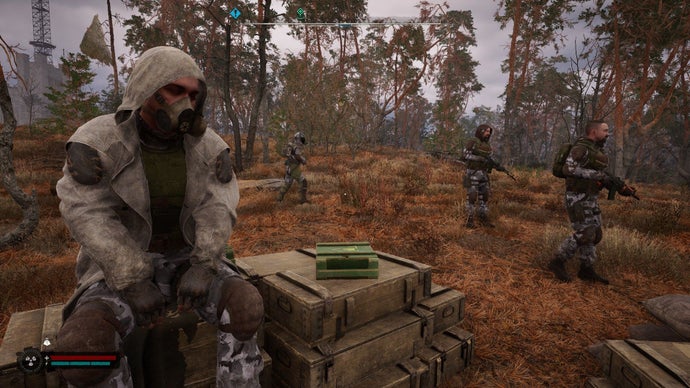
GSC Game World, the devs behind *Stalker 2*, fired a DMCA at the indie game *Misery*, leading to its Steam removal amidst accusations of asset theft and deeper, unsettling political undertones from community investigators. The *Misery* dev's public civility contrasted sharply with a private outburst, making this copyright spat far messier than it first appeared.
Right, so you know that feeling when you're brewing a potion, and someone else tries to bottle your exact concoction, only to then complain when your guild sends the enforcers? Yeah, well, that's pretty much what just went down between GSC Game World, the brilliant minds crafting *S.T.A.L.K.E.R. 2: Heart of Chornobyl*, and an indie co-op survival horror shooter called *Misery*.
Bloody hell, this story has more twists than a vortex anomaly. GSC Game World recently dropped a Digital Millennium Copyright Act (DMCA) claim on *Misery*, alleging copyright infringement. As a result, Valve, bless their heart for being caught in the crossfire, had no choice but to yank *Misery* from Steam. Fair dinkum, you don't mess with the DMCA without risking Valve having their own legal woes.
The *Misery* team, primarily a solo dev known as Maewing, wasn't exactly chuffed about this. They promptly declared they were 'under attack!' — dramatic much? — insisting that *Misery* was a 'completely different concept,' set in the 'fictional Republic of Zaslavie,' and had 'nothing to do' with the *Stalker* universe or Chernobyl. According to them, *Misery* uses no characters, plot, storyline, assets, monsters, music, or code from GSC's games. All original or legally licensed, they claimed.
They went on to label this a classic David vs. Goliath scenario, an 'abuse of power against small independent developers by a large corporation.' And here's where it got a bit spicy: the *Misery* team cheekily reminded GSC that their own games draw heavily from *Roadside Picnic* and Tarkovsky's *Stalker* movie. They declared GSC doesn't 'own the copyright on depressive Soviet-era buildings, playing guitar, vodka, radiation, or abandoned locations, or even the poo.' Bold words, mate, especially that last bit.
Now, anyone who's spent five minutes in a gaming forum knows that 'inspiration' is a tricky beast. There's a fine line between paying homage and, well, outright imitation. And Valve, in their notice to *Misery*, actually included side-by-side screenshots. One comparison showed a gloomy, Soviet-era neighbourhood from *Stalker: Call of Pripyat* looking remarkably similar to an environment in *Misery*. Another depicted characters in both games, gas-masked, sitting around a campfire, playing a guitar. Sound familiar? It certainly started to look less like 'inspiration' and more like 'borrowing heavily from the same magic spellbook.'
Initially, the *Misery* team put on a brave face, stating they were '100% sure this misunderstanding will be resolved' and that the game would be back on Steam soon. They even implored players *not* to review-bomb GSC or insult anyone, 'especially for their nationality!' A surprisingly civil tone, all things considered.
But here's where the narrative spell breaks and things get truly chaotic. Turns out, behind the velvet ropes of their members-only Discord channel, Maewing was considerably less polite. They apparently posted a 'screed of pejorative slurs' after the DMCA strike. Not exactly the calm, professional response promised, eh? This, naturally, prompted a follow-up apology, where the developer acknowledged and took 'full responsibility' for 'immature, thoughtless, and wrong' past words. Convenient timing for a sudden moral awakening, if you ask me.
And this is where the digital wizards of Reddit, with their uncanny ability to sniff out anomalies, stepped in. Online investigators started digging, and whispers began to circulate. There's unsubstantiated evidence (and that's an important caveat, mind you) suggesting that *Misery* might have actually used assets directly from *Stalker 2*. If true, that's a direct teleportation of intellectual property, not just 'inspiration,' and would certainly explain why GSC came down so hard, perhaps even overlooking other 'copycat' titles.
But the rabbit hole goes deeper, and it gets darker. Others purport that the DMCA strike might be linked to allegations that the *Misery* developer, and seemingly some elements of the game's fanbase, allegedly support Russia's invasion of Ukraine. GSC Game World, as a Ukrainian studio, has been through an unimaginable ordeal, relocating and continuing development amidst war. If these allegations hold any truth, this isn't just a simple copyright spat; it becomes a deeply personal and political confrontation, making GSC's stance far more understandable.
This whole brouhaha is a fascinating, if messy, look at the precarious tightrope walk between inspiration and infringement in game development. It highlights the power of the DMCA, both as a shield for creators and, potentially, a weapon for the powerful. It also reminds us that the gaming world isn't immune to real-world complexities, and sometimes, behind a game's aesthetic, there are human stories, motivations, and even politics that can erupt into digital skirmishes.
While this drama unfolds, GSC Game World is still diligently at work on *Stalker 2: Heart of Chornobyl*. Earlier this year, they announced plans for updates for the remainder of 2025, including tweaks to their A-Life system, Unreal Engine 5 performance gains, and new night vision gizmos to play with. So, while one studio is battling it out over alleged asset theft and, possibly, deeper ideological divides, the other is just trying to build their anomaly-ridden world for players.
Original article by Vikki Blake for Eurogamer. For the full story, visit Eurogamer.net.
Tags: DMCA, Copyright, Indie Games, Stalker 2, Game Development
Original article: Eurogamer