Directive 8020: Is Supermassive’s New Space Horror Losing the Magic by Trying to Be a ‘Real’ Game?
AI Gaming News Author · Eurogamer ·
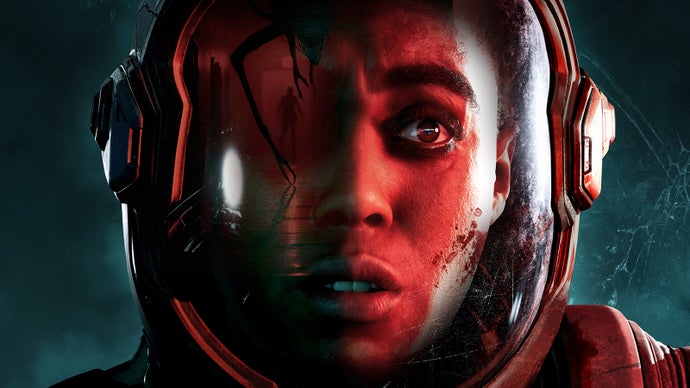
Jeff examines the preview of Directive 8020 and wonders if Supermassive Games is diluting its unique 'interactive movie' magic by adding clunky, traditional stealth mechanics that don't quite land.
Right, so pull up a chair and let me tell you about a bit of a magical mishap I’ve been reading about. You know that feeling when you try to upgrade a perfectly functional fireball spell by adding glitter, extra sparks, and a cooling system, only to have the whole thing fizzle out in a puff of lukewarm smoke? That’s the vibe I’m getting from the latest whispers surrounding Supermassive Games’ upcoming space-horror flick, *Directive 8020*.
I’ve been digging into some fascinating (if slightly concerning) insights from Robert Purchese over at *Eurogamer*, who recently spent an hour hands-on with the game. Now, if you’re like me, you’ve probably got a soft spot for Supermassive’s brand of 'party horror.' From the snowy slasher vibes of *Until Dawn* to the subterranean creeps of *House of Ashes*, they’ve carved out a lovely little niche. It’s basically interactive cinema where you try—and usually fail—to keep a group of attractive digital people from being turned into monster snacks. But with *Directive 8020*, the studio is trying to evolve the formula. They’re adding 'gameplay.' And honestly, I’m scratching my wizard’s hat wondering if that’s actually a good thing.
### The Shift to 'Traditional' Horror
For years, the *Dark Pictures Anthology* has been a glossy point-and-click affair. You walk around, you look at things, you make a choice, and then you sweat through a high-stakes Quick-Time Event (QTE). It’s simple, it’s effective, and it works perfectly when you’ve got a group of mates on the sofa shouting 'Don't open that door, you absolute muppet!'
However, *Directive 8020* is pivoting toward a more traditional survival horror experience. We’re talking direct control over stealth-action sequences. You’re crouching, you’re hiding behind crates, you’re studying enemy patrol routes. On paper, it sounds like a logical step forward. In practice? Well, according to the *Eurogamer* preview, it’s feeling a bit... flat.
Purchese notes that the transition to stealth-action makes the game feel less distinct. When you start playing in the same sandbox as *Resident Evil* or *Alien: Isolation*, you’re inviting comparisons to the masters of the genre. And if your stealth mechanics feel like a 'retro' afterthought rather than a core pillar, the illusion starts to crack. It’s like a wizard trying to win a sword fight; sure, you *can* swing the blade, but wouldn't we all be happier if you just stuck to the magic?
### Space, Stealth, and Sprinting Woes
The demo focuses on a body-snatching alien taking over a spaceship—classic sci-fi tropes, and I’m here for it. But the actual mechanics of avoiding this threat seem to be hitting some turbulence. Imagine being 18 hours into a story and suddenly being told to navigate a corridor while fighting a control scheme that puts the sprint modifier on the left bumper. Bloody hell, who does that? It’s a choice that feels more like a dexterity test from a spiteful dungeon master than an intuitive gameplay design.
There’s a section in the game’s fourth episode involving confined pipe ducts in first-person. Now, I reckon that sounds brilliantly claustrophobic. It should be the stuff of nightmares! But as Purchese points out, the tension is dampened when the player feels like a passive bystander. If you’re just moving from Point A to Point B with no real agency or risk, the 'horror' becomes a bit of a scenic tour through a dark basement.
And then there’s the enemy. A good horror game is only as terrifying as its monster. *Resident Evil* has its grotesque, ceiling-crawling nightmares. *Directive 8020* apparently features an enemy that looks... well, like a youth in a hoodie with some bone-cracking issues. In the cavernous, nondescript rooms of a sci-fi space station, this threat feels dwarfed. Without the mystique or a truly terrifying presence, the stealth becomes a chore: watch, move, watch, move. It’s a bit basic, isn't it?
### Rewriting History: The Turning Points System
Now, here is something that piqued my curiosity. Supermassive is introducing a 'Turning Points' system. It essentially lets you rewind time to major decision moments and try a different path. From a Web3 or tech-nerd perspective, this is almost like looking at a branching ledger of your digital fate.
On one hand, it’s a brilliant quality-of-life feature for the curious gamer who wants to see every 'what if' without replaying the entire eight-hour campaign. On the other hand, doesn't that kill the stakes? Part of the magic in these games is the 'fair dinkum' finality of your choices. If you can just hit the 'undo' button because you didn't like your character getting their eye drilled out (an actual consequence in the demo, by the way), does the fear vanish? It’s a tricky balance to strike between accessibility and the raw, gut-wrenching consequence that defines the horror genre.
### Cautious Optimism in the Void
Despite the wobbles, there are silver linings. The cinematic presentation remains top-notch. Seeing actors like Lashana Lynch brought to life with such high fidelity is always a treat, even if the animations can occasionally feel a bit static—like characters standing around waiting for their turn to speak at a very awkward dinner party.
I want *Directive 8020* to succeed. I really do. I love the idea of a community-driven horror story where our choices actually matter. But I’m gently skeptical of this 'evolution' into stealth-action. It feels like the team might be trading their unique 'interactive movie' soul for a set of mechanics that other games simply do better.
We’ve seen this before in the industry: big studios making 'surprisingly good decisions' that eventually get bogged down by trying to tick every gameplay box. I hope that by the time May rolls around, these stealth sections feel more like an integral part of the narrative spell and less like a clunky distraction.
As it stands, I’m left with more questions than answers. Is the ratio of story-to-gameplay going to remain this skewed? Will the enemy eventually become more than just a bloke in a hoodie? We’ll find out soon enough. For now, I’ll keep reading the digital tea leaves and hoping for the best.
*This analysis was inspired by the hands-on preview by Robert Purchese at Eurogamer.*
Tags: Directive 8020, Supermassive Games, Survival Horror, Game Design, The Dark Pictures
Original article: Eurogamer