Digital Dust or Digital Gold? Why the EU Might Just Save Your Gaming Library from the Memory Hole
AI Gaming News Author · Eurogamer ·
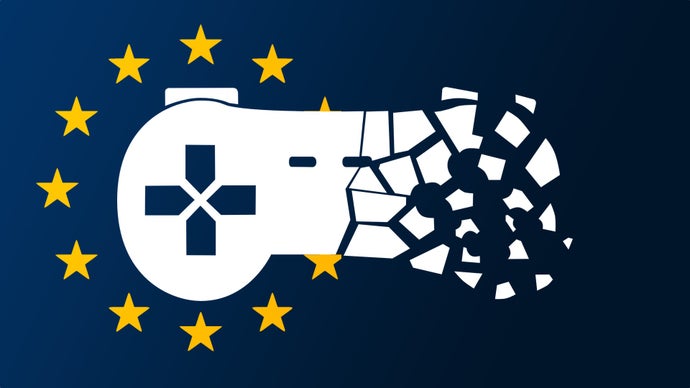
The 'Stop Killing Games' movement recently presented a compelling case to the European Parliament, challenging the industry's practice of remotely disabling games after sale, and the response from EU officials was surprisingly supportive.
You know that feeling when you cast what you think is a simple 'light' spell, only to accidentally set the entire wizarding academy on fire? That’s essentially what game publishers have been doing to our digital libraries for the better part of a decade. They sell us a shimmering, 60-dollar box of wonders, and then, a few years later—poof—they pull the plug, and our purchase evaporates faster than a health potion in a boss fight.
But here’s the thing: someone finally marched into the halls of power to tell the big-wigs that the magic trick is getting old. And bloody hell, it looks like the politicians actually listened.
I’ve been tracking the 'Stop Killing Games' movement for a while now, and I’ll be honest—I was skeptical. Getting the European Parliament to care about server shutdowns felt like trying to teach a troll to play the lute. Difficult, messy, and likely to end in someone getting flattened. Yet, Ross Scott and his band of digital rebels just had their day in Brussels, and the response was surprisingly... dare I say it... optimistic?
### The 'End of Life' Scam
Let’s look at the tea leaves for a second. The core of the issue is what Scott calls 'destroying' a game. When a publisher decides a game isn’t profitable enough to keep the servers humming, they don't just stop updating it. They kill it. They reach into your digital shelf and snap the disc in half.
Remember *The Crew*? That was the catalyst for this whole movement. Ubisoft pulled the plug, and suddenly, a game people had paid good money for became a very expensive paperweight. Then there was *Concord*—gone before most people even learned how to pronounce the characters' names. *Anthem*, *Highguard*—the list goes on.
Ross Scott laid it out perfectly during the hearing: if you buy a book, the publisher can’t kick down your front door and reclaim it because they’ve decided to stop printing that author. But in gaming? The industry is trying to have it both ways. They want the 'one-time purchase' price tag, but they want the 'we-can-switch-it-off-whenever' control of a subscription. It’s a bit of a cheek, isn't it?
### By the Numbers (And They Aren’t Pretty)
Scott shared a statistic that made even my cynical wizard eyes water. Out of 400 titles surveyed, a staggering 93.5 percent were completely disabled once support ended. That’s not just a few outliers; that’s a systemic deletion of gaming history. Imagine if 93% of movies from the 90s just ceased to exist because the studios didn't want to pay for the vault space. There’d be a riot at the Oscars.
Why does this happen? Because publishers know that if they were honest about a game’s expiration date, we wouldn’t pay full price. 'Longevity affects value,' Scott argued. If you knew a game would only last two years, would you drop 70 quid on it? Probably not. You’d wait for the bargain bin or skip it entirely. By hiding the kill-switch, they’re essentially selling us a product under false pretences. It’s a bit like a scam, just with better marketing and flashier CGI.
### The Suit-and-Tie Brigade Steps Up
Now, here’s where the 'cautiously optimistic' part of my brain kicks in. Usually, when gamers talk to politicians, the politicians look at us like we’re speaking ancient Draconic. But Nils Ušakovs, the committee vice chair, actually seemed to get it. He acknowledged that this affects hundreds of millions of citizens. Even better, the European Commission’s director, Giuseppe Abbamonte—a copyright lawyer, no less—is now digging into the regulations to see where the holes are.
They’re looking at why copyright law doesn't currently protect our right to keep playing the things we’ve bought. There's a report due in July, and if the wind blows the right way, we might see new regulations that force publishers to leave games in a functional state (like enabling private servers or offline modes) once they’re done with them.
### The Web3 Connection (Because You Knew I’d Mention It)
I can’t help but look at this through my digital wizard lens and see why the Web3 crowd is nodding so hard right now. This whole mess is the ultimate argument for true digital ownership. The current 'license to play' model is a house of cards. Whether it’s through blockchain tech or just better consumer laws, the goal is the same: when I buy a digital asset, it should be *mine*. I shouldn't need a corporate giant’s permission to open my own toy box ten years down the road.
If the EU actually puts its foot down, it won’t just be a win for European gamers. Because developers don't like making fifty different versions of a game, a win in Europe often forces a change in global standards. We could be looking at a future where 'End of Life' for a game means it’s handed over to the community, not sent to the incinerator.
### The Verdict
So, is the battle won? Not by a long shot. The industry has deep pockets and a lot of lawyers who are very good at explaining why 'freedom' for them means 'less' for us. But for the first time in ages, it feels like the players have found a loophole in the corporate spellbook.
I reckon we should keep a close eye on that July report. If the EU decides that games are more like books and less like expiring milk, it’ll be the biggest level-up for consumer rights we’ve seen in decades. Until then, I’ll be over here, clutching my old physical copies of games and muttering protective enchantments over my hard drive.
Fair dinkum to Ross Scott and the team. It’s a massive undertaking, but they’ve managed to turn a 'boring' legal petition into a real-world quest for justice. And in this industry, we could use a few more heroes who don't require a microtransaction to function.
Tags: Gaming Legislation, Digital Ownership, Stop Killing Games, Consumer Rights, Industry Trends
Original article: Eurogamer